



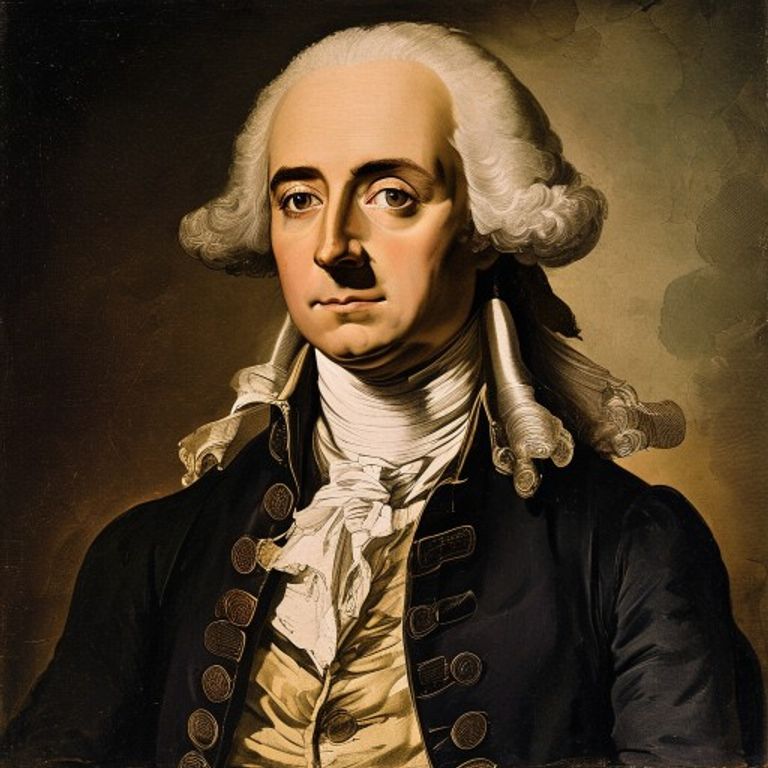
The 1804 duel between one of the US Founding Fathers and Vice President Aaron Burr, resulting in Hamilton's death and one of the greatest American political tragedies.
⚠️ Research conducted with the aid of Deep Research is subject to referential ambiguity.
🖥️ Clean HTML code using a proprietary tool.
👥 Research by Guilherme Felipe, Curation by Sílvio Lôbo
Hamilton's Double Enigma: A Duel with Blind Spots
The history of the founding of the United States is marked by colossal figures whose lives and deaths often transcend mere chronology. Among them, the figure of Alexander Hamilton, the visionary architect of the American financial system, remains shrouded in a mystery that goes beyond his tragic and public death in a duel. Although the confrontation with Aaron Burr is widely known, the details surrounding Hamilton's final hours, and the circumstances that led to such a fatal outcome, present a labyrinth of facts, speculations, and unanswered questions worthy of an in-depth journalistic investigation.
1. The Context and the Incident: Where the Shadow of Death Was Cast
The stage for Alexander Hamilton's fatal outcome was set in Weehawken, New Jersey. On July 11, 1804, under the morning mist, two of the young nation's most prominent men met on a dueling ground, an archaic ritual still accepted by the social elite of the time, especially to defend one's honor. The dispute between Hamilton and Aaron Burr, then Vice President of the United States, was not a mere whim, but the culmination of years of political and personal animosity, fueled by sharp words and mutual accusations published in newspapers and uttered in political salons.
The duel, an event pregnant with symbolism, turned into a drama where the lines between honor and murder, between life and death, became dangerously thin. What exactly happened on those banks of the Hudson, and the hours that followed, are the core of a mystery that, despite nearly two and a half centuries, still resonates with unsettling questions.
2. Timeline of Events: Crucial Hours in American History
The chronological reconstruction of the events leading to Alexander Hamilton's death is crucial to understanding the complexity of the case:
- Years Prior to 1804: Growing political rivalry between Alexander Hamilton and Aaron Burr, exacerbated by election campaigns and defamatory publications.
- April 1804: Publication of defamatory articles attributed to Alexander Hamilton about Aaron Burr, culminating in a letter from Burr challenging Hamilton to a duel.
- July 10, 1804: Hamilton accepts the challenge, despite his personal and family reservations, believing his honor was at stake.
- July 11, 1804, Early Morning: The duel takes place in Weehawken, New Jersey. Reports indicate that Hamilton fired into the air, while Burr struck Hamilton.
- July 11, 1804, Afternoon: Alexander Hamilton is transported to his residence in New York City, gravely wounded.
- July 12, 1804: Alexander Hamilton passes away.
- Subsequent Legal Proceedings: Although Burr was indicted for murder in New Jersey and New York, the cases were dismissed due to a lack of witnesses willing to testify against a former vice president and the perception that the duel was, by the standards of the time, a matter of honor.
3. Main Theories: Deciphering the Mystery of the Death
Despite public knowledge of the duel, the exact circumstances and underlying motivations continue to fuel debates and theories:
Historical-Political and Behavioral Theories:
- Classic Honorary Duel Theory: The most widely accepted explanation is that the duel was a confrontation for honor, according to the code of conduct of the time. Hamilton allegedly fired into the air in an act of magnanimity or to show contempt, while Burr, feeling provoked or humiliated by Hamilton's defamation, fired to kill. This theory is based on the gentlemanly codes of honor of the era and the testimonies of the duelists' seconds.
- Burr's Deliberate Provocation Theory: One line of thought suggests that Burr, resentful of Hamilton's political influence and constant public humiliations, orchestrated the duel with the intention of eliminating his rival. His precise aim and strategic position could indicate premeditation, although there is no concrete proof of this.
- "Friendly Weapons" (Practice Weapons) Duel Theory: Some historians speculate that duels of the time often involved the use of practice weapons or that the duelists consciously fired into the air to avoid fatal injuries, but that something went wrong. Hamilton, known for his precision, having fired into the air could indicate an intention not to kill, but the fatality suggests a failure in this "tacit agreement."
Alternative and Conspiracy Theories:
- Political Conspiracy Theory: In less conventional circles, there is speculation about a broader conspiracy involving political figures dissatisfied with Hamilton's influence or who saw in Burr an instrument for advancement. However, concrete evidence to support such allegations is lacking.
- Error or Accident Theory: Although less popular, the possibility of human error, an unexpected reflex, or even a failure in the weapon used by Burr cannot be completely ruled out, but it is unlikely given the precision of the duelists of the time.
Paranormal and Supernatural Theories (Not Based on Evidence):
- Although the figure of Hamilton is the subject of many legends, there are no paranormal theories with any factual or documentary basis that explain the circumstances of his death. Such speculations belong more to folklore and fiction.
4. Controversies and Blind Spots: Where the Truth Hides
The official investigation into Alexander Hamilton's duel was marked by gaps and omissions, fueling speculation:
- Confidential Testimonies: The only direct testimonies about the duel came from the duelists' seconds, Nathaniel Pendleton (for Hamilton) and William Van Ness (for Burr). Their accounts, although official, were made under the pressure of defending their respective "clients" and, therefore, may have been biased or incomplete. The declassification of period reports reveals little divergence, but the absence of other independent observers is notorious.
- Missing or Ignored Evidence: Hamilton's weapon, a high-quality flintlock pistol, was never presented as concrete evidence. Whether it was confiscated or lost is a question mark. Likewise, the lack of rigorous forensic analysis, by modern standards, leaves a vacuum in the analysis of the projectile's trajectory and the angle of the shot.
- Hamilton's Statement on the Shot: Later reports, coming from his children and doctors, indicate that Hamilton claimed to have fired intentionally into the air. Whether this was an act of magnanimity, a protest against the duel, or an attempt to spare his own legacy is a subject of debate. The lack of a direct and irrefutable account from Hamilton at the exact moment of the shot is a crucial blind spot.
- Burr's Aggressiveness: Burr's reputation as a calculating and ruthless man is often used to support theories of premeditation. However, without direct evidence of his intent to kill, this remains in the realm of speculation.
5. Curiosities and Legacy: The Echo of an Unfinished Duel
The case of Alexander Hamilton's death transcends the legal and political sphere, becoming a landmark in popular culture and the collective imagination:
- Lasting Cultural Impact: The duel is frequently portrayed in literature, cinema, and, more recently, in the Broadway musical "Hamilton," which, despite dramatizing the events, rekindled public interest in the figure of Hamilton and the tragedy of his death.
- Involuntary Forgiveness: Although Burr was formally indicted, the cases were effectively dismissed. American society, at the time, still tolerated duels as a means of resolving disputes of honor, and very few were willing to condemn a man for participating in one.
- Hamilton's "Ghost": The figure of Hamilton, one of the most brilliant and controversial Founding Fathers, continues to be a subject of fascination. His death in a duel, an act that, in retrospect, seems anachronistic and tragic, serves as a reminder of the fragility of life and the complexity of human passions, even among those who shaped the destiny of a nation.
- Current Status: The case of Alexander Hamilton's death has been considered legally closed for centuries. However, as a historical mystery, it remains open to interpretation and debate, an unfinished piece in the great puzzle of the founding of the United States. There are no plans to reopen official investigations, but academic and journalistic research continues to seek nuances and possible new perspectives on this dark chapter of American history.
The story of Alexander Hamilton and his confrontation with Aaron Burr is a reminder that, even in seemingly clear events, the truth often hides between the lines, in the omissions, and in the blind spots that time insists on preserving.





