



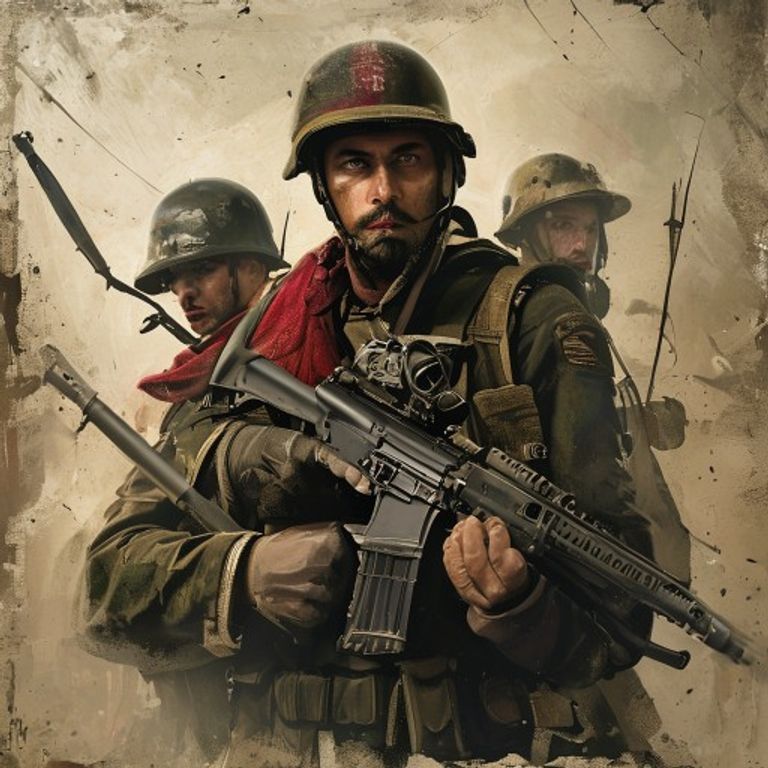
The longest civil conflict in Brazil, which took place in Rio Grande do Sul between 1835 and 1845, driven by political and economic grievances against the empire.
⚠️ Research prepared with the aid of Deep Research is subject to referential ambiguity.
🖥️ Clean HTML code using a proprietary tool.
👥 Research by Guilherme Felipe, Curation by Sílvio Lôbo
The Silent Echo of Rebellion: Unraveling the Mysteries of the Farroupilha War
The Farroupilha War, or the Ragamuffin War (1835–1845), transcends mere historiography. Beneath the surface of a fratricidal conflict that shook southern Brazil for a decade lie gaps, ambiguous interpretations, and, in some corners of our collective memory, the seeds of mysteries that the passage of time insists on not erasing. Like an investigative journalist poring over cases that defy easy answers, I dive into the mists surrounding this fundamental chapter of Gaucho history, separating the bedrock of facts from the sand of speculation.
1. The Context and the Incident: Where, When, and How the Mystery Began
The setting is Rio Grande do Sul in the mid-19th century. Discontent with fiscal policies imposed by the central government of the Empire of Brazil, especially the high taxes on the "charque" (jerked beef) produced in the province, served as the spark for the revolt. The dispute was fierce: the imperial government sought to balance its finances and protect the jerked beef production of other regions, while the Gaucho ranchers saw their profits threatened.
The direct trigger, which marks the beginning of the conflict and, to a certain extent, its enigmas, was the capture of Porto Alegre on September 20, 1835. Led by figures such as Bento Gonçalves da Silva, the rebels, known as "farrapos" (ragamuffins) due to their rustic attire, advanced on the capital. However, what followed was not a seamless triumphal march, but a complex saga marked by twists, betrayals, and tactical decisions that, in retrospect, seem to carry more than one possible explanation.
The "mystery" does not lie in a single singular event, but in the complexity of motivations, volatile alliances, and countless battles and sieges where historical truth is sometimes confused with the clamor of propaganda and the need to construct heroic narratives. The true nature of certain actions, the extent of certain internal conspiracies, and the fate of assets and people amidst the chaos of war are, in many cases, objects of debate and, consequently, mystery.
2. Timeline of Events: A Chronological Reconstruction of Key Facts
The Farroupilha War was a long and bloody epic. A rigorous timeline allows us to glimpse the fluidity and twists of the conflict:
- September 20, 1835: Start of the revolt with the capture of Porto Alegre by the rebels.
- 1836: The province is declared independent as the Riograndense Republic, with Bento Gonçalves da Silva as its first president.
- 1837: General Antônio de Sousa Neto proclaims the Juliana Republic in Santa Catarina, allying with the rebels.
- 1839–1840: Period of greatest expansion and strength for the rebels, with incursions into Santa Catarina.
- 1842: The Baron of Caxias (Luís Alves de Lima e Silva) takes command of the imperial troops, adopting a strategy of siege and negotiation.
- March 1, 1845: Signing of the Paz de Poncho Verde (Peace of Poncho Verde), ending the war.
Each of these milestones, however, hides a series of battles, sieges, and political maneuvers that, if examined closely, reveal obscure details and decisions whose justifications are not always transparent in official records. The escape of Bento Gonçalves from imperial prison, for example, is an episode that borders on the legendary, with versions that include external help and privileged knowledge.
3. Main Theories: Possible Explanations for the Shadows of History
The mystery in the Farroupilha War emerges when official explanations seem insufficient to encompass the complexity of events. Several theories attempt to shed light on these blind spots:
Historical-Military and Political Theories
- Tactical and Strategic Analysis: Many scholars focus on military miscalculations by both sides, or political alliances that did not materialize as expected, explaining the prolongation of the conflict and certain unexpected defeats or victories. The strategy of Caxias, for example, is often analyzed through the lens of his genius, but also his ability to exploit internal divisions among the rebels.
- Crossed Economic Interests: Beyond jerked beef, in-depth investigations seek to uncover the role of other economic interests, such as free navigation of the rivers in the River Plate basin, which could have influenced the support or opposition of foreign powers and other Brazilian provinces.
- Internal Power Dynamics: Leadership disputes among the rebels themselves, such as the veiled rivalry between Bento Gonçalves and Antônio de Sousa Neto, are pointed out as factors that may have weakened the movement and led to questionable decisions.
Conspiracy and Alternative Theories
- Veiled Foreign Intervention: Rumors have always circulated about the covert support of neighboring countries, such as Argentina and Uruguay, for the rebels. The theory suggests that these nations encouraged independence to weaken Brazil, but the support never materialized in an open and substantial way, leaving the impression of a frustrated or poorly executed conspiracy.
- Betrayal and Secret Agreements: Experts in "hidden history" raise the possibility that the Peace of Poncho Verde was not just a surrender agreement, but the result of secret negotiations that benefited prominent figures on both sides, with the pardoning of crimes or the guarantee of future positions. This line of reasoning suggests that the end of the war was "orchestrated" to maintain the status quo of elites.
- Unknown Sabotage Actions: Amidst countless battles, some historians question whether certain significant setbacks for the rebels were the result of internal sabotage or imperial intelligence, whose authors and methods were never discovered or disclosed.
Paranormal or Supernatural Theories (More Speculative)
- Omens and Local Myths: In regions with strong oral traditions, legends arise about apparitions, omens, and inexplicable events that marked the course of the war, influencing decisions or generating panic. These narratives, although popular, lack documentary evidence and are generally dismissed by rigorous historical research.
4. Controversies and Blind Spots: The Flaws in the Historical Plot
No historical investigation is free of flaws, and the Farroupilha War is no exception. Blind spots and controversies are abundant:
- Incomplete or Destroyed Records: The war, by its chaotic nature, led to the loss or destruction of countless documents. Incomplete military reports, lost diaries, and the lack of a rigorous filing system in some stages of the conflict leave insurmountable gaps.
- Conflicting Testimonies and Propaganda: War memories are, by nature, biased. Many of the accounts that reached us were written years after the events, with the goal of glorifying heroes or demonizing enemies. Testimonies from commanders, soldiers, and civilians often contradict each other, making the objective reconstruction of certain moments difficult.
- Disappeared Evidence: There are reports that certain assets, documents, or even important weaponry disappeared during or after the conflict, without a conclusive official explanation. The discussion about the location of rebel treasures, for example, is a recurring theme in legends, but without concrete proof.
- The Case of Prisoners and Exiles: The treatment of prisoners of war, the exact number of exiles, and the circumstances of their deaths or returns are poorly explored areas where official information is sparse, opening space for speculation about abuses or undisclosed agreements.
- The Veracity of the "Peace of Poncho Verde": Although it is the official milestone for the end of the war, the details of the agreements and guarantees granted to rebel leaders after the Peace of Poncho Verde are frequently questioned. The "broad amnesty" promised by the Empire, for example, was not always applied uniformly, generating lingering resentment.
5. Curiosities and Legacy: The Echo That Does Not Cease
The Farroupilha War left a profound legacy in Gaucho culture and identity, but it also generated a myriad of curiosities that fuel the popular imagination:
- The Myth of the "Relentless Hero": The figure of Bento Gonçalves da Silva, although fundamental, is portrayed in distinct ways. To some, a visionary; to others, an uncompromising leader who prolonged the suffering of his people. This duality is, in itself, a mystery regarding the true dimension of his leadership.
- The Role of Women in the War: Female participation, often relegated to footnotes, is a point of current investigation. Accounts of female combatants, spies, and suppliers exist, but their extent and real influence are still subjects of research.
- The Influence on Gaucho Identity: The war is, for Rio Grande do Sul, a watershed moment. Bravery, idealism, and the fight for autonomy became pillars of local identity. However, the human cost and the brutality of the conflict are sometimes eclipsed by idealization.
- The Current Status of the Case: The Farroupilha War is not a "case" to be reopened in a legal sense. However, the historiographical debate about its contours, motivations, and consequences is more alive than ever. New research, using declassified sources and new methodologies, continues to shed light on previously obscure aspects, recontextualizing events and questioning old certainties.
The echo of the Farroupilha War resonates even today, not as a mystery to be solved once and for all, but as an invitation to reflection. An invitation for us, as investigators of history, to never accept ready-made narratives, but rather to seek the questions that still hang in the air, in the shadows of a past that refuses to be completely deciphered.





