



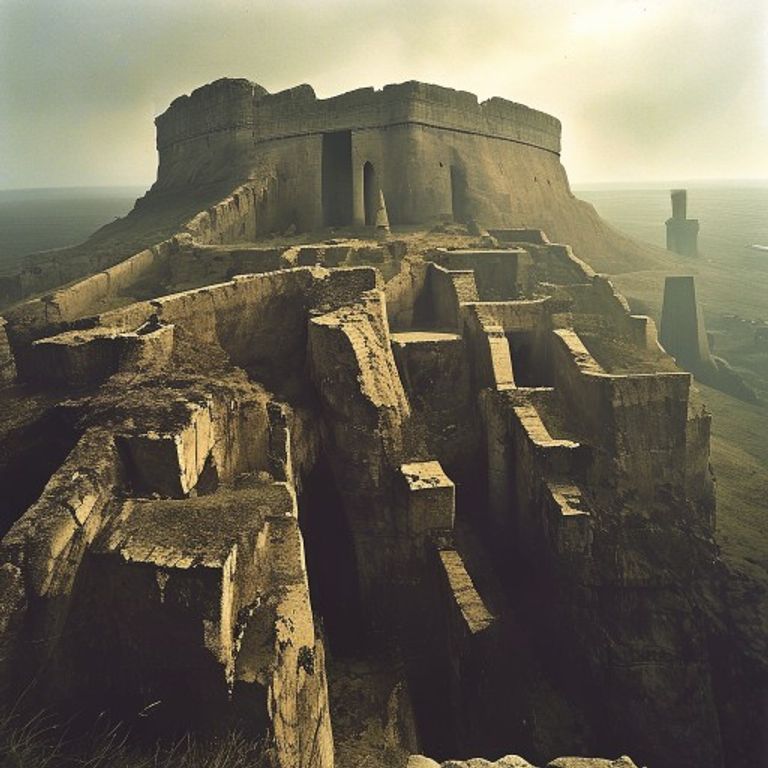
A stone complex in Southern Africa built without mortar by an advanced civilization that controlled gold and ivory trade routes.
⚠️ Research conducted with the aid of Deep Research is subject to referential ambiguity.
🖥️ Clean HTML code using a proprietary tool.
👥 Research by Guilherme Felipe, Curation by Sílvio Lôbo
The Silent Enigma of Great Zimbabwe: A Mystery of Stone and Shadow
By [Your Senior Journalist Name], Senior Researcher in Unsolved Cases
In the heart of Zimbabwe stand the monumental ruins of Great Zimbabwe, a silent testament to a lost civilization. However, the true mystery surrounding this ancestral site lies not only in its architectural magnificence, but in the questions it inspires and the answers that refuse to emerge from the mists of time. This is a case that transcends archaeology, delving into speculation, controversy, and a legacy of uncertainty.
The Context and the Incident: The Awakening of an Enigma
The ruins of Great Zimbabwe, located near the city of Masvingo in the modern nation of Zimbabwe, are an impressive architectural complex composed of massive dry-stone structures built without the use of mortar. They represent the largest ancient masonry structure in Sub-Saharan Africa, spanning an area of approximately 722 hectares. The mystery itself is not a single, isolated event, but rather the persistent enigma regarding the origin, purpose, and disappearance of its builders.
The "incident" that brought the mystery to light, in the sense of broader investigation and theorization, occurred during the colonial period, when European explorers and administrators first encountered the site in the late 19th century. The grandeur and sophistication of the ruins violently contrasted with the racist conceptions of the time, which denied the capacity of Africans to have erected such structures. This initial denial sowed the seeds for decades of speculation and debate, often obscuring the truth with prejudice.
Timeline of Events: Fragments of a Forgotten Past
Reconstructing a precise timeline for the origins of Great Zimbabwe is a challenge intrinsic to the nature of an ancient archaeological site. However, academic research and radiocarbon dating have allowed for an approximate picture to be drawn:
- c. 11th Century AD: Evidence suggests the site began to be occupied by pastoral populations.
- c. 12th - 15th Century AD: The peak period of construction and occupation of Great Zimbabwe. It is believed to have been the capital of a vast kingdom, with an estimated population between 10,000 and 20,000 inhabitants.
- c. 15th Century AD: Decline and eventual abandonment of the site. The reasons for this abandonment are a primary focus of the mystery.
- Late 19th Century: First documented reports by European explorers, such as Adam Renders and Karl Mauch. Mauch's interpretation, suggesting a Phoenician or Egyptian origin, was particularly influential and controversial.
- Early 20th Century: First archaeological excavations, often destructive and guided by prejudice. Despite this, evidence of an advanced African culture began to emerge.
- 1920s-1930s: Archaeologists such as Gertrude Caton-Thompson challenged foreign theories, presenting compelling evidence of the African origin of the ruins.
- Post-Independence of Zimbabwe (1980): The site is renamed and officially recognized as a symbol of African heritage, with the country's name derived from it.
The Main Theories: From Scientific to Fantastic
The enigma of Great Zimbabwe has generated a vast spectrum of theories, from those scientifically grounded to the highly speculative. It is crucial to distinguish between hypotheses based on evidence and narratives that seek to shape history according to ideological or entertainment interests.
Scientific and Archaeological Theories
- Bantu Origin (Predominant Theory): The hypothesis most accepted by the scientific community is that Great Zimbabwe was built by Bantu-speaking peoples, specifically the ancestors of the Shona people. Archaeological evidence, such as pottery, tools, and settlement patterns, corroborates this theory. It is believed the city served as a political and religious center, controlling the gold and ivory trade in the region. Prosperity likely declined due to factors such as overpopulation, depletion of natural resources, internal conflicts, or changes in trade routes.
- Regional Power Centers: Some research suggests that Great Zimbabwe may have been one of several interconnected power centers, with other contemporary communities of similar size. This view contrasts with the idea of a single, centralized empire, proposing a more complex network of alliances and exchanges.
Alternative and Speculative Theories
- Phoenician/Egyptian Influence (Refuted Theory): Proposed by explorers like Karl Mauch and popularized by authors like Graham Hancock, this theory suggests the ruins were built by ancient civilizations from the Middle East or Egypt. The logic behind this hypothesis lies in the supposed architectural similarity or the presence of symbols interpreted as Egyptian or Phoenician. However, this theory is widely discredited by archaeology due to the lack of concrete evidence and the purposeful ignorance of African evidence.
- Nordic/Atlantean Colonizers: Even more fanciful theories postulate construction by Nordic navigators or even survivors of Atlantis. These ideas lack any factual basis and reside in the realm of science fiction or pseudoscience.
Conspiracy and Paranormal Theories
- Hidden Gold and Secret Power: Some conspiracy theories revolve around the idea that the ruins hold secrets about vast gold treasures, which were hidden to avoid colonial exploitation. There are also speculations about the use of the ruins by secret societies or esoteric cults, though without any documented evidence.
- Energetic or Alien Phenomena: At the extreme end of the speculative spectrum, some suggest that the monumental construction may have been facilitated by advanced knowledge or technologies, possibly of extraterrestrial origin, or that the ruins possess unique energetic properties not yet understood.
Controversies and Blind Spots: Scars on the Investigation
The legacy of Great Zimbabwe is inseparable from the controversies that marked its "discovery" and study. The way the site was treated by colonial powers left deep scars on the investigation and historical narrative:
- Racial Prejudice in Interpretation: The denial of the Africans' ability to build the ruins is the greatest controversy. Reports and publications of the time frequently minimized or ignored findings that pointed to an African origin, preferring theories of foreign intervention. Archaeologist Gertrude Caton-Thompson, in 1931, was a crucial figure in challenging these narratives, presenting solid evidence of the African origin.
- Destructive Excavations: Many of the early excavations were carried out without modern scientific rigor, leading to the loss of context and the destruction of important archaeological layers. The search for "exotic" artifacts often prevailed over preservation and contextual analysis.
- Ignored or Missing Evidence: Allegations that significant artifacts were removed from the site and "disappeared" into private collections or forgotten archives are not uncommon. The lack of a complete and transparent record of all archaeological findings since the beginning of explorations contributes to this gap.
- Ideologically Motivated Interpretations: Even after independence, the interpretation of the ruins was sometimes shaped by political agendas, seeking to build a narrative of greatness and power that, while valid, may have led to simplifications of the kingdom's complex social and economic history.
Curiosities and Legacy: The Stone That Speaks
The cultural impact of Great Zimbabwe is immense. It is not only a UNESCO World Heritage site but a national symbol and an icon of African heritage. The soapstone bird found at the site has become a national symbol, present on the flag and currency of Zimbabwe.
The mystery of Great Zimbabwe persists, not as a crime to be solved, but as an invitation to reflect on human capacity, the complexity of ancient civilizations, and the way history is told and reinterpreted. The ruins continue to inspire research and debate, and with each new discovery, the stone seems to whisper another fragment of its forgotten history, a silent enigma that echoes through the centuries.
The case of Great Zimbabwe, in its essence, was never "reopened" or "shelved" in the traditional sense of a police case. It remains an active field of archaeological and anthropological study, where "investigations" continue, driven by the relentless search to understand a past that shaped the present and continues to challenge us.





