



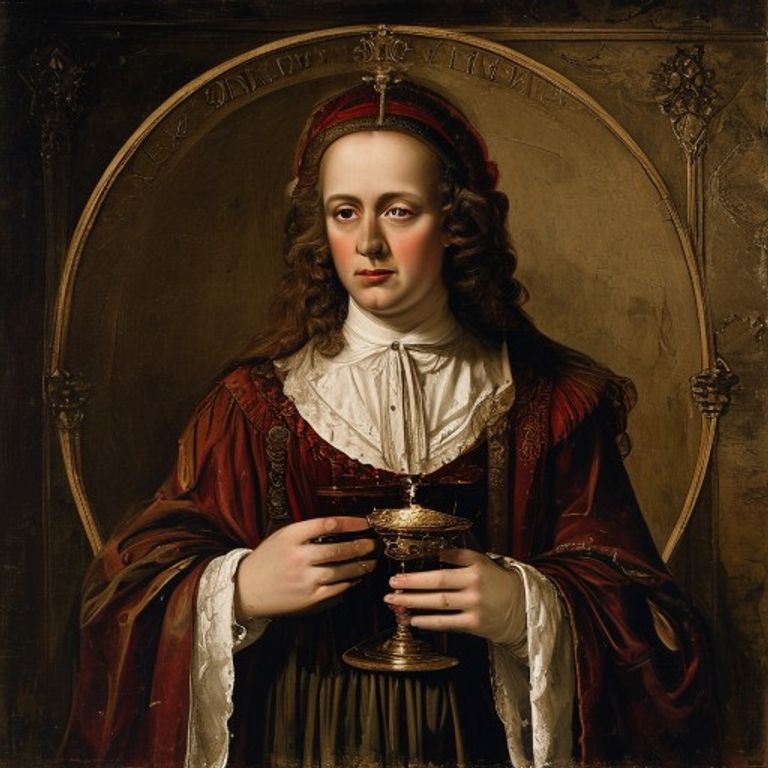
Young Esther Cox was at the center of violent phenomena in Canada in 1878, including spontaneous writing on walls and objects catching fire for no apparent reason in front of witnesses.
⚠️ Research conducted with the aid of Deep Research is subject to referential ambiguity.
🖥️ Clean HTML code using a proprietary tool.
👥 Research by Guilherme Felipe, Curation by Sílvio Lôbo
The Silent Enigma of Great Amherst: An Investigation in Search of the Truth
In 1878, the quiet village of Great Amherst, in Nova Scotia, Canada, became the epicenter of a mystery that defies time and reason. What unfolded in the Deacon family home was not a common crime, but a series of inexplicable events that would haunt the community and capture the imagination of investigators and skeptics for generations. This article delves into the depths of the Great Amherst Mystery Case, separating proven facts from speculation, and seeking to understand one of the most persistent enigmas of Canadian paranormal folklore.
1. The Context and the Incident: Where, When, and How the Mystery Began
The narrative begins on the property of the Deacon family, a Victorian residence located in Great Amherst, Nova Scotia. The patriarch, Reverend George William Deacon, a Methodist minister, his wife, Mary Jane Deacon, and their ten children were the inhabitants of the house. The apparent tranquility of rural life was brutally interrupted in October 1878, when the couple's youngest daughter, Esther Ada Deacon, then 18 years old, began to exhibit behaviors that bordered on the inexplicable.
Initial reports describe Esther suffering from agonizing pain, violent muscle spasms, and a voice that, at times, did not seem to be her own. It is believed that the initial trigger was an attempted harassment by a group of men unhappy with Reverend Deacon, which may have triggered a nervous breakdown in Esther. However, what followed went far beyond a psychological reaction.
2. Timeline of Events: A Chronological Reconstruction
- October 1878: Esther Ada Deacon, aged 18, begins to show the first bizarre symptoms after a traumatic incident.
- November 1878 - February 1879: The phenomena intensify, with Esther experiencing paralysis, fainting, voice changes, and frightening physical manifestations. The Deacon family seeks medical and religious help, but conventional treatments prove ineffective.
- March 1879: The situation attracts the attention of local authorities and medical investigations. The case gains notoriety in the region, initially being treated as hysteria or a peculiar ailment.
- April 1879: The case begins to be documented more officially, with the arrival of investigators and the collection of testimonies. There are reports of visits from curious onlookers and even mediums to the Deacon home.
- May 1879: The phenomena seem to gradually diminish. Esther shows signs of recovery, and the "activity" in the Deacon house ceases abruptly.
- Later Years: The case is revisited on several occasions, with the publication of reports and the search for explanations. The Deacon house, later known as the "Amherst Haunted House," attracts visitors and paranormal investigators.
3. The Main Theories: Seeking Logic in the Inexplicable
The enigmatic nature of the Great Amherst Case has generated a myriad of theories, each attempting to claim a plausible explanation. We analyze the most prominent ones:
3.1. Scientific and Medical Hypotheses
- Hysteria and Dissociative Identity Disorder: This is perhaps the most conservative and widely accepted explanation by some scientific sectors. The theory posits that Esther, under extreme psychological stress resulting from trauma, may have developed dissociative symptoms, such as personality changes, hallucinations, and psychosomatic physical manifestations. Hysteria was a common diagnosis at the time for women exhibiting unusual behaviors.
- Rare Neurological or Psychiatric Diseases: It is possible that Esther suffered from a medical condition unknown to the science of the time, such as a rare form of epilepsy, multiple sclerosis, or psychiatric disorders that manifested atypically. The lack of advanced diagnostic tests at the time limits the confirmation of this hypothesis.
- Hoax or Conscious Simulation: Some argue that Esther could have staged the events to gain attention, avoid responsibilities, or for other hidden motivations. However, the severity and duration of the symptoms, as well as the absence of clear benefits for her, make this theory less convincing to many.
3.2. Alternative and Paranormal Theories
- Haunting and Spiritual Possession: The most widespread theory in the popular imagination is that Esther was the victim of a supernatural entity, whether a vengeful spirit or a demonic force. The described phenomena, such as moving objects, inexplicable voices, and violent physical manifestations, are often attributed to the presence of a "haunting."
- Psychic Energies or Poltergeist: Another paranormal perspective suggests that the events were caused by an intense release of psychic energy, possibly linked to the emotional state of Esther herself or other family members. The chaotic and destructive nature of the phenomena would fit the description of a "poltergeist."
- Conspiracy and Disinformation: Although less explored, the possibility of a conspiracy to cover up the truth or the deliberate spread of false information to discredit the Deacon family or to exploit the case cannot be completely ruled out. The lack of detailed official reports may fuel such speculation.
4. Controversies and Blind Spots: The Shadows of the Investigation
The Great Amherst Case is dotted with inconsistencies and gaps that hinder a definitive conclusion. The official investigation, if it can be called that, seems to have been fragmented and disorganized.
- Lack of Detailed Expert Reports: There are no extensive and conclusive medical or psychiatric reports on Esther's condition. The descriptions are based on testimonies and third-party accounts, which may be biased or inaccurate.
- Conflicting Testimonies: Although many witnesses reported similar events, the interpretation and intensity of the manifestations may have varied, leading to divergent narratives about what actually occurred.
- Missing or Unrecorded Evidence: It is likely that many of the "phenomena" that occurred in the house, such as moving objects or strange voices, were not properly documented or that the evidence was lost over time. The absence of photographs or recordings, common today but rare at the time, is a limiting factor.
- Focus on the Deacon Family: The investigation seems to have focused intensely on Esther and the Deacon family, without deeply exploring the social context and possible conflicts that could have triggered the events.
5. Curiosities and Legacy: A Mystery That Persists
The Great Amherst Mystery Case transcended the local sphere and became an icon of paranormal folklore. The house where the events occurred, later known as the "Amherst Haunted House," attracted countless curious onlookers and paranormal investigators over the years, fueling the legend.
- Publicity and Urban Legends: The story was widely publicized in newspapers of the time and in later publications about the paranormal, solidifying the case as one of the most notorious in Canada.
- Continuous Interest: Despite more than a century having passed, the case continues to be a subject of study and debate. Contemporary investigations by ufologists, paranormal researchers, and skeptics attempt, without definitive success, to unveil the veil of mystery that surrounds the Deacon residence.
- Current Status: The case remains officially an "unsolved mystery." There is no reopening of police investigations, as no crime was proven. The notoriety of the case lies in its inexplicable nature and the inability of science and reason to offer a single, definitive answer, leaving the door open for debate and speculation.
The Great Amherst Mystery Case serves as a reminder of the fragility of our knowledge and the capacity of the unknown to haunt us. Whatever the underlying explanation, the story of Esther Ada Deacon and her family continues to echo through time, a silent enigma in the landscape of Nova Scotia, waiting for a truth that may never be fully unraveled.





