



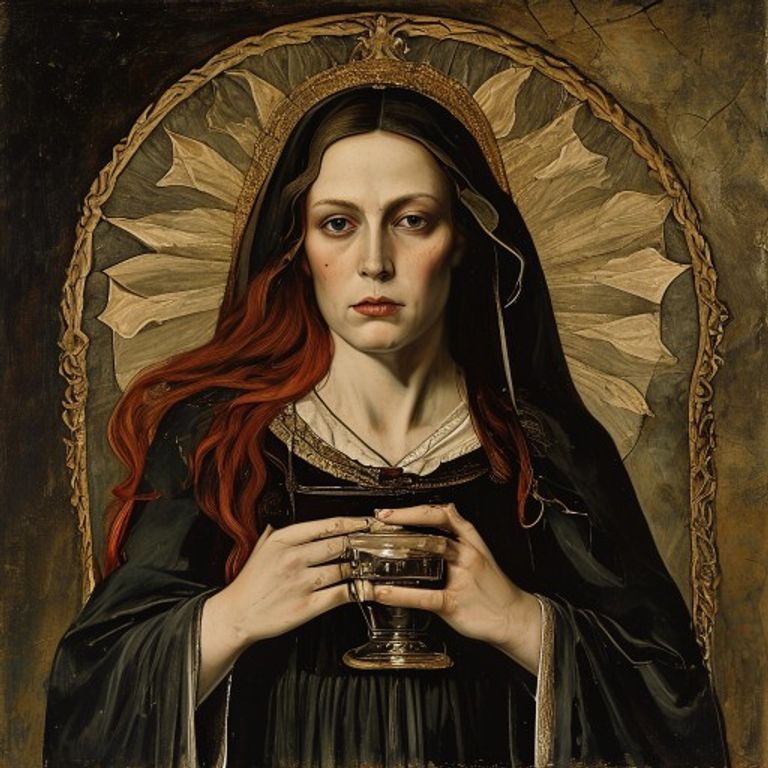
The young conqueror died suddenly in Babylon at the age of thirty-two; theories regarding the cause range from tropical diseases and poisoning by rivals to a rare neurological disorder.
⚠️ Research conducted with the aid of Deep Research is subject to referential ambiguity.
🖥️ Clean HTML code using a proprietary tool.
👥 Research by Guilherme Felipe, Curation by Sílvio Lôbo
The Twilight of a God: The Enigma of the Death of Alexander the Great
The ancient world trembled before one man: Alexander III of Macedon, known as Alexander the Great. In little more than a decade, he forged an empire that stretched from Greece to India, toppling the powerful Persian Empire. His rise was meteoric, his ambition limitless. But the same force that propelled him to glory led him, abruptly, into the darkness of death. And it is precisely this transition, from an invincible leader to a lifeless body, that has become one of history's most persistent and debated mysteries. What really killed the conqueror who had never known defeat in battle?
1. The Context and the Incident: The End in Babylon
The stage for Alexander's demise was Babylon, then a jewel of his vast, newly conquered empire. In the year 323 B.C., after exhaustive campaigns and the imminence of new expeditions (including to Arabia and the Mediterranean Sea), the king was in his prime, around 32 years of age. It was in May of that year that Alexander's health began to deteriorate alarmingly. The description of his final days in historical annals, such as the accounts of Arrian and Plutarch, paints a picture of high fever, extreme weakness, and agonizing pain. The speed and nature of his symptoms have, ever since, raised suspicions that go far beyond a simple illness. The empire, built on the strength and vision of a single man, saw its leader succumb in a palace, far from the din of battle, leaving behind a massive power vacuum and an unsolved enigma.
2. Timeline of Events (323 B.C.)
The exact reconstruction of the events leading to Alexander's death is hindered by the fragmentary and sometimes contradictory nature of ancient sources. However, a consolidated timeline points to the following:
- Early May: Alexander participates in banquets and celebrations in Babylon. Reports mention excesses, including the consumption of wine.
- Approximately 10 days before death: Alexander begins to feel unwell. Initial symptoms are vague, such as fever and general malaise.
- Approximately 7 days before death: Symptoms intensify. Alexander develops high fever, intense pain (described as being in the body and abdominal region), and difficulty speaking.
- June 5 (approximate date): Alexander's condition worsens dramatically. He is taken to his room, where his generals and friends gather by his side. There are reports that he tried, unsuccessfully, to get up to go to the temple of Bel, a sign of his extreme weakness.
- Night of June 10 to 11 (most accepted date): Alexander the Great dies in Babylon. His final moments are marked by confusion and uncertainty regarding who his successor would be.
3. The Main Theories: Uncovering Potential Assassins and Diseases
Alexander's premature death, at a moment of apparent peak power, fueled a range of speculations spanning from the most plausible hypotheses from a medical and forensic point of view to the most fantastic.
3.1. Scientific and Medical Hypotheses
* Infectious Diseases: This is the most robust line of investigation and currently dominant among modern historians and physicians.
- Typhoid Fever: One of the strongest theories. High fever, body aches, weakness, and possible intestinal symptoms are consistent with this bacterial disease, transmitted by contaminated water and food. Poor hygiene in ancient camps and cities made typhoid a constant threat.
- Malaria: Another real possibility, especially in regions with swamps and stagnant water, such as Babylon. The cyclical symptoms of malaria (fever, chills, sweating) could fit, although the description of continuous and acute pain is less typical.
- Plague: Although less likely given the absence of clear reports of buboes or other distinctive characteristics of the bubonic plague, other forms of plague could have had febrile symptoms and rapid progression.
- Viral Encephalitis: Inflammation of the brain, which could explain the mental confusion and weakness observed in his final days.
- Acute Pancreatitis: An inflammation of the pancreas, which can be triggered by excessive consumption of alcohol and fat. The intense abdominal pain described would fit.
* Intoxication:
- Slow and Intentional Poisoning: This theory, popular in antiquity and in many works of fiction, suggests that Alexander was poisoned gradually. Ancient sources mention the possibility of poisoning, but without presenting concrete evidence or a clear suspect. The lack of a specific and well-documented poison at the time, in addition to the difficulty of administering it without being discovered, makes this hypothesis complex.
- Accidental Poisoning: The consumption of food or drinks contaminated with toxic substances, whether by negligence or error, is a possibility to be considered.
3.2. Alternative, Conspiracy, or Paranormal Theories
* Political Conspiracy: The most persistent of the conspiracy theories points to Alexander's own generals, the Diadochi. These men, who would later fight among themselves for control of the empire, would have seen in Alexander an obstacle to their ambitions. The absence of a clear successor and the speed of his death would have created the perfect scenario for them. Names like Ptolemy, Antipater, and his son Cassander are frequently mentioned. The logic here lies in self-interest and the opportunity that Alexander's death represented for these powerful men. * Military Resentment: Some reports suggest that Alexander could have been a victim of revenge by soldiers or officers dissatisfied with his policies or military decisions. However, concrete evidence to support this idea is lacking. * Consequences of Old Wounds: Although Alexander was known for his resilience and for surviving countless battle wounds, it is possible that a serious and poorly healed wound eventually led to his death from complications. * Divine Manifestation or Punishment: In a religious and mythological context, Alexander's death could be interpreted as divine intervention, whether for having arrogated divine powers or for having offended the gods. This perspective, while fascinating for the time, lacks any modern empirical basis.
4. Controversies and Blind Spots: Where Truth Dissolves
The investigation into the death of Alexander the Great, if it can be called that, is marked by gaps and inconsistencies that fuel the debate to this day.
- Fragmentary and Biased Ancient Sources: The main historical sources on Alexander's death (Arrian, Plutarch, Diodorus Siculus, Curtius Rufus) were written centuries after the event, based on lost documents and with different agendas. The veracity and interpretation of their accounts are constantly questioned.
- Lack of Autopsy: The practice of formal autopsies as we know them today did not exist in antiquity. The cause of death was presumed based on observed symptoms and reports from court physicians, but without a detailed and scientific physical examination.
- Missing Evidence: Medical reports of the time, if they existed in written form, disappeared over the centuries. No "official report" in the modern sense has survived.
- Conflicting Testimonies: Descriptions of Alexander's final days and the events leading to his death vary among ancient historians, making it difficult to create a unified and irrefutable narrative. For example, the exact role of banquets and alcohol is a subject of interpretation.
- The Mystery of the "Will": Reports indicate that Alexander, on his deathbed, handed his ring to Perdiccas and said "to the strongest," or a similar phrase, indicating that power should go to whoever could take it. This ambiguity would have been crucial for the subsequent conflict between the generals.
5. Curiosities and Legacy: The Echo of an Enigma
The mystery surrounding the death of Alexander the Great has transcended time and space, shaping perceptions and fueling the popular imagination.
- Immediate Cultural Impact: Alexander's death plunged his vast empire into chaos. The Diadochi, his generals, immediately began fighting for power, dividing the empire into smaller Hellenistic kingdoms. This period of conflict and political redefinition was a direct result of the uncertainty surrounding his death and succession.
- Literal and Fictional Narratives: The story of his death became a recurring theme in ancient and medieval literature, art, and philosophy. Attempts to attribute his death to poison reflect the human difficulty in accepting the finitude of great leaders and the search for concrete explanations for traumatic events.
- Continuous Study: The case was never "reopened" in a legal sense, as there was no formal police investigation. However, it has been the subject of continuous academic and scientific "reopening." Historians, archaeologists, and even doctors continue to analyze ancient sources and propose new theories, especially with advances in medicine and forensic science.
- The Unknown Tomb: The exact location of Alexander the Great's tomb is a mystery in itself. He was buried in Babylon, but his body was later moved to Alexandria, Egypt. However, the final whereabouts of his sarcophagus were lost over the centuries, making his grave one of the most coveted "lost treasures."
The death of Alexander the Great remains a grim reminder that even the greatest conquerors are, ultimately, subject to human frailty. The enigma of his death is not just a matter of historical curiosity, but a reflection of our incessant search for answers, for logic, and for order amidst the chaos of existence. While new archaeological or scientific discoveries may shed more light on the symptoms and possible causes, the veil of mystery that surrounds the twilight of a god seems destined to hover over Babylon forever.





