



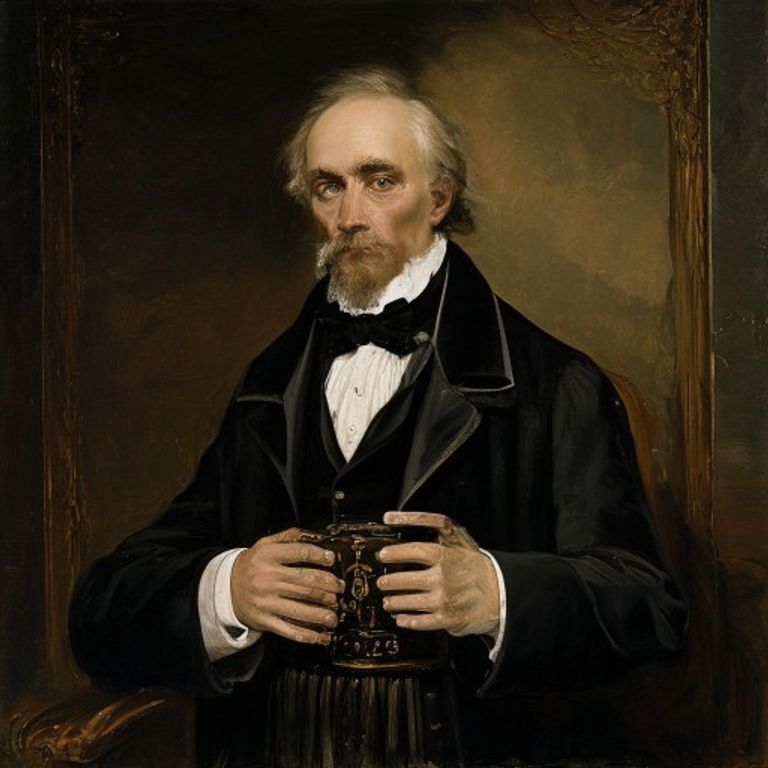
The composer's passing in 1893 was officially attributed to cholera, yet it remains surrounded by persistent theories of suicide forced by a court of honor due to his private life.
⚠️ Research conducted with the aid of Deep Research is subject to referential ambiguity.
🖥️ Clean HTML code using a proprietary tool.
👥 Research by Guilherme Felipe, Curation by Sílvio Lôbo
The Mystery of Pyotr Ilyich Tchaikovsky's Death: The Interrupted Symphony
In 1893, the world of classical music was shaken by the sudden and controversial death of one of its greatest geniuses: Pyotr Ilyich Tchaikovsky. The official narrative, told for decades, suggests a case of cholera contracted accidentally. However, the circumstances surrounding the Russian composer's passing in Saint Petersburg continue to echo like a dissonant note in history, fueling theories ranging from police investigations to high-level conspiracies.
The Context and the Incident: Silence Amidst Glory
Tchaikovsky, in the midst of a period of immense artistic success, was in Saint Petersburg for the premiere of his final symphony, Symphony No. 6 "Pathétique." It was the end of October 1893. The night of October 28 marked the beginning of his end. According to reports, the composer felt unwell after a dinner with friends, where he allegedly consumed unboiled water at a restaurant.
The illness progressed rapidly. Classic symptoms of cholera, such as severe diarrhea, vomiting, and dehydration, manifested brutally. Despite medical efforts to save the composer, the progression of the disease was relentless. Pyotr Ilyich Tchaikovsky passed away in the early hours of November 6, 1893 (according to the Julian calendar; October 28 in the Gregorian calendar).
Timeline of Events (Official Version)
- October 1893: Pyotr Ilyich Tchaikovsky arrives in Saint Petersburg for the premiere of his Symphony No. 6 "Pathétique."
- October 28, 1893 (Gregorian calendar): The composer attends a dinner with friends. Later reports indicate he may have consumed unboiled water.
- Night of October 28 to 29: Tchaikovsky begins to feel ill, exhibiting symptoms of cholera.
- October 29 - November 5: The composer is attended by doctors, including Dr. Alexei Petrovich Obolensky, who diagnoses cholera. Every effort is made to combat it, including saline injections.
- November 6, 1893 (Gregorian calendar): Pyotr Ilyich Tchaikovsky passes away in his apartment in Saint Petersburg.
The Main Theories: A Score of Possibilities
The apparent chance of death by cholera, in the midst of such a public life and a society full of intrigue, opened space for various speculations:
1. The Official Theory: Accidental Cholera
Logic: This is the hypothesis most accepted by authorities and official history. Cholera was an endemic and easily transmissible disease in Russia at the time, especially through contaminated water. The 1892 outbreak in Europe may have contributed to the widespread fear of the disease. The chronology of symptoms and the medical diagnosis of the professionals who attended him support this thesis.
Evidence/Anchoring: Medical reports from the time, testimonies from close acquaintances who saw him fall ill, and the sanitary environment of Imperial Russia.
2. Suicide (Criminal/Psychological Hypothesis)
Logic: In his letters, Tchaikovsky expressed frequent bouts of melancholy, insecurity, and even suicidal thoughts. There were rumors about his personal life, including his relationship with his nephew Vladimir Davydov and the social pressure regarding his sexuality, which could have led to a state of despair. Some believe he "let" himself die, deliberately exposing himself to contagion as a form of indirect suicide.
Evidence/Anchoring: Tchaikovsky's correspondence revealing his state of mind, the lack of a detailed record of what he actually ingested at dinner, and the silence of the era regarding certain social issues.
3. Poisoning (Conspiracy/Criminal Theory)
Logic: The idea that Tchaikovsky was poisoned has circulated for decades. Suggested motivations vary: a love affair, gambling debts, or even an attempt to silence the composer regarding some compromising secret. The speed with which the disease manifested and the absence of a more detailed autopsy (common at the time) fuel this thesis. A variation of this theory suggests that the poisoning was disguised as cholera.
Evidence/Anchoring: The lack of a formal and complete autopsy, the absence of conclusive evidence ruling out other causes, and the history of speculation surrounding the deaths of prominent figures.
4. The Tsar's Conspiracy (Political/Moral Theory)
Logic: One of the most audacious theories suggests that Tsar Alexander III himself ordered Tchaikovsky's death. The justification would be that the composer had become romantically involved with a prince of the imperial family, becoming a moral and political risk to the monarchy. Cholera would then be a perfect smokescreen to cover up an orchestrated assassination.
Evidence/Anchoring: This theory is pure speculation, based on the monarchy's supposed need to maintain its image and silence scandals. There is no concrete or documentary evidence to support it. The lack of a public trial or robust investigation is often cited as "proof" of a cover-up.
5. Paranormal / Predestination (Mystical Theory)
Logic: Some accounts, though not supported by concrete evidence, suggest that Tchaikovsky had premonitions about his own death, associating it with his Symphony No. 6 "Pathétique," which he described as a "farewell to life." The idea that he could have felt the end approaching, almost as if he were prophesying his destiny, adds a touch of mystery.
Evidence/Anchoring: Interpretations of letters and excerpts from the symphony. It is a line of thought more linked to artistic and spiritual interpretation than to investigable facts.
Controversies and Blind Spots: Flaws in the Score
The official investigation into Tchaikovsky's death presents several gaps and points that generate distrust:
- Incomplete Autopsy: A formal and complete autopsy, as would be expected in the case of the sudden death of a public figure of such importance, was never performed. This leaves open the possibility that other factors, besides cholera, could have contributed or been the primary cause.
- Lack of Detailed Dinner Record: Although the official version mentions the consumption of unboiled water, there is no detailed record of what each person present at the dinner consumed. The absence of a thorough interrogation of the guests and the lack of a formal police inquiry into the causes of the illness are significant blind spots.
- Contradictory or Omitted Testimonies: Over time, witness accounts may have become inaccurate or influenced by rumors. Social pressure and the desire to avoid scandals in Tsarist Russia may have led to the concealment of relevant information.
- Missing Evidence: As in many historical cases, the possibility that crucial documents or evidence were lost, destroyed, or intentionally suppressed over the decades cannot be ruled out.
Curiosities and Legacy: The Melody That Remains
The mystery surrounding Tchaikovsky's death has contributed to an enduring fascination with the composer and his work. The "Pathétique," with its aura of farewell and melancholy, gained a new tragic weight in light of the circumstances of his passing. The case became a symbol of how historical truth can be overshadowed by speculation and investigative gaps.
Currently, the case remains officially "closed" under the aegis of death by cholera. However, the mystery persists in fueling historical and academic debates and in inspiring new interpretations of his life and work. The lack of a definitive resolution to the controversies ensures that the symphony of Pyotr Ilyich Tchaikovsky's life continues to resonate with notes of suspense and inscrutability.





