



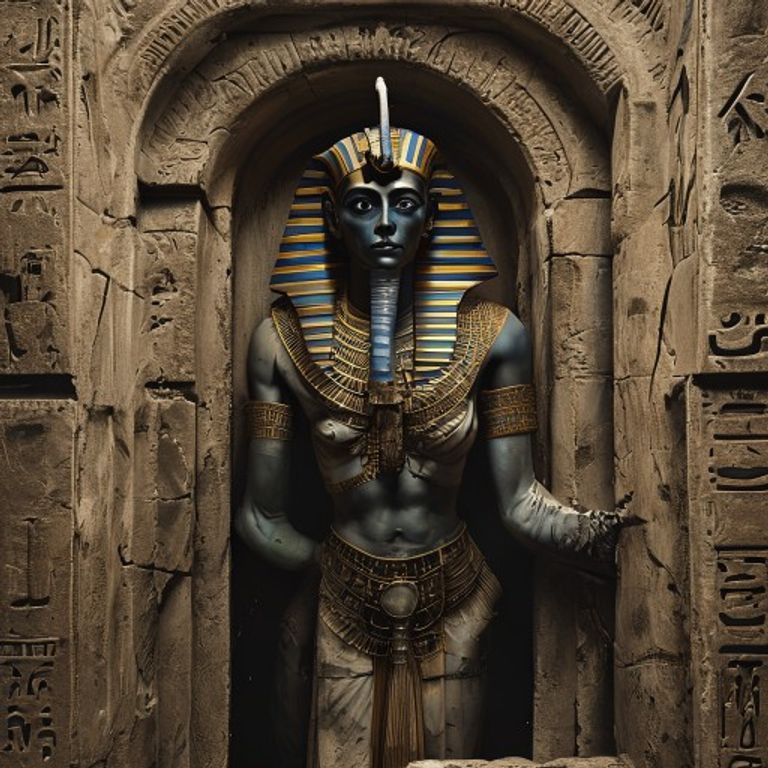
The sudden death of several archaeologists and financiers of the 1922 expedition, sparking the legend of a spiritual vengeance against anyone who dared to disturb the rest of the Egyptian pharaoh.
⚠️ Research conducted with the aid of Deep Research is subject to referential ambiguity.
🖥️ Clean HTML code using a proprietary tool.
👥 Research by Guilherme Felipe, Curation by Sílvio Lôbo
The Pharaoh's Curse: Unraveling the Mystery of Tutankhamun's Tomb
In November 1922, the discovery of the nearly intact tomb of the young pharaoh Tutankhamun in the Valley of the Kings, Egypt, was not only a milestone in archaeology but also the catalyst for a dark narrative that would haunt the popular imagination for decades: the so-called "Curse of Tutankhamun's Tomb." What began as a scientific triumph quickly turned into a cycle of seemingly inexplicable deaths, fueling speculation about divine vengeance and supernatural forces.
1. The Context and the Incident: Where, When, and How the Mystery Began
The British expedition, led by renowned archaeologist Howard Carter and funded by Lord Carnarvon, had been searching for years for the lost burial site of a relatively unknown pharaoh. After a decade of frustrating excavations, Carter finally found a staircase hidden under rubble that led to a sealed door, bearing the royal cartouche of Tutankhamun. The opening of the tomb, which took place on February 16, 1923, in ceremonies that included the presence of authorities and the press, released not only priceless treasures but also, according to popular belief, an ancient wrath.
The incident that started the curse saga was the unexpected death of Lord Carnarvon on April 5, 1923, just a few months after the tomb was opened. Carnarvon, who had returned to England to recover from the flu, succumbed to a severe infection after cutting himself while shaving, a gesture made in mourning for the death of a pet. The wound reportedly served as a portal for fatal septicemia. Shortly thereafter, the British press, eager for sensationalism, began to associate his death with the "curse" that supposedly guarded the pharaoh's tomb.
2. Timeline of Events
- 1917: Howard Carter receives sponsorship from Lord Carnarvon to search for Tutankhamun's tomb.
- November 4, 1922: Carter discovers the staircase leading to the tomb.
- February 16, 1923: Tutankhamun's tomb is officially opened in a ceremony.
- March 28, 1923: Lord Carnarvon is bitten by a mosquito (or cut while shaving, versions vary) at his home in Luxor.
- April 5, 1923: Lord Carnarvon dies in a hospital in Cairo. The official cause was septicemia and pneumonia.
- 1923-1930: Various deaths and unfortunate events involving people linked to the expedition or the tomb begin to be reported, fueling the legend of the curse.
- 1939: Howard Carter, the primary discoverer, dies of natural causes (lymphoma) at age 64.
- 20th and 21st Centuries: The "Curse of Tutankhamun's Tomb" is solidified as one of the most famous historical and paranormal mysteries.
3. Main Theories
Scientific and Forensic Theories (Rational Hypotheses)
- Fungal or Bacterial Contamination: This is the most accepted hypothesis by science. It was believed that the tomb, sealed for over 3,000 years, could contain spores of pathogenic fungi or dangerous bacteria in its closed, humid environment. Inhaling these microorganisms could have led to respiratory diseases or fatal infections. Later reports of air analyses from the tomb did not find unusual pathogens in dangerous concentrations, but the hypothesis remains a plausible explanation for some deaths.
- Toxic Agents in Decoration: Some researchers have suggested that the pigments used in the tomb's paintings and decorations could contain toxic substances, such as arsenic or lead. Handling these materials without proper protective care could have led to chronic or acute poisoning. However, there is no concrete evidence that the amounts present were lethal.
- Pre-existing Conditions Aggravated: Many of those involved with the tomb were elderly or in fragile health. Exposure to new environments, stress, and the grueling travel itself may have aggravated pre-existing medical conditions, leading to deaths that would otherwise have been natural.
- Coincidence: The timeline between the opening of the tomb and the deaths may have been mere statistical coincidence. A large number of people were involved directly or indirectly with the expedition and the tomb. In such a large group, it is natural for some deaths to occur within a relatively short period.
Alternative, Conspiracy, or Paranormal Theories
- The Divine Curse: The most widespread belief at the time, which persists to this day. According to this theory, the ancient Egyptians, fearing the desecration of their tombs, placed curses upon intruders. Carnarvon's death would be the first manifestation of this divine wrath. This belief was widely disseminated by the sensationalist press, which sought a "magical" explanation for the deaths.
- The Curse of the Guardians: A variation of the divine curse, suggesting that spiritual guardians or demonic entities protected the tomb and punished those who violated it.
- Psychological Dread: The very suggestion of the curse could have led to psychological dread in those involved, exacerbating illnesses or causing accidents. Suggestion, especially in a cultural context where superstitions were strong, can have real effects on health.
- Conspiracy Theories about the Treasure: Some more elaborate theories suggest that the curse was fabricated to protect secrets about the treasure found, or even to cover up the involvement of third parties in thefts or illicit activities related to the tomb.
4. Controversies and Blind Spots
The curse narrative thrived due to a series of factors that favored sensationalism over rigorous investigation. Controversies and blind spots include:
- Media Selectivity: The media focused disproportionately on the deaths that occurred after the tomb was opened, ignoring the fact that most of those involved lived relatively long lives. Howard Carter, the main character, lived more than 16 years after the discovery.
- Lack of Conclusive Forensic Evidence: At the time, medical examinations, although performed, were unable to unequivocally prove the cause of death. The complexity of some diseases, such as Carnarvon's septicemia, allowed darker interpretations to gain traction.
- Ignored Clues: The official investigation, focused on the archaeological discovery, did not delve into the circumstances of all deaths. The possibility of natural causes, trivial accidents, or common diseases was often sidelined in favor of the curse hypothesis.
- Conflicting Testimonies: Accounts of the events, especially regarding the moments preceding Carnarvon's death, presented some inconsistencies, fueling the idea that something more sinister was at play.
- Missing or Uncollected Evidence: The frantic activity of excavating and removing artifacts may have led to the loss or contamination of potential evidence that could have proven or refuted the presence of pathogenic or toxic agents.
5. Trivia and Legacy
The case of the Curse of Tutankhamun's Tomb transcended the field of archaeology and became a pop culture icon. Its legacy is multifaceted:
- Cultural Impact: The story of the curse inspired countless films, books, documentaries, and even songs. It shaped the popular perception of Egyptian mummies and ancient tombs, turning them into synonyms for danger and mystery.
- The Power of Sensationalism: The case is a classic case study on how media sensationalism can create and perpetuate myths, often obscuring scientific and rational facts.
- Legacy for Archaeology: Despite the dark aura, the discovery of Tutankhamun's tomb revolutionized the study of Ancient Egypt, providing an unprecedented view of the life, culture, and funerary practices of the time. The treasures found continue to be a subject of study and fascination.
- Current Status: The curse case, as a phenomenon to be investigated from a paranormal perspective, is "shelved" in the sense that there is no official reopening for investigation. However, the mystery and fascination surrounding it remain alive. Science continues to explore the possible natural causes of the deaths, seeking to demystify the legend, but the shadow of the curse hangs, irresistibly, over the boy pharaoh's tomb.
Tutankhamun's Tomb, with its shimmering treasures and its ancient secret, continues to provoke us. Whether through the wonder of human ingenuity or the echo of an ancient belief in forces beyond our understanding, the "curse" of the young pharaoh is, perhaps, the most enduring and intriguing of his relics.





