



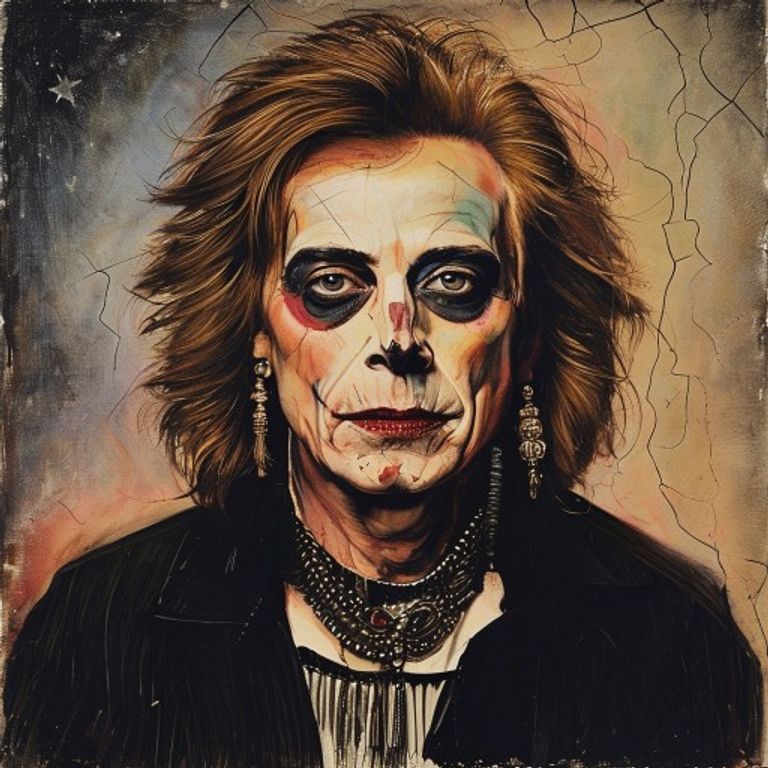
The passing of the Queen frontman in 1991 due to complications from AIDS, one day after publicly confirming the illness, sparked global mourning.
⚠️ Research conducted with the aid of Deep Research is subject to referential ambiguity.
🖥️ Clean HTML code using a proprietary tool.
👥 Research by Guilherme Felipe, Curation by Sílvio Lôbo
The Echoing Silence: Unraveling the Mysteries of Freddie Mercury's Death
The name Freddie Mercury resonates like thunder in the history of music. His unmistakable voice, magnetic stage presence, and musical genius established him as a timeless icon. However, behind the glare of the crowds and the chords that set stadiums ablaze, a shadow of mystery hangs over his final days and the exact cause of his premature departure. The case of Freddie Mercury's death, although officially declared, still carries a veil of uncertainty that has intrigued researchers and fans for decades.
The Context and the Incident: The Twilight of a Legend
The mystery surrounding the death of Freddie Mercury does not refer to a premeditated crime or an inexplicable disappearance in the traditional sense. Rather, it concerns the intrinsic complexity of a devastating disease and the voluntary silence maintained by the artist himself in his final years of life. The central incident is his death on November 24, 1991, at his residence in Kensington, London. The official cause, confirmed by medical reports and his family, was bronchopneumonia, a direct complication of AIDS, a disease he had contracted years earlier.
The "mystery" does not lie in the final cause, but in how this information was managed. Mercury, known for his private nature, chose to keep his battle against HIV/AIDS in absolute secrecy for most of the time. This discretion, while understandable to many, fueled speculation and a certain veil of inaccessibility over his final moments, leaving a vacuum that human curiosity has relentlessly sought to fill.
Timeline of Crucial Events
- Early 1980s: It is suspected that Freddie Mercury contracted HIV. He never publicly confirmed the exact date of the diagnosis, but it is widely accepted that he knew of his condition years before his death.
- Mid-1980s onwards: Mercury's health began to decline visibly. He became more reclusive, and his shows with Queen became less frequent.
- 1987: This is believed to be the year Mercury was formally diagnosed with AIDS. However, he chose to keep this information strictly private.
- 1990: The last public appearance of Freddie Mercury, in a performance with Queen at the Brit Awards. His appearance already showed the effects of the disease.
- 1991: Mercury's health deteriorated drastically. He spent most of the year at his home in Garden Lodge, surrounded by his closest loved ones.
- October 23, 1991: Freddie Mercury made a public statement confirming he was HIV-positive. The statement was made just one day before his death, minimizing the time for the news to be widely assimilated while he was alive.
- November 24, 1991: Freddie Mercury passed away at his home in Kensington, London, at the age of 45. The official cause of death was bronchopneumonia, resulting from AIDS.
The Main Theories Regarding the Progression of the Disease
Although the cause of Freddie Mercury's death is clinically clear, the "theories" surrounding the case revolve around the chronology of the disease, the hidden suffering, and the decisions made during his final years. It is crucial to distinguish between the proven medical cause and the speculations about the artist's personal experience.
1. The Medical and Scientific Theory (Proven Fact)
This is the official and scientifically grounded explanation. Freddie Mercury contracted the HIV virus and, over the years, the virus attacked his immune system, leaving him vulnerable to opportunistic infections. Bronchopneumonia is a common lung infection in individuals with advanced AIDS, where the body no longer has the capacity to fight pathogens. Medical reports and the official statement confirm this cause.
2. The Theory of Hidden Suffering and Private Struggle
This theory focuses on the emotional and physical pain that Mercury may have endured in silence. The decision not to make his condition public allowed him to maintain a certain level of control over his life and image, but it may also have meant isolation and the inability to seek public support or benefit from treatments that might have been more accessible with the disease openly declared. The speculation here lies in how aware he was of his prognosis and his process of acceptance.
3. Alternative and Speculative Theories (Without Proven Foundation)
- Speculation Theory on Transmission: While not a theory about the death itself, there is speculation about how Mercury contracted HIV. Given the era and the lifestyle that involved relationships with men and women, and the high prevalence of AIDS in the gay community in certain metropolises, sexual transmission is the most likely route. However, the lack of explicit statements fueled the silence.
- Conspiracy Theories (Highly Improbable and Without Evidence): As with many cases of deaths of prominent public figures, conspiracy theories arise suggesting murder or a cover-up. However, there is absolutely no evidence to support such allegations in the case of Freddie Mercury. His medical records and the testimony of those close to him consistently point to AIDS as the cause.
- Paranormal Theories (Outside the Scientific Realm): Some speculation may revolve around "hidden messages" or "signs" in his music or final interviews. These are subjective interpretations and have no basis in factual investigation.
Controversies and Blind Spots
The main "controversy" in the case of Freddie Mercury lies in how the information about his illness was managed, rather than in direct investigative failures. Mercury's extreme discretion created significant blind spots for the public and the media in general.
- The Timing of the Public Statement: Freddie Mercury's public statement about his HIV/AIDS condition was made one day before his death. This strategy of keeping the secret until the last moment generated discussions about the reasons behind it. Was it an attempt to protect his privacy until the end? Or a way to avoid the media circus surrounding his struggle?
- The Absence of Details on Treatment: There is no detailed public information about the treatments Mercury received. In the 1980s and early 1990s, treatments for AIDS were less effective and often experimental. The secrecy regarding his treatment regimen contributes to the mystery of his personal experience.
- Conflicting Testimonies (General): There are no conflicting testimonies about the cause of death. The "inconsistencies" that may arise are in interpretations regarding the artist's level of suffering, how aware he was of his situation at certain times, or the impact of his personal decisions on his journey.
- Ignored Clues (Not Applicable to the Cause of Death): There are no "ignored clues" in the sense of a criminal investigation. The mystery here is the lack of public information about the progression of the disease and the artist's state of mind, due to his choice of privacy.
Curiosities and Legacy
The legacy of Freddie Mercury transcends music. His premature death, linked to a disease still stigmatized at the time, had a profound impact on AIDS awareness. His courage in finally speaking about his condition, even if late, helped break down barriers and humanize the fight against the virus.
- Cultural Impact: The death of Freddie Mercury was one of the most shocking events of the 1990s. The news reverberated globally, uniting millions in mourning. The public statement of his condition, even at the end, was an important milestone for AIDS awareness, especially in an era when fear and prejudice were even more pronounced.
- Queen Post-Mercury: After his death, Queen continued in different formations, but Freddie's absence was irreplaceable. The posthumous album "Made in Heaven" (1995), composed of recordings he left behind, was an emotional tribute and a commercial success.
- Current Status of the Case: The "case" of Freddie Mercury's death is clinically resolved and closed. It is not an ongoing criminal investigation. The mystery that persists is the intimate and private nature of his struggle, leaving fans and researchers with the task of interpreting the silence and celebrating the memory of an irreplaceable artist. What remains is the legend, immortalized in his music, and the poignant reminder of a battle fought in silence.





