



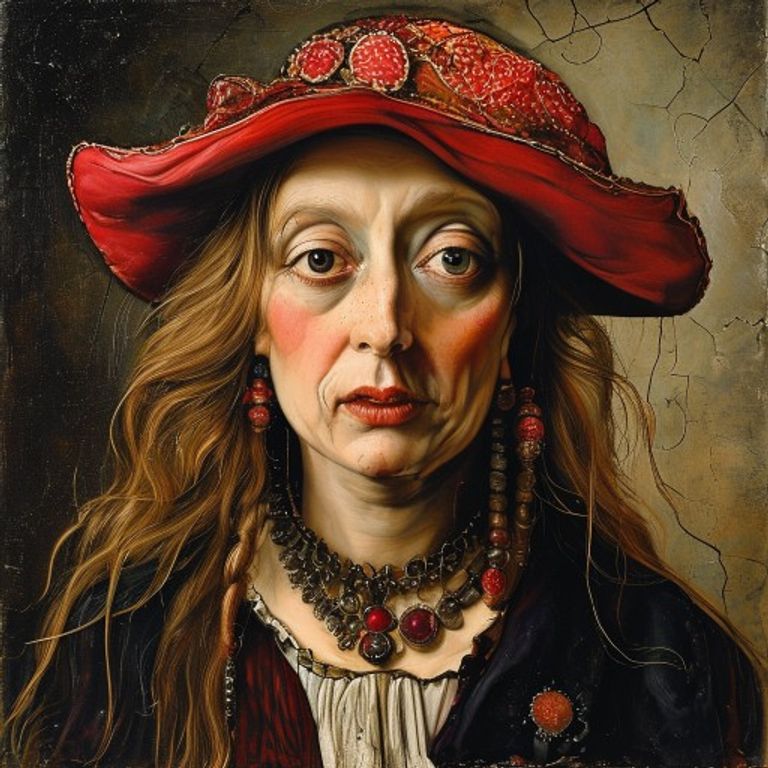
One of the most brutal criminals in American history, who confessed to dozens of murders and thousands of other crimes, claiming he hated the entire human race.
⚠️ Research conducted with the aid of Deep Research is subject to referential ambiguity.
🖥️ Clean HTML code using a proprietary tool.
👥 Research by Guilherme Felipe, Curation by Sílvio Lôbo
The Enigma of Carl Panzram: A Trail of Death and Disappearances
The name Carl Panzram echoes through the annals of American criminology as one of the darkest and most enduring enigmas of the 20th century. It is not a matter of a single crime, but a series of macabre events spanning decades, intertwining disappearances, violent deaths, and a trail of destruction that defies a definitive resolution. This article aims to unravel the layers of this mystery, separating proven facts from the speculations that still hover over Panzram's enigmatic figure.
1. The Context and the Incident: A Prolonged Shadow
The mystery surrounding Carl Panzram did not begin with a single "incident," but rather with a life dedicated to marginality and, it is suspected, acts of extreme brutality. Born in 1895, Panzram had a childhood marked by instability and violence, which, according to reports, shaped his character and led him down a path of transgression. Although his criminal record is extensive, with convictions for robbery, assault, and, notably, murder, the full extent of his criminal activities remains an open question.
The focal point of the mystery lies in the possibility that Panzram was responsible for a much larger number of deaths than those for which he was formally charged or convicted. The nature of the crimes associated with him often involved the concealment of bodies and a modus operandi that made direct attribution difficult, allowing his activities, real or alleged, to span vast periods and geographies.
2. Timeline of Key Events
Reconstructing the complete chronology of Carl Panzram's activities is a herculean challenge, given the fragmented nature of the information and the lack of detailed records for many of his active periods. However, some milestones are crucial:
- 1895: Birth of Carl Panzram in New York.
- 1910s-1920s: First records of criminal activities, including robberies and assaults. Beginning of a nomadic lifestyle.
- 1929: The arrest of Carl Panzram in Seattle, Washington, for assault and robbery. It is during this period that he allegedly confessed to crimes that were never formally investigated or confirmed.
- 1930: Conviction of Carl Panzram for the murder of Alice Ann Smith, a 17-year-old girl whose body was found with signs of torture and strangulation.
- 1931: Execution of Carl Panzram in the gas chamber in Walla Walla, Washington.
It is important to note that the 1929 arrest is often cited as a point where Panzram could have revealed more about his activities. However, the way these alleged confessions were handled by the authorities of the time is one of the many controversies of the case.
3. Main Theories
The persistence of the mystery surrounding Carl Panzram has fueled various theories, ranging from logical and police explanations to darker and paranormal speculations.
3.1. The Undetected Serial Killer (Police and Psychological Theory)
This is the most widely accepted theory among investigators and criminologists. The logic lies in the observation that Panzram's behavior, documented during his brief periods of incarceration and in later statements, indicated a deep aversion to society and a history of escalating violence. The theory suggests that during the long periods he was at liberty and moving between cities, Panzram may have operated as a serial killer, attacking and murdering individuals, often without apparent connection, and masterfully concealing his crimes.
Foundation: Panzram's statements (though unverified) and the pattern of unexplained disappearances in areas where he was present. The lack of identification for many bodies found at the time and the brutal nature of some crimes attributed to him reinforce this hypothesis.
3.2. The Lone Wolf and Revenge (Psychosocial Theory)
This theory focuses on reports about Panzram's childhood and youth, which were reportedly marked by abuse and neglect. Panzram's behavior would, therefore, be an extreme and pathological reaction to deep trauma. His crimes would not necessarily be planned in series, but rather impulsive acts of violence directed at individuals who, in some way, represented to him the oppression or injustice he himself suffered.
Foundation: Biographical reports about Panzram's childhood and the analysis of his patterns of aggression, which sometimes seemed directed at authority figures or people perceived as "privileged."
3.3. The Victim Accumulator (Conspiracy Theory)
This is one of the most speculative theories. Some argue that Panzram may have been part of a larger network of criminals, or that his actions were, in some way, covered up or utilized by others. The idea is that he did not act alone, but rather as an "executor" or "collector" of victims for darker purposes, possibly related to rituals, human trafficking, or other clandestine activities.
Foundation: The apparent ease with which Panzram moved without being detected for long periods, and the lack of clear motivation for some of his crimes, raise suspicions about possible hidden coordination.
3.4. The Guilty Ghost (Paranormal/Supernatural Theory)
Although devoid of any scientific or police basis, this theory arises from the atmosphere of mystery that surrounds Panzram. Some reports and urban folklore suggest that the spirits of his victims, or even Panzram's own spirit, still haunt locations associated with his crimes or his life. This interpretation focuses more on the psychological and cultural impact of the case than on a logical resolution.
Foundation: Urban legends, unverified reports of "sightings" or "sensations" in specific locations, and the inexplicable nature of some disappearances that were never associated with Panzram, but which popular culture tends to link to dark figures.
4. Controversies and Blind Spots
The investigation into Carl Panzram, or the lack thereof in many aspects, is full of controversies and blind spots that fuel the mystery to this day.
- Panzram's Confessions: The most critical point. During his time in prison in Seattle, Panzram allegedly confessed to several crimes, including the murders of women and children in different states. Official reports from the time indicate that many of these confessions were disregarded or treated with little rigor, whether due to skepticism, lack of resources for interstate investigations, or because they were considered mere bravado from a violent criminal. The lack of a detailed and systematic record of these confessions is one of the biggest blind spots.
- Unidentified Victims: Many bodies were found over the years in places where Panzram had been, without a firm connection being established. The absence of advanced forensic resources at the time made identification difficult, leaving an unknown number of potential victims nameless.
- Panzram's Elusiveness: Panzram's ability to disappear and reappear without being detected for long periods suggests an unusual skill in blending into society or moving with great discretion. This raises the question: did he have help? Or was his cunning simply extraordinary?
- Lost or Uncollected Evidence: Given the fragmented and often improvised nature of the investigations surrounding Panzram, it is highly probable that crucial evidence was lost, poorly documented, or simply never collected. The forensic technology of the time was rudimentary compared to current standards.
5. Curiosities and Legacy
The case of Carl Panzram has transcended the criminal realm to become an icon of the "forgotten serial killer" or the untamable criminal. His legacy is complex:
- Cultural Inspiration: The figure of Panzram, with his mystery and latent brutality, has inspired literary works, films, and debates about the nature of evil and the limits of justice. He represents the dark side of the human psyche that sometimes escapes our understanding and control.
- The Persistent Enigma: Despite being executed in 1931, the case of Carl Panzram was never truly "closed." The possibility of unsolved crimes and unfound victims hangs like a dark cloud over his history. There is no definitive "dead file" for the Panzram mystery, only a disturbing silence about his possible deeds.
- A Warning for Investigation: The Panzram case serves as a grim reminder of the importance of thoroughly investigating all leads, no matter how unlikely they may seem, and the fragility of justice when resources and attention are limited. Panzram's confessions, ignored or underestimated, represent a systemic failure that may have cost many lives.
To this day, the name Carl Panzram evokes a sense of unease. He is the ghost that haunts the statistics of unsolved crimes, a whisper in the wind about the secrets that time and negligence may bury, but which never completely disappear.





