



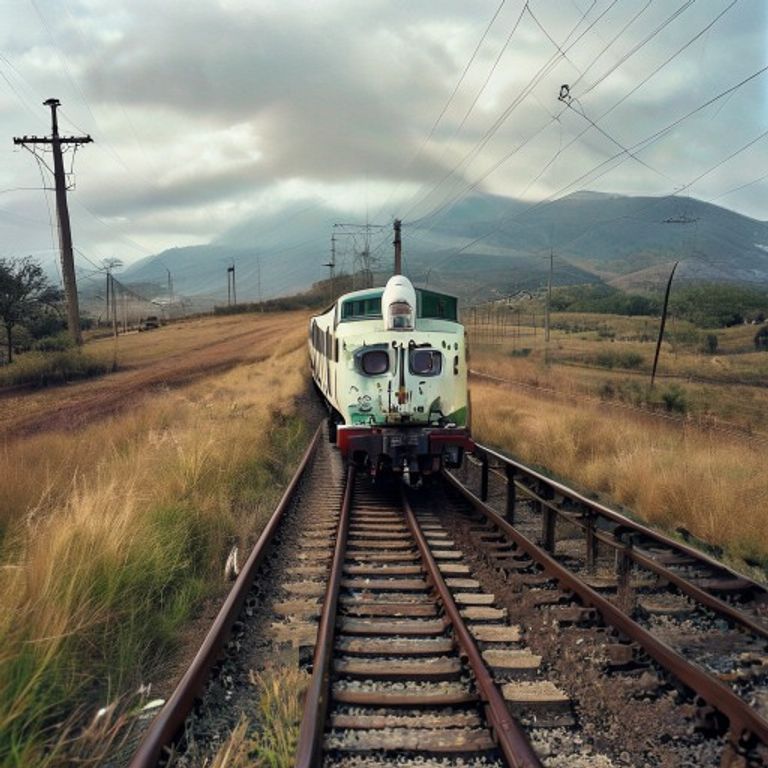
Club Atlético Ferro Carril Oeste, popularly known as "Verdolaga" or simply "Ferro," is one of the most traditional and historically rich institutions in Argentine football. Based in the traditional neighborhood of Caballito, in Buenos Aires, the club currently competes in the Primera Nacional (the second division of Argentine football), engaged in a long and dramatic institutional and sporting reconstruction to return to the elite from which it was relegated in the year 2000, after experiencing decades of glory that shaped the identity of the sport in the country.
Club History
1. Origins and Foundation: The Rail of Progress in the Heart of Caballito
The history of Ferro Carril Oeste is intrinsically linked to the railway expansion of Argentina at the turn of the 19th to the 20th century. On July 28, 1904, ninety-five employees of the Buenos Aires Western Railway company gathered with the firm purpose of founding an athletic club that would promote recreation and sports practice for railway workers.
Under the leadership of figures such as David Simpson, who became the institution's first president, the club was born under the official name Club Atlético del Ferrocarril Oeste de Buenos Aires. The strong British influence in the railway's administration dictated the club's first steps, from the colors adopted (initially maroon and green, inherited from the locomotives and signaling colors, later consolidating into green and white) to the acquisition of land for sports practice.
In 1905, Ferro Carril Oeste inaugurated its stadium, the Estadio Arquitecto Ricardo Etcheverri, located in the geographical heart of Buenos Aires, in the Caballito neighborhood. It is the oldest football stadium in Argentina still in use at the same location and one of the oldest in the Americas. Initially built with wooden stands—a direct legacy of English railway engineering—the stadium became an urban landmark and a symbol of resistance over time.
During the amateur era of Argentine football, Ferro quickly gained prominence. In 1912, the club earned promotion to the Elite Division of the Argentine Football Association (AFA), establishing itself as a respected competitor and a multi-sport powerhouse. The club was not limited to football: athletics, pelota paleta, basketball, and table tennis soon turned the Caballito headquarters into a hub of community and sporting activity.
2. Golden Eras and Historic Campaigns: The Timoteo Griguol Revolution
While the decades from the 1930s to the 1970s were marked by fluctuating campaigns, alternating between relegations and returns to the first division, the 1980s reserved Ferro Carril Oeste's most glorious era, transforming the club into a model of tactical vanguard and institutional excellence on a global scale.
The turning point occurred in 1979 with the hiring of technical director Carlos Timoteo Griguol. Affectionately known as "El Maestro," Griguol revolutionized Argentine football by applying concepts of scientific physical preparation, iron tactical discipline, high pressing, and ultra-fast offensive transitions. Under the physical supervision of the legendary trainer Luis María Bonini, Ferro transformed into a "running and playing machine."
In the 1982 National Championship, Ferro Carril Oeste became champion undefeated. In 22 matches played, the team totaled 16 wins and 6 draws, scoring 50 goals and conceding only 13. The consecration came in the final against Quilmes, with a 2-0 victory in the second leg in Caballito.
Two years later, in 1984, Ferro repeated the feat of genius by winning its second First Division title (National Championship). In the historic final, they faced the powerful River Plate. In the first leg, at the Monumental de Núñez, Ferro delivered a resounding 3-0 win. In the second leg, in Caballito, the 1-0 victory sealed the national double, consolidating that team as one of the most efficient and brilliant in the history of South American football.
Ferro's solidity in the 80s was not limited to national titles. The club was runner-up in the 1981 Metropolitano (losing by just one point to Diego Maradona's Boca Juniors) and the 1981 Nacional, in addition to another runner-up finish in the 1984 Metropolitano. In the Copa Libertadores, Ferro represented Argentina with pride in the 1983 and 1985 editions.
Off the field, the success was even greater. In 1988, the club had more than 45,000 members and dozens of active sports disciplines. Such civil and sporting success earned the club the prestigious Pierre de Coubertin Prize, awarded by UNESCO in 1988, recognizing Ferro Carril Oeste as one of the most exemplary social and sporting institutions in the world.
3. Context and Current Moment: The Long Fight for the Return
The 1990s marked the beginning of a severe financial and administrative crisis at the club. The model of a mass social and sports club suffered immensely from the neoliberal policies of the time in Argentina. Indebted and unable to maintain the level of investment in professional football, Ferro entered a technical decline.
In the year 2000, the club suffered the sporting "coup de grace": relegation to the second division, followed immediately by a drop to the Primera B Metropolitana (third division) in 2001. In the same period, the Argentine justice system declared the club bankrupt (quiebra), and it began to be managed by a judicial fiduciary body.
The salvation of Ferro Carril Oeste came from its most loyal base: the fans and members. Through massive mobilizations, donations, and the creation of support cooperatives, the Caballito community prevented the club's headquarters and historic stadium from being auctioned off to the real estate market. In December 2014, after 12 years of judicial intervention, the members finally regained democratic control of the club.
Currently, Ferro competes in the Primera Nacional. The current moment is characterized by heavy investments in the club's infrastructure, with the complete modernization of the Estadio Ricardo Etcheverri, which had its old wooden stands replaced by modern concrete structures (such as the new Platea Sur). In football, the team has been close to achieving promotion. In 2021, the club was very close to returning to the elite, but was eliminated in an extremely controversial playoff semifinal against Quilmes, after a disputed penalty called in the final minutes. Recently, in the 2023 and 2024 seasons, the club remained competitive, fighting for qualification positions for the Reducido (promotion playoff), under the constant pressure of its fans, who demand the return of the "true giant" to the Argentine elite.
4. Gallery of Immortals: Idols and Legendary Coaches
- Carlos Timoteo Griguol: The greatest coach in the club's history. Griguol not only brought titles to Ferro but established an ethical and professional standard that shaped generations of athletes. He prioritized the education of young players, requiring them to finish their secondary studies before debuting in the first team.
- Gerónimo "Cacho" Saccardi: The ultimate symbol of "Verdolaga" passion. A player of unmatched grit, Saccardi was a central midfielder who defended Ferro's colors with his heart. After ending his career, he became the club's coach. He passed away in 2002, but his image remains alive on flags, songs, and a statue erected at the club's headquarters.
- Alberto "Beto" Márcico: The brain of the 1982 and 1984 championship teams. An attacking midfielder with refined technique, superb vision, and dribbling ability that enchanted Argentine football before shining at Toulouse in France and Boca Juniors.
- Adolfino Cañete: A Paraguayan midfielder of extreme elegance and precision in passing. He was the ideal partner for Márcico in the creative engine of the 80s Ferro.
- Oscar Garré: A left-back of extreme consistency and defensive solidity. Garré is the only player in the history of Ferro Carril Oeste to become a World Champion with the Argentine National Team while playing for the club, being part of the winning squad at the 1986 World Cup in Mexico.
- Héctor Cúper: A central defender of unquestionable leadership during the golden era of 1982 and 1984. Later, he achieved world fame as a coach of major European teams (such as Valencia and Internazionale).
5. Rivalries: The Western Classic and Porteno Geography
The greatest and most visceral rival of Ferro Carril Oeste is Club Atlético Vélez Sarsfield, with whom they play the historic Clásico del Oeste (Western Classic).
The origin of the rivalry dates back to the beginning of the 20th century and has a strong geographical and social basis. Ferro, established in Caballito, represented the central portion of Buenos Aires and the railway workers of a predominantly British-owned company. Vélez Sarsfield, based in Liniers (and previously in Villa Luro), represented the city's expansion toward the deep west, also along the Sarmiento railway line. As both clubs grew and competed for national titles, the sporting rivalry intensified.
The first official match took place in 1920. During the 1980s and 1990s, the classic reached its peak of drama, with both teams competing for the top positions in Argentine football and presenting massive social structures that rivaled each other in number of members and additional sports activities. Since Ferro's relegation in 2000, the classic has not been played officially in the First Division, which has generated enormous collective nostalgia in Buenos Aires and turned the reunion into one of the most anticipated moments of national football.
In addition to Vélez, Ferro maintains regional and historical rivalries of lesser intensity with clubs such as All Boys, Platense, and Argentinos Juniors, matches often dubbed neighborhood classics due to their geographical proximity on the map of the Argentine capital.
6. Honors: Gallery of Titles and Achievements
Below is the official list of notable national titles for Ferro Carril Oeste in professional and amateur football:
| Competition / Category | Titles | Years of Achievement |
|---|---|---|
| Primera División (National Championship) | 2 | 1982 (Undefeated), 1984 |
| Second Division / Primera B Nacional | 5 | 1958, 1963, 1969, 1970, 1978 |
| Primera B Metropolitana (Third Division) | 1 | 2002/03 |
| Official National Cups (Copa de Competencia Adolfo Bullrich) | 2 | 1912, 1913 (Amateur Era) |
7. Period Curiosities and Picturesque Facts
- The Green Clockwork Orange: In 1974, under the influence of Johan Cruyff's revolutionary Dutch National Team at the World Cup in Germany, Ferro Carril Oeste temporarily adopted an entirely orange away kit with green details, an aesthetic boldness rarely seen on traditional Argentine pitches.
- The Cradle of National Rock: The Estadio Ricardo Etcheverri is not just a temple of football. During the 1980s and 1990s, the Caballito pitch hosted historic concerts by bands that defined Argentine rock, such as Sui Generis (2000 reunion), La Renga, and Los Piojos, turning the stadium into a cultural icon of Porteno youth.
- The Goalkeeper's Unbeaten Record: During the preparation for the great achievements of the 80s, Ferro's goalkeeper, Carlos Barisio, set a historic record in the Argentine First Division in 1981: he went 1,075 minutes without conceding a goal, a mark of defensive solidity driven by Griguol's rigid tactical scheme.
Sources Researched
- Club Atlético Ferro Carril Oeste - Official Website. Available at: <https://www.ferrocarriloeste.org.ar>.
- Argentine Football Association (AFA) - Championship History.
- "El Gráfico" - Historic editions from 1982 and 1984 regarding Ferro Carril Oeste's achievements.
- "Clarín Deportes" - Coverage of the remodeling of the Ricardo Etcheverri Stadium and the campaign in the Primera Nacional (2023/2024).
- RSSSF (Rec.Sport.Soccer Statistics Foundation) - Argentina - Domestic Championships.





