



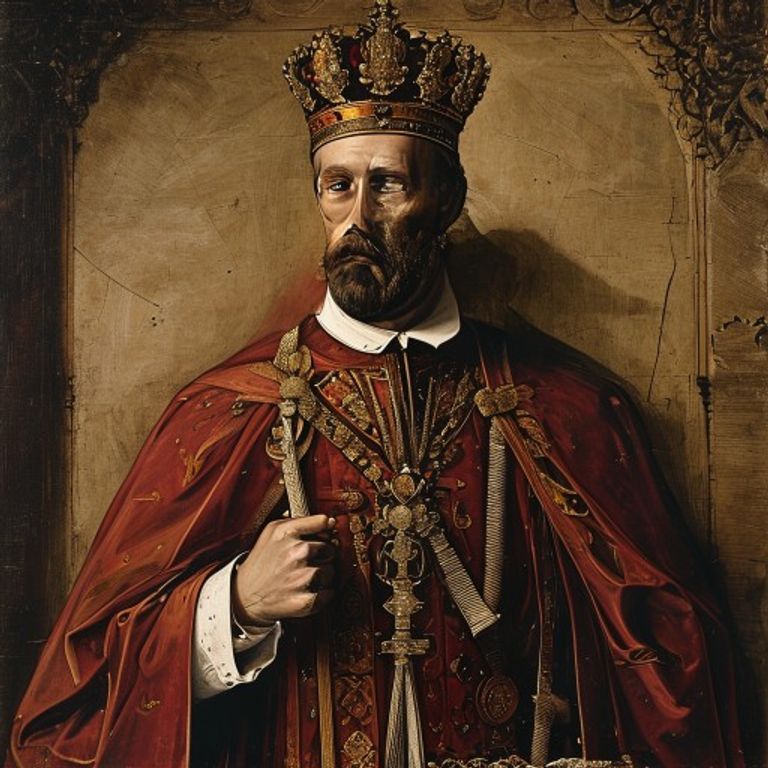
The 1914 Sarajevo attack that served as the catalyst for the start of World War I, triggering a complex system of military alliances.
⚠️ Research conducted with the aid of Deep Research is subject to referential ambiguity.
🖥️ Clean HTML code using a proprietary tool.
👥 Research by Guilherme Felipe, Curation by Sílvio Lôbo
The Shot That Set the World Ablaze: Unraveling the Assassination of Archduke Franz Ferdinand
The scorching sun of June 28, 1914, bathed the streets of Sarajevo, the capital of Bosnia, then under Austro-Hungarian rule. An official visit, intended to be a spectacle of power and diplomacy, quickly turned into the spark for a conflict that would redefine the 20th century. The assassination of Archduke Franz Ferdinand, heir to the Austro-Hungarian throne, and his wife, Duchess Sophie, was not just a heinous crime, but an enigma that, decades later, still resonates with uncertainties and conspiracy theories. This article investigates the facts, doubts, and legacy of an event that lit the fuse of World War I.
1. The Context and the Incident: A Fatal Visit
The presence of Archduke Franz Ferdinand in Sarajevo on St. Vitus Day (Vidovdan), a date of profound national significance for Serbs, was perceived by many as a provocation. The Archduke, known for his ideas regarding Slavic autonomy within the empire, was not universally liked even in Vienna. The city was seething with nationalist tensions, fueled by the annexation of Bosnia by Austria-Hungary in 1908 and the growing influence of Serbia in the Balkans, which aspired to unite all South Slavs.
The initial plan involved a modest motorcade, but security concerns led to the inclusion of more cars and soldiers. The route, which was supposed to be secret, ended up being leaked, making the occasion a predictable target. Several young Serbian nationalists, recruited by the secret organization "Black Hand," planned the attack. The incident itself occurred after a first failed attempt in the morning, when a bomb thrown by Nedeljko Čabrinović exploded under the wrong car, injuring several spectators.
Instead of returning immediately, the Archduke decided to visit the wounded in the hospital. It was during this change of plans, in a moment of apparent confusion and reorganization, that fate intervened. The driver of the Archduke's car made a wrong turn, stopping exactly in front of Gavrilo Princip, one of the conspirators who, disillusioned by the morning's failure, had taken refuge in a nearby delicatessen. Princip seized the unique opportunity and, with two shots, took the lives of the Archduke and the Duchess.
2. Timeline of Events: The Circle of Fire
A precise reconstruction of events is crucial to understanding the complexity of the case:
- June 28, 1914, morning: Arrival of Archduke Franz Ferdinand and Duchess Sophie in Sarajevo.
- Approximately 10:00 AM: First assassination attempt. Nedeljko Čabrinović throws a bomb that hits the car behind the Archduke's, injuring several people. Čabrinović attempts suicide but is detained.
- Approximately 10:30 AM: The Archduke arrives at the Sarajevo City Hall. During the mayor's speech, the Archduke expresses his dissatisfaction with the attacks and the lack of security.
- Approximately 11:00 AM: The Archduke decides to visit the hospital where the victims of the attack are being treated.
- Approximately 11:15 AM: The motorcade departs from City Hall. The driver of the Archduke's car misses the planned route, turning onto Franz Joseph Street toward the city center.
- Approximately 11:15 AM: The Archduke's car stops in front of a shop where Gavrilo Princip was located. Princip fires at the couple.
- Shortly after 11:30 AM: Archduke Franz Ferdinand and Duchess Sophie are declared dead. Gavrilo Princip is arrested.
3. Main Theories: Between Cause and Consequence
The official Austro-Hungarian investigation, focused on establishing Serbia's guilt, quickly reached the conclusion that the attack was a plan orchestrated by the Serbian government with the support of the "Black Hand" organization. However, the breadth of theories regarding the case goes far beyond what was officially accepted.
3.1. Official and Police Theory: The Black Hand and the Shadow of Serbia
This theory, widely documented in official reports and based on the trials of the conspirators, points to the "Black Hand," a Serbian nationalist secret society, as the primary executor of the plan. It is suspected that high-ranking figures in the Serbian army and government, such as Colonel Dragutin Dimitrijević (Apis), head of Serbian military intelligence, provided weapons, training, and logistical support to the young shooters. The logic lies in the deep animosity between Serbia and the Austro-Hungarian Empire, and the Serbian desire to liberate the South Slavs from Austrian rule.
- Evidence: Testimonies from the arrested conspirators, the seizure of weapons and explosives indicating Serbian origin, and the subsequent declaration of war by Austria-Hungary on Serbia, with an ultimatum containing demands that violated Serbian sovereignty, suggesting a pre-prepared pretext.
3.2. Conspiracy Theories: Vienna and Berlin in the Game
Some alternative theories suggest that the assassination may have been orchestrated or, at the very least, permitted by elements within the Austro-Hungarian or German government itself. The argument is that some conservative sectors of the Austro-Hungarian Empire saw the Archduke as an obstacle to their ambitions, especially his ideas about a tripartite monarchy, which would give more autonomy to the Slavs, threatening the German balance of power.
- Logic: The idea that a catastrophic event might be necessary to justify a preventive war against Serbia and assert imperial power. There is speculation that deliberate security failures facilitated the assassins' access.
- Points of Doubt: The lack of concrete evidence directly linking Austrian or German officials to the planning of the attack. Official reports were emphatic in pointing to Serbia.
3.3. Paranormal or Inexplicable Theories: The Wind of Fate
Although less substantial and lacking factual support, some interpretations seek almost mystical elements or extreme coincidence. The series of unlikely events that culminated in the fateful encounter between Princip and the Archduke's car — the bomb that failed, the decision to visit the wounded, the wrong turn — are, for some, indicative of a greater force at work.
- Logic: The belief in predestination or the action of hidden forces that shape historical events.
- Criticism: This line of thinking transcends the field of journalistic investigation and leans toward metaphysics, lacking any empirical basis.
4. Controversies and Blind Spots: Gaps in the Narrative
Despite investigative efforts, the case of the assassination of Archduke Franz Ferdinand carries controversies and blind spots that fuel debate to this day.
- Inconsistencies in Official Investigations: The Austro-Hungarian investigation was quick to blame Serbia, but the depth of the Serbian government's involvement remained, and still remains, a subject of debate. Colonel Dimitrijević, a central figure in the theory of a state-sponsored plan, was executed in 1917 on trumped-up charges, which raises suspicions about the real motivation behind his trial.
- Ignored or Underestimated Clues: The first assassination attempt with the bomb should have been a more forceful warning. The decision to proceed with the route, even after the incident, and the choice of an unplanned path demonstrated gross security failures.
- Conflicting Testimonies: Accounts of the exact moments of the second attack, the dynamics of the car's stop, and the guards' reactions vary in some details, as is common in situations of panic and chaos.
- Missing or Undisclosed Evidence: There is always the possibility, in historical cases of great political relevance, that important documents have been destroyed, hidden, or kept secret for reasons of State, even after decades. Declassified archives over the years have shed more light, but have never completely dissipated all the shadows.
5. Curiosities and Legacy: A Crime That Set the World Ablaze
The assassination of Archduke Franz Ferdinand is one of the most studied events in modern history, not only for its direct consequences but for its intricate nature and the symbolism it carries.
- The Legacy of Multiple Causes: Although the assassination was the immediate trigger, World War I was the result of a complex web of military alliances, imperialism, exacerbated nationalism, and an arms race that had been unfolding for years. The attack was the spark that ignited a powder keg.
- Current Status: The criminal case was resolved in its own way at the time, with the conviction of those involved. However, the political and historical question regarding the degree of responsibility of the Serbian government and the underlying motives for the decisions made by Vienna and Berlin continue to be the subject of academic debate and historical investigation. There is no reopening of the case in a judicial sense, but the analysis and reinterpretation of the facts have never ceased.
- Cultural Impact: The image of Gavrilo Princip, the young assassin, has become an ambiguous symbol, venerated by some as a national hero and condemned by others as a terrorist. The story of the assassination has been portrayed in countless books, films, and documentaries, each attempting to shed its own light on one of the most decisive moments in human history. The car in which the couple was assassinated, a Gräf & Stift, is today a museum piece in Vienna, a silent witness to the tragedy.
The assassination of Archduke Franz Ferdinand remains a grim reminder of how seemingly isolated events, fueled by hatred, ambition, and latent tensions, can trigger global cataclysms. The questions about what really happened behind the scenes and how inevitable the outcome was continue to haunt us, proving that some historical mysteries, no matter how much we investigate them, always hold a fragment of shadow.





