



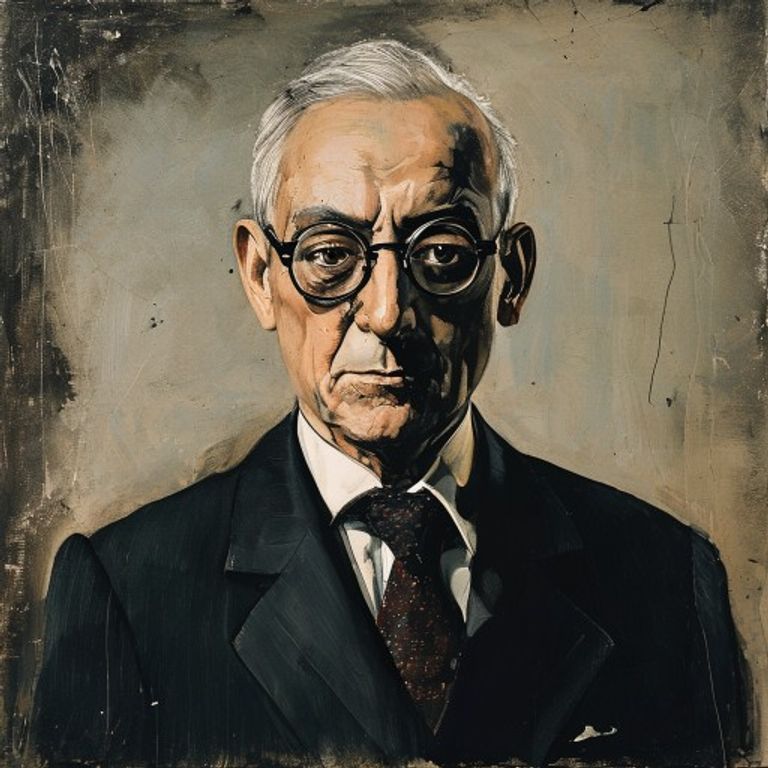
The death of the activist leader in 1965 in New York by members of the Nation of Islam, which occurred after he adopted a more inclusive view of human rights.
⚠️ Research prepared with the aid of Deep Research is subject to referential ambiguity.
🖥️ Clean HTML code using a proprietary tool.
👥 Research by Guilherme Felipe, Curation by Sílvio Lôbo
The Assassination of Malcolm X: A Legacy of Unanswered Questions
February 21, 1965, a sunny Sunday at the Audubon Ballroom in New York, was supposed to be the stage for an inspiring speech. Instead, it became the scene of one of the most shocking and enigmatic assassinations in recent American history: that of the iconic Black leader Malcolm X. What followed was not just the loss of an influential voice, but the beginning of a persistent mystery, filled with inconsistencies, suspicions, and a shadow of conspiracy that lingers to this day.
1. The Context and the Incident: Where, When, and How the Mystery Began
Malcolm X, once a fervent spokesperson for the Nation of Islam (NOI), had distanced himself from the organization and formed his own, the Organization of Afro-American Unity (OAAU). This rift was not amicable and generated significant tensions, both within the NOI and between him and former associates. The OAAU sought a broader approach to the civil rights struggle, with an emphasis on Black self-determination and international cooperation. It was in this new phase of his life and activism that he found himself when he was brutally silenced.
The incident occurred around 3:30 PM. Malcolm X was on the stage of the Audubon Ballroom, preparing to speak, when two men approached him. One of them, according to reports, struck him with a weapon in the chest, while the other fired repeatedly. Witnesses described scenes of panic and chaos. Despite efforts to save him, Malcolm X was declared dead at the hospital shortly thereafter. The crime scene, the site of an attack on the life of a public figure of such magnitude, would become the epicenter of a complex and, for many, flawed investigation.
2. Timeline of Events
- February 21, 1965, 3:30 PM: Malcolm X is shot at the Audubon Ballroom in New York.
- Immediately after the attack: Panic ensues. One of the shooters is initially detained by bystanders but escapes before the police arrive.
- Shortly after: Malcolm X is taken to Columbia Presbyterian Medical Center, where he is declared dead.
- Hours later: Police begin the investigation, focusing on individuals linked to the Nation of Islam.
- February 26, 1965: Talmadge Hayer (also known as Thomas Johnson) is arrested and charged with involvement in the assassination.
- March 1966: Hayer is tried and convicted. During the trial, he names two other accomplices, Norman 3X Butler and Leon 1X Washington, both members of the Nation of Islam.
- 1970: Norman 3X Butler and Leon 1X Washington are arrested and charged with the assassination of Malcolm X.
- 1970: Butler and Washington are tried and convicted based, in large part, on Hayer's testimony.
3. Main Theories
The assassination of Malcolm X gave rise to a myriad of theories, some anchored in official investigations, others floating in the realm of speculation and conspiracy.
3.1. The Official Version: Nation of Islam Revenge
The police investigation and subsequent trials pointed to the Nation of Islam as the primary instigator of the crime. The logic behind this theory lies in the bitter rift between Malcolm X and the organization. After his departure, Malcolm X became a vocal critic of the NOI and its leader, Elijah Muhammad. It is believed that the organization saw him as a threat and a traitor, justifying revenge.
- Evidence: The main pillar of this theory is the testimony of Talmadge Hayer, who confessed to being present and shooting Malcolm X, in addition to naming the other two individuals as accomplices. Hayer was a member of the NOI. The atmosphere of hostility between Malcolm X and the NOI at the time is a proven fact.
3.2. The Conspiracy Hypothesis: FBI and/or CIA Involvement
One of the most widespread conspiracy theories suggests that government agencies, such as the FBI (Federal Bureau of Investigation) and/or the CIA (Central Intelligence Agency), orchestrated the assassination. The motivation would be to silence a voice that was becoming increasingly influential and dangerous in the eyes of the establishment, especially considering the radicalization of the civil rights movement and the growing concern over Malcolm X's influence in Black communities and abroad.
- Arguments: Proponents of this theory point to the apparent negligence of security at the Audubon Ballroom, the rapid escape of one of the shooters, and the subsequent difficulty in gathering conclusive evidence against all those involved. Declassified FBI reports revealed that the agency extensively monitored Malcolm X, and documents suggest an interest in "neutralizing" him in some way. However, a direct link to the assassination has never been proven.
3.3. "Traitor" and "Infiltrator" Theories
Other strands of conspiracy theory focus on the idea that people close to Malcolm X could have played a role, either as informants or facilitators of the attack. The proximity of the assassination to the formation of his new organization and his international travels could have created opportunities for enemies to reach him.
- Arguments: The failure to anticipate or prevent the attack, despite Malcolm X having received death threats, raises questions about the effectiveness of his personal security and whether someone was sabotaging his protection efforts.
3.4. Paranormal or Supernatural Hypotheses (Marginal)
Although these are the theories least supported by concrete evidence, in some speculative circles, hypotheses involving supernatural forces or energies arise. However, these are widely disregarded by serious researchers and historians.
- Arguments: Generally based on symbolic or mystical interpretations of events, without any material or testimonial support.
4. Controversies and Blind Spots
The official investigation into the assassination of Malcolm X is far from immune to criticism and blind spots, which fuel conspiracy theories.
- The Fugitive Shooter: One of the shooters, identified by witnesses, was momentarily detained by the public but managed to escape before the police arrived. The identity and whereabouts of this individual remain unknown, raising questions about the effectiveness and priority of immediate capture.
- Security Failures: Despite Malcolm X having received death threats, security at the Audubon Ballroom was notoriously fragile. The presence of two firearms and the ease with which the assassins approached the stage raise serious doubts about the preparation and execution of the security plan.
- Conflicting Testimony and Pressure to Confess: The credibility of the main testimony, that of Talmadge Hayer, has been questioned over the years. Reports suggest he may have been pressured by authorities to name Butler and Washington in exchange for benefits. Furthermore, the exact identity of the shooters at the time of the event is confusing in some initial reports.
- Missing or Lost Evidence: The lack of meticulous collection of certain evidence, the rapid cleaning of the crime scene, and the difficulty in tracking all the weapons used contributed to the atmosphere of uncertainty.
- The Nation of Islam Connection: Although the NOI was widely implicated, the official investigation never managed to conclusively prove direct involvement of its leaders, such as Elijah Muhammad, in orchestrating the attack. The conviction of the three individuals was based primarily on Hayer's testimony.
- FBI Documents: The partial declassification of FBI documents revealed that the agency was aware of the threats against Malcolm X and possessed information about members of the Nation of Islam. However, the actions taken (or lack thereof) to protect him remain a point of contention.
5. Trivia and Legacy
The assassination of Malcolm X left an indelible mark on history, transforming him into a martyr for many and a symbol of the fight for social justice.
- The Legacy of Struggle: The death of Malcolm X, instead of silencing him, amplified his message. His philosophy, his critique of systemic racism, and his defense of Black self-sufficiency continue to inspire activists and thinkers around the world.
- The Documentary "Who Killed Malcolm X?": In 2020, a Netflix documentary with this title re-examined the case, raising new evidence and reinforcing the possibility of third-party involvement beyond the Nation of Islam. The documentary generated renewed public interest in the case.
- Case Review: In 2021, due to new evidence presented by independent investigators and the documentary's production, Manhattan District Attorney Cyrus Vance Jr. announced the reopening of the case. This decision marks a significant moment in the search for more concrete answers.
- Cultural Symbolism: The Audubon Ballroom, the site of the assassination, has become a place of pilgrimage and reflection. The image of Malcolm X is featured on murals, t-shirts, and in speeches by contemporary leaders, symbolizing resistance and the pursuit of equity.
- The Ongoing Debate: More than half a century after his death, the assassination of Malcolm X remains an enigma. Questions about who really conspired and executed the plan, and the level of responsibility of each actor, continue to echo, reminding us of the complexity of civil rights struggles and the shadows that can obscure the truth.





