



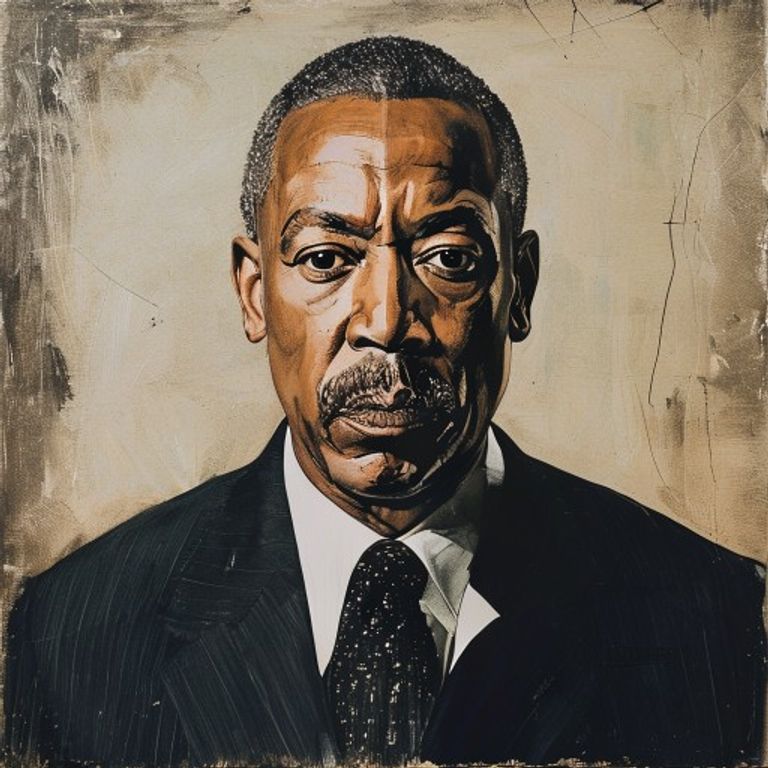
The 1968 attack in Memphis that claimed the life of the greatest leader of the civil rights movement in the US, triggering riots in several American cities.
⚠️ Research prepared with the aid of Deep Research is subject to referential ambiguity.
🖥️ Clean HTML code using a proprietary tool.
👥 Research by Guilherme Felipe, Curation by Sílvio Lôbo
The Silent Echo of Memphis: The Assassination of Martin Luther King Jr. and the Ghosts of Uncertainty
On April 4, 1968, the United States witnessed the irreparable loss of one of its most powerful voices. Martin Luther King Jr., the iconic leader of the civil rights movement, was assassinated by a single fatal shot while on the second-floor balcony of the Lorraine Motel in Memphis, Tennessee. The shot, fired from a bathroom in a rooming house across the street, reverberated not only through the city but across the entire world, leaving an immense void and a trail of questions that, decades later, still echo in the silence of unresolved history.
1. The Context and the Incident: Where, When, and How the Mystery Began
King's assassination occurred at a time of profound social and political turmoil in the United States. The civil rights movement, led by King, was facing violent resistance, and the country was mired in heated debates over racial equality, the Vietnam War, and poverty. King was in Memphis to support a strike by Black sanitation workers, demonstrating his ongoing commitment to social justice in its various forms. The night of April 4 found him in a moment of rare contemplation on the balcony of the Lorraine Motel, a location that would forever become the stage for one of the most striking crimes of the 20th century. The shot echoed, and with it, one of the greatest mysteries of modern America began.
2. Timeline of Events: A Chronological Reconstruction of Key Facts
- April 3, 1968: Martin Luther King Jr. arrives in Memphis, Tennessee, to support the sanitation workers' strike.
- April 3, 1968 (night): King delivers his iconic "I've Been to the Mountaintop" speech, expressing a premonition about his own mortality.
- April 4, 1968 (early afternoon): King meets with friends at the Lorraine Motel.
- April 4, 1968 (approximately 6:01 PM): A single shot is fired. Martin Luther King Jr. is struck in the face by a rifle bullet.
- April 4, 1968 (after the shot): King is rushed to St. Joseph's Hospital, where he is pronounced dead.
- April 4, 1968 (a few hours later): Police find a Remington .30-06 caliber rifle abandoned in a bathroom of the Bessie Brewer rooming house across from the motel. A box of bullets and a hat are also found.
- April 5, 1968: Police issue an arrest warrant for James Earl Ray, identifying him as the prime suspect.
- June 8, 1968: James Earl Ray is arrested at Heathrow Airport in London while attempting to board a flight to Europe with a fake passport.
- March 10, 1969: James Earl Ray pleads guilty to the assassination and is sentenced to 99 years in prison. He withdraws his confession days later.
- 1993: The King family, in a civil trial, argues that Ray did not act alone and that there was a conspiracy. A Memphis jury agrees.
- 1998: The U.S. House Select Committee on Assassinations (HSCA) concludes that King was likely the victim of a conspiracy, although it stated that James Earl Ray was the shooter.
3. Main Theories: Possible Explanations
The official narrative points to a lone gunman, James Earl Ray. However, the nuances and controversies surrounding the case have opened the door to a range of theories:
3.1. The Official Theory: The Lone Wolf
This is the version supported by the initial investigation and the conviction of James Earl Ray. The logic is simple: Ray, a racist white fugitive, acted alone, driven by hatred and resentment. Physical evidence, such as the rifle found and Ray's partial fingerprints, supports this thesis. Police reports and Ray's initial testimony (though later retracted) reinforce this line.
3.2. Conspiracy Theories: Multiple Actors
Several conspiracy theories point to the participation of other entities:
- The FBI and J. Edgar Hoover: For years, J. Edgar Hoover's FBI relentlessly pursued King, considering him a threat to national security. Declassified COINTELPRO files revealed coordinated efforts to discredit and destabilize the civil rights movement and its leaders. The theory suggests that the FBI could have orchestrated or facilitated the assassination to silence King. The logic lies in Hoover's deep animosity toward King and the FBI's capacity to operate in secret.
- The Mafia: Some investigators and theorists suggest that the Mafia, bothered by King's support for federal laws that could dismantle their operations, hired the assassin. This theory is based on the connections of some Mafia members to political figures and the ability to orchestrate complex crimes.
- U.S. Government Agents (CIA, etc.): Similar to the FBI theory, other government agencies, concerned about King's influence and his potential to destabilize the country (especially amidst the Cold War), could have been involved. The logic here is the protection of national interests as perceived by these agencies.
- Southern Government/Confederate Agents: The possibility of an organized racist group, operating with the knowledge or complicity of local or state authorities in the South, is also considered. The fierce resistance to civil rights in some parts of the South may have created an environment conducive to such a conspiracy.
3.3. Alternative or Less Likely Theories
- The Role of Carlos Marcello: The name of Carlos Marcello, a prominent New Orleans Mafia boss, has been raised in connection with the assassination. The allegation, supported by informant testimony and parallel investigations, suggests that Marcello could have hired or orchestrated the assassination. The logic is based on his reputation and power within the organized crime underworld.
- Multiple Shooter Hypotheses: Some ballistic analyses and testimonies suggest the possibility of more than one shooter, or that the shot that killed King did not come from the Bessie Brewer building. This hypothesis, while less supported by direct physical evidence, attempts to explain inconsistencies in the investigations.
- Paranormal (extremely speculative): Although without scientific basis, some individuals have speculated about supernatural or energetic influences on the tragedy. This line is widely dismissed by serious investigation and the scientific community.
4. Controversies and Blind Spots: Inconsistencies in the Investigation
The King case is a labyrinth of unanswered questions and obscure details:
- Ray's Confession: James Earl Ray confessed to being the assassin but retracted his confession days later, claiming he had been forced to confess and that he was not the shooter. He claimed to have been a "scapegoat" and that he was manipulated by larger forces.
- The Speed of the Official Investigation: The identification and capture of Ray were surprisingly fast, raising suspicions about the haste to close the case.
- Questionable Physical Evidence: The exact origin of the rifle, the absence of Ray's full fingerprints on the weapon, and inconsistencies in the traces found raised doubts about Ray's direct and exclusive link to the crime.
- Ignored Leads and Conflicting Testimonies: Reports indicate that several leads and testimonies that could point to a conspiracy were neglected or minimized by the official investigation. There were reports of other people being observed at the scene or suspicious behavior in the vicinity that were not properly investigated.
- The HSCA Report: The 1998 report by the House Select Committee on Assassinations concluded that King was "probably the victim of a conspiracy," despite stating that Ray was the shooter. This official ambiguity further fueled conspiracy theories.
- The Role of "Raul": Ray frequently mentioned an individual named "Raul" whom he claimed was the true orchestrator and who had used him. The identity and role of "Raul" were never fully elucidated.
5. Curiosities and Legacy: Cultural Impact and Current Status
The assassination of Martin Luther King Jr. shocked the world, triggering a wave of revolt and mourning in the United States and globally. The event marked a turning point in the fight for civil rights, intensifying debates about racial violence and the need for social justice. King's figure became a universal symbol of peaceful resistance and the fight for equality.
The case remains in a legal and historical limbo. Although James Earl Ray was convicted, the consensus on his lone guilt is widely questioned. The King family, through legal actions, sought the full truth, and the 1993 civil trial, which concluded that Ray did not act alone, represents a milestone in this search. However, the U.S. government has never officially reopened the case for a new, comprehensive criminal investigation that could fully unravel the complexities and possible conspiracies.
The legacy of the assassination of Martin Luther King Jr. is a somber reminder that, even in the face of shocking crimes, the search for the full truth can be an arduous and, at times, inconclusive journey. The ghosts of uncertainty hover over the Lorraine Motel, reminding us that the greatest tragedies often carry with them the greatest mysteries.





