



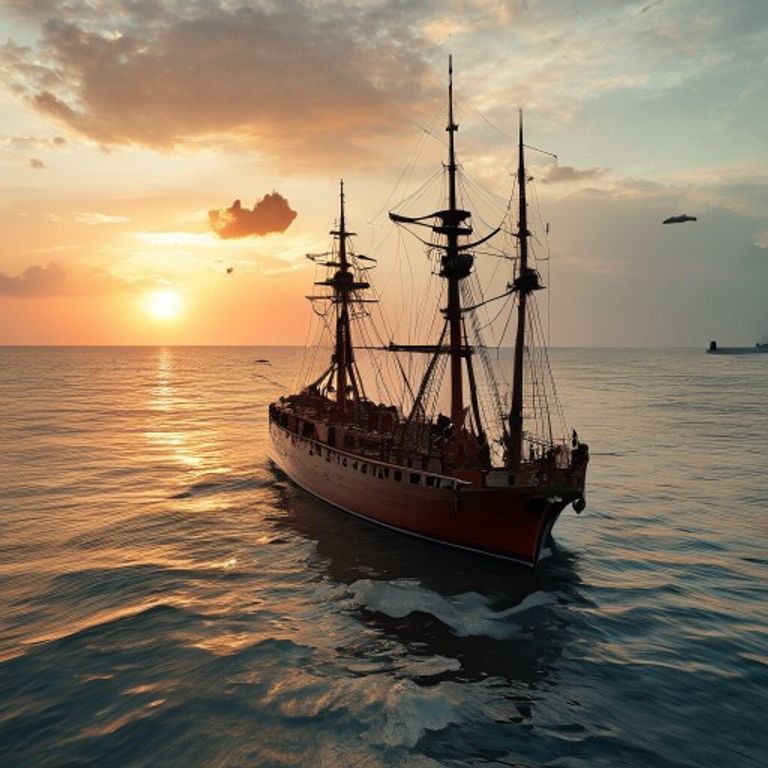
The Spanish galleon laden with gold and emeralds that sank in 1708 off the coast of Colombia, the subject of a multi-billion dollar dispute following its discovery in 2015.
⚠️ Research conducted with the aid of Deep Research is subject to referential ambiguity.
🖥️ Clean HTML code using proprietary tools.
👥 Research by Guilherme Felipe, Curation by Sílvio Lôbo
The Ghost Ship of Gold: The Enigma of the San José
The San José, a Spanish galleon laden with incalculable treasures, sank in the turquoise waters of the Caribbean in 1708, taking with it not only a vast fortune but also a veil of mystery that has persisted for over three centuries. Official reports from the time, fragmented and often contradictory, cast a shadow over the exact circumstances of its sinking, fueling a debate that oscillates between naval tragedy and a possible intentional cover-up. This article dives into the depths of this enigma, separating proven facts from the most audacious speculations.
The Context and the Incident: A Tide of Gold and Fire
The San José was the jewel of the Spanish galleon fleet, an imposing 64-gun ship that in 1708 was sailing from Portobelo, in the Viceroyalty of New Granada (modern-day Panama), toward Cartagena de Indias, Colombia. Its cargo was sumptuous: tons of gold, silver, and jewels, intended to finance the War of the Spanish Succession. The vessel was part of a merchant fleet that, however, became the target of an audacious attack by the British Navy, commanded by Admiral Charles Wager. The encounter, which took place somewhere near the coast of the La Guajira Peninsula, is the ignition point of the mystery.
Reports from the era describe a fierce combat where the San José, for reasons still debated, exploded spectacularly, sinking with its crew and treasure. The violence of the explosion and the speed with which the ship disappeared beneath the waves left few survivors and even fewer direct eyewitnesses who could offer a clear and unequivocal account of the events.
Timeline of Events: Fragments of a Shipwreck
- June 1708: The galleon San José departs from Portobelo, laden with gold, silver, and precious stones.
- June 1708: The Spanish fleet, including the San José, is spotted by the British fleet under the command of Admiral Charles Wager.
- June 1708: The confrontation between the vessels begins. Reports indicate that the San José was one of the primary targets.
- June 1708: The San José is hit and explodes violently, sinking rapidly. Few survivors are rescued.
- 18th Century onwards: Various expeditions and attempts to locate the wreck are carried out, with limited or inconclusive success.
- 2015: The company Sea Search Armada (SSA) announces the location of the wreck, claiming ownership of part of the treasure.
- 2015-Present: Legal and diplomatic disputes intensify between Colombia, Spain, and SSA over the ownership of the treasure and the conduct of excavations.
The Main Theories: The Depth of Possibilities
The sinking of the San José has given rise to several theories, varying in plausibility and the evidence supporting them.
Theory 1: Naval Combat and Accidental Explosion (Official/Scientific Hypothesis)
This is the explanation most accepted by initial official investigations. It is argued that the San José, hit by enemy fire, suffered an explosion in its gunpowder stores. The logic lies in the vulnerability of ships of that era to fire and the chain reaction explosion that could occur with the handling of large quantities of gunpowder in confined compartments. British reports from the time corroborate the idea of a successful attack.
Theory 2: Internal Sabotage or Organized Crime (Police/Speculative Hypothesis)
A line of thought suggests that the explosion may have been triggered from inside the ship. Infiltrated pirates, mutinous crew members, or even smugglers who might have attempted to steal part of the treasure before the British attack could have ignited the gunpowder as a form of distraction or to destroy evidence. The lack of high-ranking survivors to report the events and the speed of the sinking fuel this speculation, although concrete proof is lacking.
Theory 3: Adverse Weather Conditions and Structural Failure (Alternative Hypothesis)
Although less popular, some suggest that a sudden and violent storm, combined with a possible structural failure in the already overloaded ship, may have led to the sinking. However, this theory weakens if we consider the intensity of the naval combat reported by both sides.
Theory 4: The Gold Conspiracy (Conspiracy Theory)
This theory, popular in online forums and pop culture, suggests that the San José treasure did not sink with it. It is speculated that the ship was intentionally "sunk" or that the treasure was diverted before the confrontation, with the story of the shipwreck being a pretext. Motives range from protecting the gold from enemies to using it in secret operations. This theory lacks any factual evidence, relying on assumptions and the mystique of lost treasure.
Theory 5: The Ghost of the San José (Paranormal Theory)
Like many historical shipwrecks, the San José does not escape reports of ghostly apparitions or inexplicable phenomena associated with the ship. Although without scientific value, these narratives contribute to the folklore and suspense surrounding the case, adding a layer of mysticism to the tragedy.
Controversies and Blind Spots: Shadows in the Depths
The San José case is full of controversies and blind spots that hinder a definitive understanding:
- Conflicting reports: The Spanish and British versions of the events differ in crucial details regarding the dynamics of the combat and the actions of the San José.
- Lost or unexplored clues: The rapid and violent nature of the sinking resulted in the loss of many potential pieces of evidence. The scarcity of direct eyewitnesses regarding the exact cause of the explosion is a significant obstacle.
- The SSA claim: The 2015 discovery by Sea Search Armada reignited the debate over the ownership of the treasure. Colombia claims ownership based on the location of the wreck in its territorial waters, while Spain argues that the ship was property of the Spanish State and, therefore, so is the treasure. The lack of complete transparency in salvage operations and the analysis of recovered evidence also generates suspicion.
- The fate of the treasure: The true extent and exact value of the treasure on board are still a matter of speculation, as the original inventories may not have been entirely accurate or were lost.
Curiosities and Legacy: A Treasure That Still Makes Waves
The San José has transcended the status of a mere sunken ship, becoming an icon of lost wealth and maritime mystery. Its history has inspired books, documentaries, and countless speculations. The estimated value of the treasure, which may exceed billions of dollars, makes it one of the most valuable and coveted shipwrecks in the world.
Currently, the San José case remains in a legal and scientific limbo. Excavations and the recovery of the treasure are complex processes, complicated by international disputes and concerns about the preservation of historical heritage. The San José continues to rest on the seabed, guarding its secrets, a somber and fascinating reminder of the fragility of fortune and the persistence of enigmas that time and the depths cannot completely erase.





