



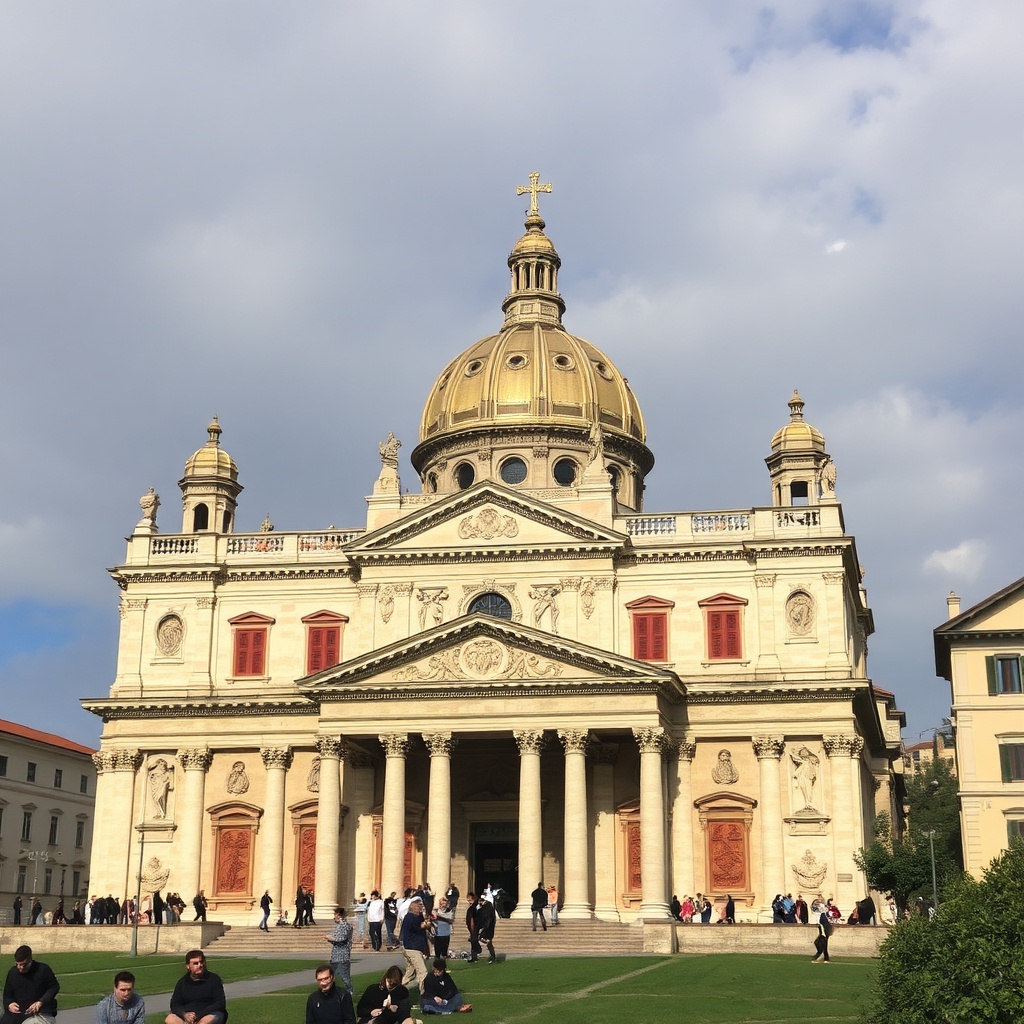
Roman Catholicism, the world's largest Christian denomination, is a religious tradition with deep historical, theological, and sociological roots, characterized by a centralized hierarchical structure, a rich collection of doctrines and rituals, and a global cultural influence dating back two millennia. This article examines Roman Catholicism from an academic perspective, covering its definition, origins, beliefs, structure, controversies, and contemporary impact, with historical and sociological rigor.
Origin and Historical Foundation
Roman Catholicism, in its essence, is one of the main branches of Christianity, which originated in the 1st century AD in Judea, part of the Roman Empire. Catholic theology is based on the belief in Jesus Christ as the Son of God and the Savior of humanity, whose teachings and life are recorded in the New Testament Gospels. The Roman Catholic Church sees itself as the direct successor to the church founded by Jesus Christ and his apostles, with an unbroken line of apostolic succession dating back to Saint Peter, considered the first Pope. The term "Catholic" derives from the Greek "katholikos," meaning "universal," reflecting the Church's ambition and missionary nature from its inception. The development of Roman structure and doctrine was shaped by a complex interaction of historical, theological, and cultural factors over the centuries, including the fall of the Western Roman Empire, the Protestant Reformation, and the Second Vatican Council.
Sociological and Theological Definition
Sociologically, Roman Catholicism is often analyzed as a global religious institution with characteristics of a mass organization and, in some contexts, an institutional religion. Its theology is elaborated and codified in various documents, including the Catechism of the Catholic Church, which systematically presents the beliefs, morals, and sacraments of the faith. Central to Catholic theology is the Trinity (God the Father, Son, and Holy Spirit), the Incarnation of Jesus Christ, his redemptive death and resurrection, and the belief in the Church as the Body of Christ on Earth, guided by the Holy Spirit. Salvation is viewed as a process involving faith, divine grace, and good works, mediated by the sacraments, which are efficacious signs of grace instituted by Christ and entrusted to the Church.
Main Beliefs, Dogmas, Rites, and Practices
The fundamental beliefs of Roman Catholicism include the Holy Trinity, the divinity of Jesus Christ, his virgin birth, death and resurrection, and the belief in eternal life. Important dogmas include the Immaculate Conception of Mary, the Assumption of Mary, and papal infallibility in matters of faith and morals. The seven sacraments are central to Catholic life: Baptism, Confirmation, Eucharist, Penance (Reconciliation), Anointing of the Sick, Holy Orders, and Matrimony. The Eucharist, or Mass, is the most important rite, where Catholics believe in transubstantiation – the conversion of bread and wine into the Body and Blood of Christ. Devotion to Mary and the saints is a significant practice, viewed as intercession before God. Prayer, the reading of the Scriptures, and the practice of the theological virtues (faith, hope, and charity) and cardinal virtues (prudence, justice, temperance, and fortitude) are pillars of Catholic spiritual life.
Organizational Structure and Leadership
The Roman Catholic Church has a well-defined hierarchical structure, with the Pope, Bishop of Rome, at the top as the successor of Saint Peter and supreme leader of the Church. Below him are the bishops, who govern individual dioceses; priests, who serve parishes; and deacons. The Roman Curia is the administrative body that assists the Pope in the governance of the Church. Leadership is clerical, with the priesthood and episcopate restricted to men. This centralized and hierarchical structure is a distinctive feature of Roman Catholicism, allowing for uniform governance worldwide, but also being the subject of internal debates regarding collegiality and the participation of the laity.
Contemporary Controversies and Challenges
The Roman Catholic Church, like any long-standing secular or religious institution, has faced and continues to face various controversies and challenges. Historically, one of the most devastating scandals has been the sexual abuse of minors by clergy, and the institutional response to these crimes. Investigative reports and legal proceedings in various countries have revealed patterns of cover-ups and mismanagement by the ecclesiastical hierarchy, generating a deep crisis of trust and numerous legal cases. Organizations such as RAINN (Rape, Abuse & Incest National Network) and SNAP (Survivors Network of those Abused by Priests) have extensively documented these cases. These allegations do not characterize Roman Catholicism as a "destructive cult" in its entirety, as the vast majority of the faithful and clergy are not involved in such acts, and the religion itself does not promote social isolation, systematic financial exploitation, or mind control as an intrinsic doctrine or practice. However, the management of these scandals and the pursuit of structural and spiritual reforms remain a significant challenge and a critical point for the Church's credibility. Other controversies include debates over sexual morality, the role of women in the Church, and the response to contemporary social issues.
Social, Cultural Impact, and Contemporary Relevance
Roman Catholicism has had an indelible impact on the history of Western civilization and continues to be a significant social and cultural force worldwide. Catholic institutions, such as hospitals, schools, and universities, play a crucial role in social development in many countries. Western art, architecture, music, and philosophy have been deeply influenced by the Catholic tradition. In terms of contemporary relevance, Roman Catholicism remains the largest Christian denomination, with over a billion followers. The Vatican, as the seat of the Church, plays an active role in international forums, promoting peace, human rights, and interreligious dialogue. The Church seeks to respond to the challenges of the modern world through social and theological dialogue, maintaining its doctrine while adapting to the times.
References and Research Sources
- Britannica. "Roman Catholicism."
- Catholic Answers. "What is the Catholic Church?"
- Catechism of the Catholic Church.
- National Catholic Welfare Conference. "The Faith of the Catholic Church."
- United States Conference of Catholic Bishops. "What We Believe."
- Encyclopedia Britannica. "Papacy."
- The New York Times. "Catholic Church Sex Abuse Crisis." (Generic reference to numerous published articles)
- The Guardian. "Catholic Church Abuse Scandals." (Generic reference to numerous published articles)
- RAINN (Rape, Abuse & Incest National Network).
- SNAP (Survivors Network of those Abused by Priests).
- BBC News. "Catholic Church: Challenges and Controversies." (Generic reference to numerous published articles)
- Pew Research Center. "Religion in America." (Generic reference to reports on global religion)





