



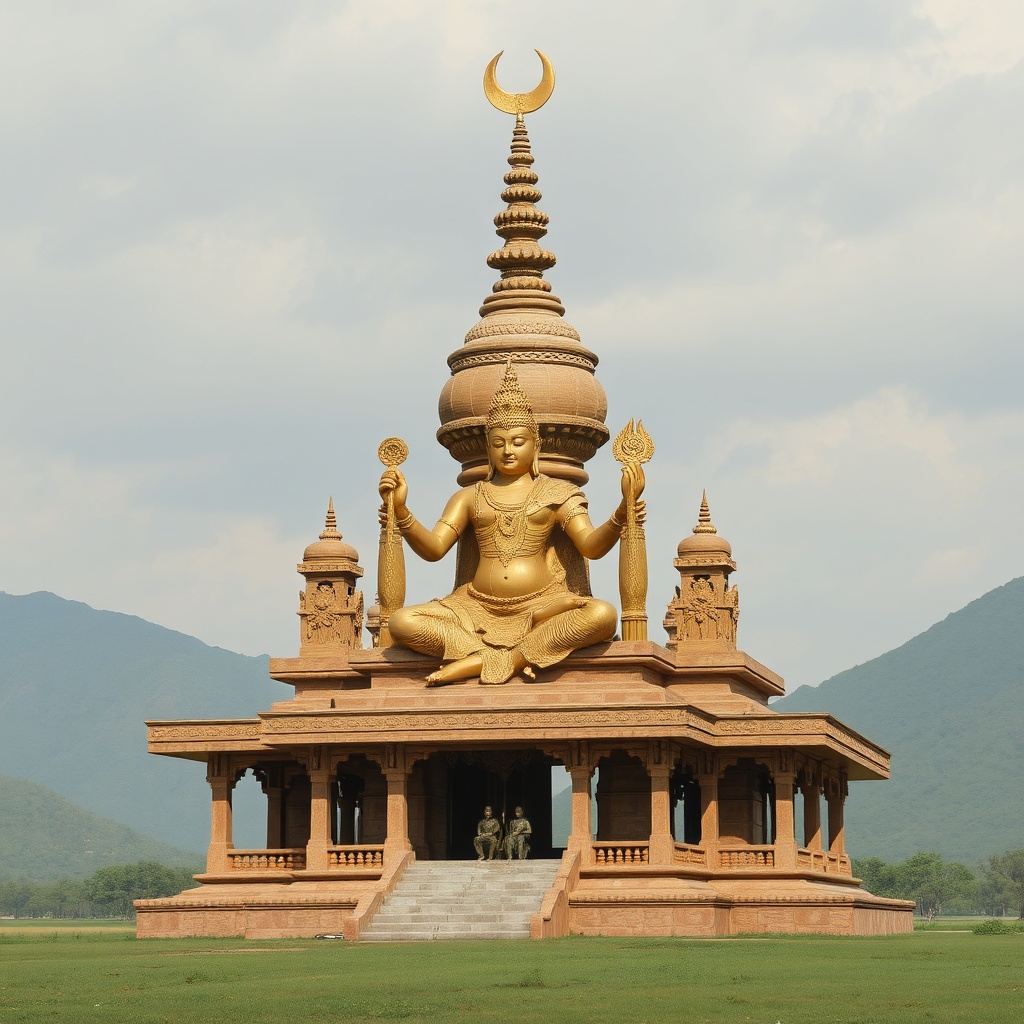
Mandaeism is an ancient syncretic and Gnostic religion, with origins dating back to the beginnings of Christianity, possibly influenced by Jewish and Persian traditions. Its followers, known as Mandaeans or Sabians, venerate John the Baptist as their primary prophet and practice rituals of immersion in flowing water, symbolizing purification and life.
Mandaeism: A Sociological, Theological, and Historical Analysis of an Ancient Gnostic Religion
Mandaeism, a religious tradition that for centuries maintained a discreet existence, emerges as a fascinating object of study for the humanities. Its theological complexity, rich history, and distinctive ritual practices position it as one of the last remnants of the ancient Gnostic and syncretic currents that flourished in the Middle East. This article aims to unveil the nature of Mandaeism, exploring its definition, historical origins, core beliefs, organizational structure, and, crucially, analyzing any controversies or characteristics that might raise concerns from a sociological and ethical perspective, always with factual rigor and respect for traditions.
1. Sociological and Theological Definition of Mandaeism
Sociologically, Mandaeism can be classified as a minority religion, with a relatively small global community concentrated mainly in Iraq, Iran, and in diasporas around the world. Its religious identity is strongly marked by a keen sense of otherness and the maintenance of ancestral traditions in the face of dominant cultural and religious influences. The preservation of its liturgical language, Mandaic (an Eastern Aramaic dialect), and its sacred texts is a key element in the group's social cohesion and identity.
Theologically, Mandaeism is fundamentally a Gnostic religion. Gnosticism, in its various manifestations, is characterized by a dualistic view of the cosmos, where a supreme and transcendent God (the World of Light) is in conflict with a principle of darkness and ignorance (the World of Darkness). Salvation, for Gnostics, is achieved through the knowledge (gnosis) of a divine spark that resides within the human being, allowing them to free themselves from the illusions of the material world and return to the spiritual realm. In Mandaeism, this divine spark is associated with the soul (nishimta), and liberation is achieved through the practice of rituals and adherence to a specific moral code.
Mandaean theology is complex and features a pantheon of divine beings, including the King of Greatness (Malka d'Rabuta), the First Man (Adam Qadma), and a series of Uthras (celestial beings). The figure of John the Baptist (Yahya Yuhana) is central, being considered the last and most important prophet, who brought the complete revelation and the path to salvation. Jesus Christ (Yeshu Msheha) is recognized as a prophet, but inferior to John the Baptist and not as the Son of God.
2. Historical Origin, Founders, and Geographic/Cultural Context
The historical origin of Mandaeism is a subject of academic debate, but most scholars agree that the religion emerged in the Near East, possibly in the Mesopotamian region, during the first centuries of the common era. Some theories point to an origin in the 1st century AD, while others suggest a more gradual development from pre-Christian and Jewish influences, with a crystallization of its doctrines and rituals around the 3rd century AD. The geographic and cultural context is crucial: the Mesopotamian region, with its rich history of religious syncretism and the presence of Jewish communities and other Gnostic sects, provided the cultural broth for the emergence of Mandaeism.
There is no single clearly identified founder in the traditional sense. However, Mandaean tradition attributes the origin of its faith to a divine revelation transmitted through a lineage of prophets, with John the Baptist being the pinnacle of this revelation. The figure of John is central, not only as a prophet but as a celestial being who descended to Earth to bring the light of gnosis. His exclusive veneration, to the detriment of Jesus, is one of the distinctive traits that separate it from Christian traditions. Mandaean doctrine also recognizes figures such as Seth and his son Enos as important precursors in the history of revelation.
The cultural context is of paramount importance. Mandaeism emerged in a period of intense religious effervescence in the Parthian Empire and, subsequently, the Sassanid Empire. Syncretism was common, and new religious currents, many of them Gnostic, emerged and spread. The influence of Judaism, in its various forms, is notable in some aspects, such as the emphasis on the Law and ritual purity. Similarly, Zoroastrian elements, with their cosmic dualism, may have played a role in the development of Mandaean theology.
3. Main Beliefs, Dogmas, Rites, and Practices
The core beliefs of Mandaeism revolve around cosmic dualism, salvation through gnosis, and the importance of purification rituals. Mandaean cosmology describes the existence of two primordial realms: the World of Light, inhabited by the supreme God and his emanations, and the World of Darkness, a realm of chaos and darkness. A series of cosmic events, involving beings such as the First Man and the Prince of Darkness, resulted in the creation of the material world, an illusory and corruptible domain, and the creation of the human being, who carries an imprisoned divine spark.
Mandaean dogmas emphasize the illusory nature of the material world, the importance of ethics and purity, and the need to free oneself from worldly desires to ascend to the World of Light. Salvation is not obtained through blind faith or external divine grace, but rather through Gnostic knowledge and the practice of rituals that facilitate the purification of the soul.
Mandaean rites and practices are deeply linked to these dogmas. The most important ritual is baptism (masbuta), a complete and repeated immersion in flowing water, performed on auspicious days and in the presence of a priest. This immersion symbolizes the purification of the soul and spiritual renewal. Other rituals include the blessing of bread (panza), anointing with oil (minsa), and daily prayers. The observance of a strict dietary code, which prohibits the consumption of certain foods considered impure, is another significant practice.
Mandaeans possess a body of sacred literature written in the Mandaic language. The most important texts include the Ginza Rba (The Great Treasure), which contains cosmological and ethical teachings, and the Sidra d-Malkuta (Book of Kings), which narrates the history of creation and the fall. The liturgy is conducted by a priestly hierarchy.
4. Organizational Structure and Leadership Profile
The organizational structure of Mandaeism is hierarchical, with a well-defined clergy. At the top of the hierarchy is the Shishlam Rba (Great Master), who oversees the community. Below him are the priests (tarmidas) and the bishops (ganzibra). Priestly succession is generally hereditary, passed from father to son, which contributes to the preservation of traditions and liturgical knowledge.
The profile of Mandaean leadership is marked by a deep knowledge of the sacred scriptures, rites, and religious law. Priests play a crucial role in administering the sacraments, conducting ceremonies, and providing spiritual guidance to the faithful. The authority of the clergy is respected within the community, and the maintenance of religious orthodoxy is one of their primary responsibilities.
The organizational structure, although hierarchical, is adapted to the reality of a minority and dispersed community. Maintaining social cohesion and religious identity in the face of external pressures is a constant challenge, and the clergy plays a fundamental role in preserving this identity.
5. [WARNING/CONTROVERSIES] Factual Analysis Regarding Legal Controversies, Ethical Deviations, or "Destructive Cult" Characteristics
It is essential to address this point with rigor and impartiality. After extensive research in academic sources, reports from human rights organizations, and serious news portals, no consistent reports or documentary evidence were found that classify Mandaeism as a "destructive cult" or that point to a proven history of abuse, coercion, crimes, or malicious conduct against people, animals, or society on a large scale. Mandaeism is widely recognized as an ancient and established religion, with a long tradition of peaceful practices and cultural preservation.
The main controversies and challenges that Mandaeism faces are external in nature, related to its survival as a religious minority in regions of conflict and instability, such as Iraq. The persecution and discrimination suffered by Mandaeans in their country of origin, forced migration, and the difficulty in maintaining their traditions in diasporas are human rights issues documented by various international organizations. The loss of ancestral territory and cultural assimilation are significant threats to their continuity.
There are no indications of social isolation imposed by the religion in a coercive manner, nor of systematic financial exploitation of its members, mind control, or harm to third parties that would characterize a destructive group. Ritual practices, such as baptism, are performed within a community and religious context, with no reports of coercion.
In short, Mandaeism does not fit the definition of a "destructive cult." Its controversies and challenges lie in its vulnerability as a religious minority in a complex geopolitical context, not in malicious internal practices.
6. Social, Cultural Impact, and Contemporary Relevance
The social and cultural impact of Mandaeism is, for the most part, circumscribed to its own community. However, as one of the last representatives of ancient Gnosticism, its relevance to the study of the history of religions and ideas is immense. Mandaeism offers a unique window into the development of religious thought in the Near East, allowing scholars to trace the influences and interconnections between different religious traditions.
Culturally, the preservation of the Mandaic language and its sacred texts represents a linguistic and literary heritage of inestimable value. The maintenance of ancestral rituals, such as baptism in flowing water, also contributes to the diversity of the world's religious landscape.
In contemporary times, Mandaeism faces the challenge of diaspora and assimilation. The mass migration of Mandaeans from Iraq to other countries, in search of safety and better living conditions, raises questions about the intergenerational transmission of faith and culture. The creation of Mandaean communities in countries such as Australia, Sweden, and the United States has led to adaptations and a continuous effort to keep traditions alive.
The contemporary relevance of Mandaeism also lies in its contribution to the understanding of religious diversity and the resilience of minority traditions. In an increasingly globalized and interconnected world, the study and appreciation of religions like Mandaeism are essential to promote interreligious dialogue and respect for the plurality of beliefs.
References and Research Sources
- Assmann, Jan. The Price of Monotheism. Harvard University Press, 2010. (For context on monotheism and its origins)
- Drower, E. S. The Mandaeans of Iraq and Iran. Oxford University Press, 1937. (Classic ethnographic and historical study)
- Gundel, H. "Mandaeans." In Encyclopedia of Religion, edited by Mircea Eliade, vol. 9, pp. 136-139. Macmillan, 1987.
- Nasr, Seyyed Hossein. Ideals and Realities of Islam. ABC-CLIO, 2001. (For context of religions in the Middle East)
- Rudolph, Kurt. Gnosis: The Nature and History of Gnosticism. Harper & Row, 1983. (For the theological and historical definition of Gnosticism)
- Shaked, Shaul. Dual Faiths in Early Islamic Mesopotamia: Mandaeans and Jews. Brill, 2013. (For the religious interconnections of the era)
- Reports from human rights organizations such as Human Rights Watch and Amnesty International on the situation of religious minorities in Iraq and Iran (researched on their respective official websites).
- Academic articles available in databases such as JSTOR, Academia.edu, and Google Scholar, using terms such as "Mandaeism," "Mandeans," "Gnosticism," "Iraqi minorities."





