



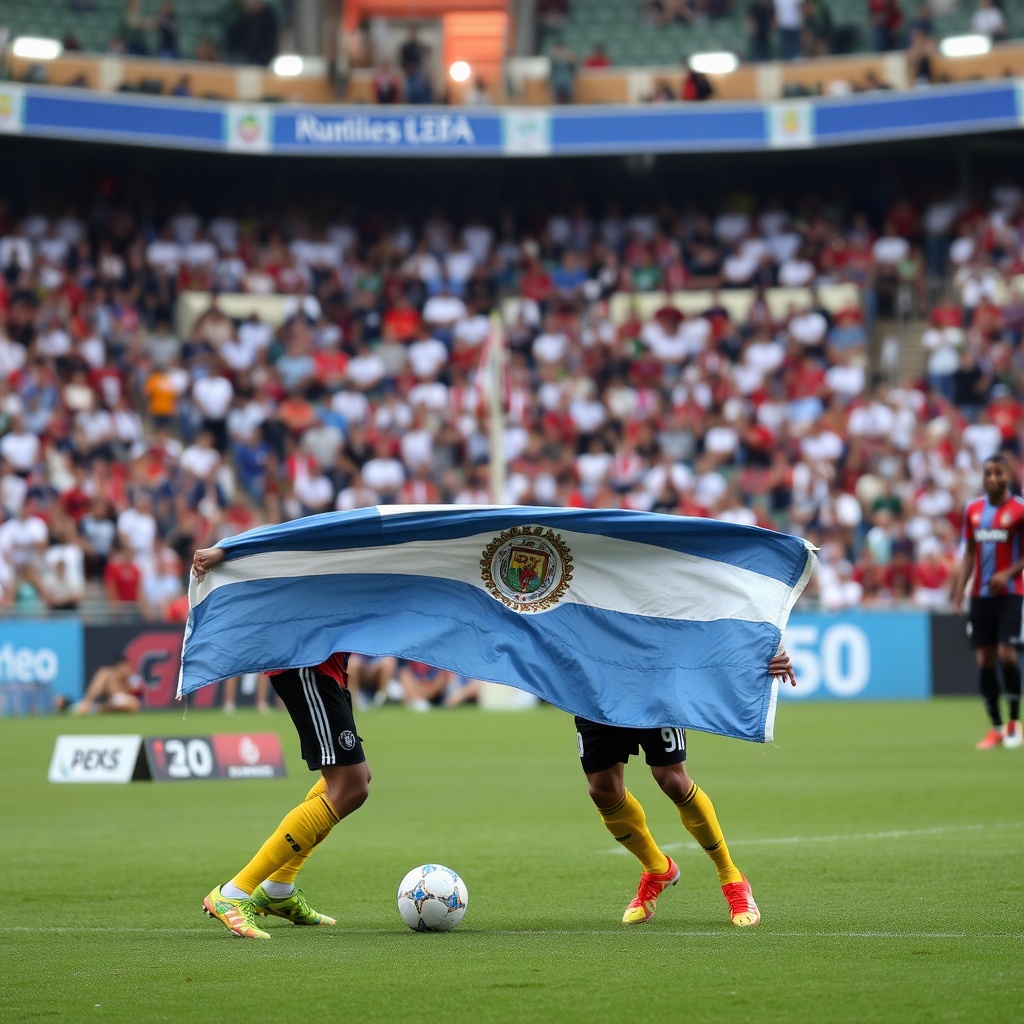
Club Deportivo y Mutual Leandro N. Alem, affectionately nicknamed "El Lechero" (The Milkman), is one of the most unique and resilient entities in Argentine lower-league football. Based in General Rodríguez, in the Province of Buenos Aires, the club currently competes in the Primera C Metropolitana (the unified fourth division of Argentine football affiliated with the AFA). Experiencing a period of institutional and sporting reconstruction, Alem is striving to move past the tragic chapters of its recent history to reclaim the community-based, working-class, and purely footballing essence that has defined it for nearly a century of existence.
1. Origins and Foundation: The Political and Working-Class Cradle of General Rodríguez
The history of Club Deportivo y Mutual Leandro N. Alem began to be written in the autumn of 1925. On May 24, 1925, a group of young enthusiasts from General Rodríguez—a town growing to the rhythm of the Western Railway and the dairy industry—decided to found an institution that would serve as a social, cultural, and sporting meeting point for the community.
The choice of name was not neutral and carries deep historical and political symbolism. Leandro Nicéforo Alem (1842–1896) was the charismatic founder of the Unión Cívica Radical (UCR), one of Argentina's first mass parties, known for its uncompromising defense of free suffrage, public ethics, and the rights of the emerging middle and working classes. At a time when football and politics walked hand-in-hand in the process of building Argentine national identity, naming the club after Alem was a declaration of democratic and popular principles.
The colors adopted by the club were blue and yellow (azul y oro). Although local legends point to the influence of fabrics available in haberdasheries at the time, the most solid historiographical consensus suggests the choice was a direct tribute to Boca Juniors, a club that was already drawing crowds at the beginning of the amateur era and symbolized the passion of the working classes. In its early years, Alem played in regional tournaments and independent leagues in the western zone of Greater Buenos Aires, forging a reputation as a tough, gritty team closely linked to the region's dairy sector—which would later earn them the famous nickname "Lechero" (The Milkman), due to the presence of the dairy giant La Serenísima and dozens of tambos (milking farms) in the outskirts of the municipality.
2. Golden Eras and Historic Campaigns
The club's first major administrative and sporting milestone occurred in 1957, when Leandro N. Alem obtained its official affiliation with the Asociación del Fútbol Argentino (AFA). The transition from regional amateurism to structured professional football required rapid adaptation.
The Triumphant Debut (1957)
In its very first year in the former Tercera de Ascenso (which would become the Primera D), Alem surprised the lower-league football scene by becoming champions. With a brilliant campaign, the club earned the right to move up a division immediately, demonstrating the strength of its stronghold in General Rodríguez.
The Golden Age: Promotion to Primera B Metropolitana (1996)
The pinnacle of the "Lechero" footballing history occurred in the mid-1990s. Under the presidency of historic leaders and with strong local support, the club assembled a competitive team for the 1995/1996 Primera C season. With a pragmatic style of play and great physical commitment, Alem won the 1996 Clausura tournament and defeated General Lamadrid in the promotion finals, stamping their historic passport to the Primera B Metropolitana (the third division of Argentine football at the time, equivalent to the top tier of directly affiliated football, just below the Primera B Nacional).
Between 1996 and 2000, Alem experienced its years of greatest media exposure, facing lower-league giants such as Tigre, Platense, Atlanta, All Boys, and Temperley. The cramped stadium in General Rodríguez turned into a cauldron feared by the big clubs of Buenos Aires. The team managed to stay in the category based on impressive defensive solidity and the unconditional support of its fans, who adopted the motto that "in Rodríguez, the Lechero rules."
The 2017 Renaissance
After difficult years of financial decline that culminated in relegation back to the Primera D, the club resurged in the 2016/2017 season. With an impeccable campaign and a coaching staff led by one of the institution's greatest idols, Alem earned promotion to the Primera C, the category where it remains today.
3. Context and Current Status of the Team
Currently, Leandro N. Alem competes in the Primera C Metropolitana. The category underwent a deep restructuring implemented by the AFA in 2024, which unified the former Primera C and Primera D into a single professionalized fourth-division league. This change drastically increased the level of competitive demand, forcing the club to further professionalize its football and resource-gathering departments.
Institutionally, Alem is going through a delicate transition period, focused on social pacification and rebuilding its reputation. The club seeks to definitively distance itself from the episodes of violence that stained its recent history, focusing on the development of its youth academy, the improvement of its stadium facilities, and attracting new commercial partnerships with the thriving industrial sector of General Rodríguez.
In sporting terms, the team has struggled to find consistency. With a modest budget compared to its metropolitan rivals, the "Lechero" strategy has been to bet on young talents from the western region and experienced athletes accustomed to the physical battles of Argentine lower-league football.
4. Club Iconography: Key Idols and Coaches
No account of Leandro N. Alem is complete without mentioning the human figures who shaped the club's identity on and off the pitch.
- Carlos "El Lobo" Cordone: Developed at Vélez Sarsfield and with a notable stint at Newcastle United in England, Cordone is the greatest contemporary icon of Alem. "El Lobo" never hid his passion for his hometown club. He played for Alem at the end of his career and later took on the role of coach on several occasions. Cordone embodies the essence of neighborhood football: rebellious, authentic, and passionate. He was the head coach during the historic 2017 promotion.
- Héctor "Sapo" Elorriaga: One of the great goalscorers of past decades, Elorriaga became synonymous with goals in General Rodríguez. His grit and identification with the blue and yellow colors made him a hero for older generations of fans.
- Aldo "El Gaucho" González: A fierce defender who symbolized the club's golden era in the Primera B Metropolitana in the 90s. His leadership on the pitch and his ability to neutralize nationally renowned strikers are still remembered in the club's stands today.
5. Major Rivalries: The Bloody "Clásico del Oeste"
Argentine football is driven by passion and territory, and it is no different for Leandro N. Alem. The club's identity is defined, in large part, by its regional rivalries.
The Classic against Club Luján
Alem's biggest and fiercest rivalry is against Club Luján. This matchup is known as the "Clásico del Oeste" (Western Classic). The origin of the rivalry transcends football and enters the field of urban sociology and regional geography:
- Distance and Territory: The cities of General Rodríguez and Luján are neighbors, separated by only 15 kilometers along National Route 7.
- Cultural Differences: Luján is a historic city, famous for its imposing basilica and strong tourist and religious appeal. General Rodríguez, on the other hand, developed as a strictly industrial and working-class hub, closely linked to dairy production. This difference in the cities' "personalities" generated a historical antagonism between local populations that was reflected in the stadiums.
Unfortunately, the rivalry between Alem and Luján escalated to tragic levels in recent years. On July 10, 2022, one of the darkest episodes of modern Argentine football occurred during the classic played at the Luján Municipal Field. Members of the Leandro N. Alem barra brava (known as "La Banda del Lechero") carried out a planned attack with firearms against local fans. The attack resulted in the death of 18-year-old Joaquín Coronel and left several others injured.
Police investigations revealed dangerous connections between the Alem barra brava, club officials, and local political power (involving family members of General Rodríguez municipal employees). The scandal resulted in severe punishments for Alem, including point deductions, heavy financial fines, the obligation to play behind closed doors for long periods, and the imprisonment of several individuals involved. This sad episode marked a turning point in the club's history, sparking a deep community self-criticism regarding the need to eradicate violence from behind the scenes.
Secondary Rivalry: Atlas and Flandria
Alem also maintains rivalries of lower intensity, but quite traditional, with Atlas (a neighbor from the same municipality of General Rodríguez, with whom they play the local derby) and with Flandria (located in the town of Jáuregui, Luján district).
6. List of Titles and Notable Achievements
| Competition / Achievement | Season / Year | Status / Type |
|---|---|---|
| Primera D (Tercera de Ascenso) | 1957 | Official Champion (Direct Promotion) |
| Torneo Clausura de Primera C | 1996 | Champion (Resulted in promotion to Primera B Metropolitana after playoff) |
| Torneo Apertura de Primera D | 2006 | Short Tournament Champion |
| Reduzido de Primera D (Promotion Playoffs) | 2016/2017 | Playoff Winner (Promoted to Primera C) |
| Torneo de Transición de Primera D | 1985 | Zone Winner / Promoted |
Research Sources
- AFA (Asociación del Fútbol Argentino): Official tournament records, club affiliations, and disciplinary sanction bulletins (cases from 1957, 1996, and the 2022 incident trial).
- Diário Olé: Journalistic coverage of lower-league football (Primera C and D) and archive of interviews with Carlos "Lobo" Cordone.
- Clarín (Sports and Police Section): Investigative reports on the tragic July 2022 attack at the classic against Luján and the political ramifications of the Alem barra brava.
- Solo Ascenso: Portal specializing in Argentine lower-league football, with technical sheets and detailed statistics of Leandro N. Alem matches.
- History of Buenos Aires Lower-League Football: Local monographs detailing the foundation of clubs associated with the railway and the agricultural expansion of the Western Zone.





