



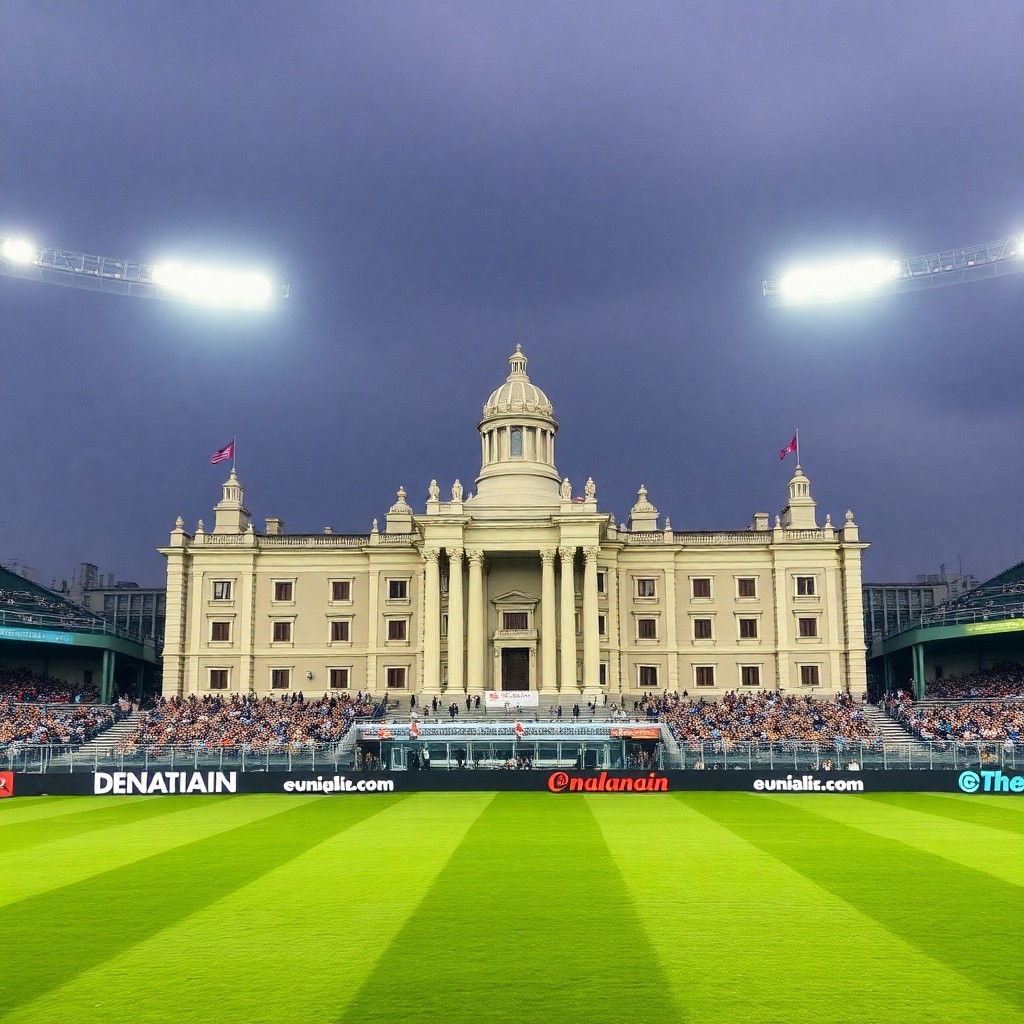
Club Atlético General Lamadrid, affectionately known as "El Carcelero" (The Jailer), is one of the most unique and folkloric clubs in Argentine lower-league football. Based in the heart of the traditional Villa Devoto neighborhood in Buenos Aires, the club currently competes in the Primera C Metropolitana (the fourth division for clubs directly affiliated with the AFA). Experiencing a period of institutional reconstruction and sporting prominence in the 2024 season, Lamadrid balances the resistance of its suburban identity with the imminent urban transformation of its surroundings, which are umbilically linked to the famous Devoto Prison.
Club History: Foundation in the Shadow of Devoto
The history of Club Atlético General Lamadrid began to be written on May 11, 1950. In a Buenos Aires that was breathing the height of the first Peronist government and the urban expansion of its residential neighborhoods, a group of young people and neighbors from Villa Devoto, led by figures such as Enrique Sexto, decided to found an institution that would serve as a social and sporting meeting point for the local community.
The name chosen was a tribute to General Gregorio Aráoz de Lamadrid, one of the most active military figures in Argentina's wars of independence and subsequent civil wars. However, the club's greatest mark of identity would not come from its patriotic nomenclature, but rather from its geographical location. The land obtained for the construction of its headquarters and its modest football pitch was on Desaguadero Street, right next to the Villa Devoto Federal Penitentiary Complex (the last prison still active within the limits of the Federal Capital).
Affiliation with the Argentine Football Association (AFA) occurred in 1956, allowing the club to join the lowest division of the time (the so-called Categoría de Cuadro or Tercera de Ascenso). Since its early years, Lamadrid has been characterized as a "purgatory" club, inhabiting the deepest divisions of Buenos Aires football, but always supported by an extremely loyal and active local community.
---Golden Eras and Historic Campaigns
Although it has spent most of its existence in the D and C divisions of Argentine football, General Lamadrid has recorded episodes of glory that remain etched in the memory of its fans and in the records of lower-league football.
1. The Historic Promotion of 1977
After more than two decades of frustrated attempts and modest campaigns in the Primera D, the year 1977 marked the club's first major leap. With a team based on defensive grit and attacking efficiency, Lamadrid earned promotion to the Primera C. That campaign established the club not as a mere figurative participant, but as a respected competitor on the metropolitan scene.
2. The Epic Rise to Primera B Metropolitana in 1998
The greatest sporting achievement of the 20th century for El Carcelero occurred in the 1997/1998 season. Competing in the Primera C, the team managed a historic run in the knockout phase (Reducido). On July 4, 1998, at the Estudiantes de Buenos Aires stadium, Lamadrid faced Deportivo Merlo in the final of the decagonal tournament.
Under the technical command of Jorge Franzoni and led on the field by legendary players such as Flavio "El Chango" Fernández and goalkeeper Hugo "Tuta" Torres, Lamadrid won the final match, securing an unprecedented and historic promotion to the Primera B Metropolitana (the third national division), where they would face sleeping giants of Argentine football such as Tigre, Platense, and Temperley.
3. The 2011 Primera C Title
The second modern "Golden Era" of the club occurred in the 2010/2011 season. With an impeccable campaign in the Primera C, Lamadrid became the absolute champion of the category by defeating Club Atlético Liniers 3-1 at their modest stadium in Villa Devoto on April 30, 2011. The coach responsible for this feat was again Jorge Franzoni, consolidating his status as a living legend of the club. The team relied on the goal-scoring instinct of Abel Flegenal and the defensive solidity of Hernán Luzzi.
---The Temple Under the Bars: The Enrique Sexto Stadium
To speak of General Lamadrid without detailing its stadium is to ignore the very essence of the club. The Enrique Sexto Stadium, formally inaugurated in the early 1950s and named in honor of one of the institution's most important founders, has an official capacity for about 3,500 spectators.
What makes the Enrique Sexto one of the most famous stadiums in the world of alternative football is its back wall, which borders directly on the concrete walls and security guard towers of the Devoto Prison. During match days, it is a common image, documented by journalists from all over the world, to see prisoners watching the matches from the small barred windows of their cells, often actively cheering for Lamadrid or interacting with the fans crowded into the popular stands.
This symbiosis has generated fantastic chronicles in the Argentine press. Period reports indicate that, in the mid-1980s and 1990s, balls that went over the stands and landed in the prison courtyard were occasionally returned by the inmates or confiscated by prison guards as a "trophy."
---Classic Rivalries and the Geopolitical Context of the Suburbs
General Lamadrid has intense rivalries that transcend the purely sporting aspect, reflecting territorial and identity disputes within the urban fabric of Buenos Aires.
1. The "Clásico de Villa Devoto" vs. Club Social y Deportivo J.J. de Urquiza
Historically, Lamadrid's most traditional and visceral rivalry is against J.J. de Urquiza. The origin of the classic dates back to the times when Urquiza had its original facilities in areas near Villa Devoto and Caseros. The clashes between the Celeste and the Carcelero have always been marked by extreme tension on and off the field, being considered high-risk games by Buenos Aires public security due to the proximity of the fan bases.
2. The "Duel of Trades" vs. Club Atlético Comunicaciones
Another rivalry of immense geographical weight is against Comunicaciones, from the neighboring neighborhood of Agronomía. This confrontation is romantically nicknamed in the press as "The Duel of Trades," pitting the Carteros (mailmen, due to Comunicaciones' historical link with postal workers) against the Carceleros (jailers). Although Comunicaciones has spent more time in higher divisions in recent decades, the rare direct confrontations bring the city's northwest region to a standstill.
3. The Rivalry with Excursionistas
In the modern sporting context of the Primera C, the duels against Excursionistas (from the Belgrano neighborhood) have taken on the contours of a classic due to the number of times both teams have competed for titles, promotions, and relegations directly, with fan bases of a markedly popular and combative profile.
---Great Idols and Coaches Who Defined an Era
Lamadrid's identity is forged in sacrifice, and its heroes reflect this mysticism of Argentine grassroots football:
- Hugo "Tuta" Torres: An iconic goalkeeper, a symbol of resistance under the posts and one of the players with the most matches played in the blue and white shirt.
- Flavio "El Chango" Fernández: A midfielder with refined technique and unquestionable grit, hero of the 1998 promotion and currently an active leader in the club's internal politics.
- Jorge Franzoni (Coach): Undoubtedly the most important coach in the club's history. He led the team through the most difficult promotions and is considered the "tactical bastion" of Lamadrid, knowing how to read the reduced dimensions of the Enrique Sexto better than anyone.
- Abel Flegenal: The classic number 10 who commanded the midfield in the 2011 title campaign, known for his precision on set pieces and refined vision of the game.
Titles and Historic Achievements
Below is the official gallery of achievements and promotions of Club Atlético General Lamadrid in professional and amateur football affiliated with the AFA:
| Competition / Category | Titles / Achievements | Seasons / Years |
|---|---|---|
| Primera C Metropolitana (4th Division) | National Champion | 2010/2011 |
| Primera C - Torneo Reducido (Promotion to Primera B) | Promotion Play-off Winner | 1997/1998 |
| Primera D (5th Division) | Promotion Play-off Champion | 1977, 2017/2018 |
The Current Moment: Survival and the End of the Prison
In the recent scenario (2023/2024), General Lamadrid is going through a crucial moment in its institutional history. Under the presidency of former players and local merchants, the club is seeking to modernize so as not to be swallowed up by the real estate speculation of Villa Devoto, one of the neighborhoods with the highest square meter value in Buenos Aires.
Sportingly, the merger of the Primera C and Primera D divisions promoted by the AFA in 2024 created a highly competitive scenario. Lamadrid responded by assembling a strong squad, fighting in the top positions of the league table, and seeking to return to the Primera B Metropolitana under the command of a coaching staff focused on developing athletes from the neighborhood's own youth divisions.
However, the main debate stirring the club's backstage is the announcement by the Buenos Aires City government regarding the definitive deactivation and demolition of the Devoto Prison. The plan provides for the transfer of all inmates to penitentiary complexes in the Province of Buenos Aires (such as Marcos Paz) and the subsequent transformation of the land into public squares and luxury residential developments.
For Lamadrid, this project represents a double-edged sword:
- On one hand, the appreciation of the surroundings could attract new sponsors, improve security on match days, and allow for the physical expansion of the club's facilities.
- On the other hand, there is the romantic fear of losing its identity. Without the prison next door, the nickname "El Carcelero" will become a purely historical and museological memory, ending one of the most picturesque and original chapters of global football.
Sources Researched
- Asociación del Fútbol Argentino (AFA) - Historical Archives of Promotion Categories.
- El Gráfico Magazine - Special editions on lower-league football from 1998 and 2011.
- Olé Newspaper - Coverage of the Primera C Metropolitana (2023 and 2024 seasons).
- Municipal Archive of the City of Buenos Aires - History of the Villa Devoto Neighborhood and the Federal Penitentiary Complex I.
- TyC Sports archive documentaries - "Atlas, la otra pasión" and special reports on the Enrique Sexto Stadium.





