



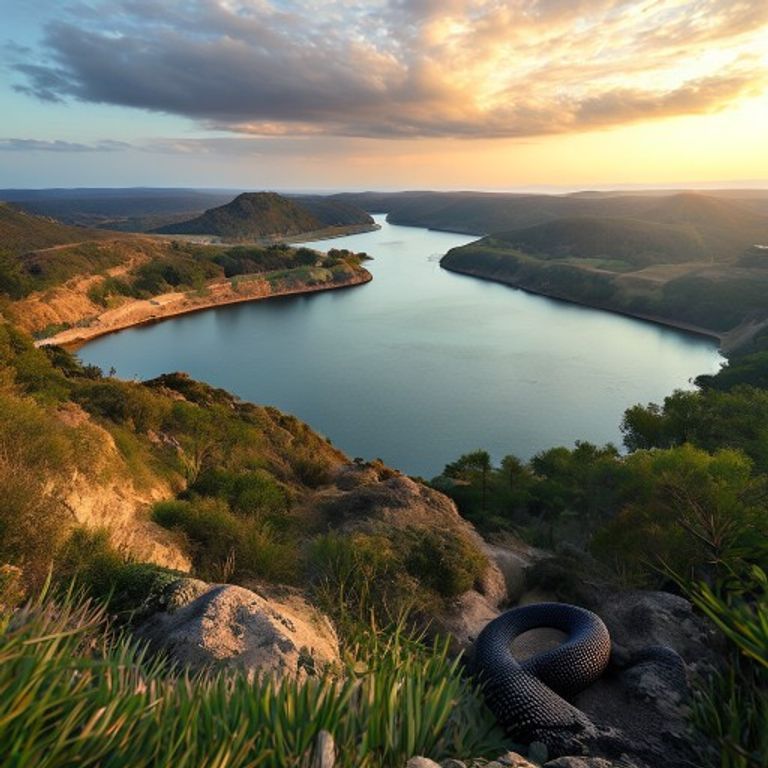
This municipality in the State of Roraima is the center of the Roraimeira movement, with emphasis on the work of Eliakin Rufino, Zanny Adairalba, and Devair Fiorotti, who fuse urban modernity with the legends of Makunaima and the strength of the Rio Branco.
The Silence That Cries Out for Verses: An Investigation into the Literary Scene of Boa Vista, Roraima
There is a recurring misconception among researchers of Amazonian literature: believing that a capital city is synonymous with a consolidated literary scene. Boa Vista, the capital of Roraima, disproves this illusion. Not for lack of potential—there are professors, students, anonymous poets, memories of pioneers—but for the absence of digital footprints and vibrant editorial infrastructure.
This investigation set out in search of Boa Vista's literature. What we found was a city that once had publishers, once had a movement, but today seems to have let its writings slumber in drawers, abandoned blogs, and old CNPJs with "CLOSED" status.
The result is a melancholic, yet necessary, portrait. Sometimes, the silence of a capital speaks louder than the verses of a literary metropolis.
1. Roots and Tradition: Literature as an Unfinished Project
The Absent Intellectual Patron
Unlike other Amazonian cities that honor writers or educators in their names, Boa Vista carries a descriptive toponymy—"Boa Vista" (Good View)—without a direct link to literary figures. This does not mean that cultural production has been absent. It means that this production, when it existed, did not leave lasting marks on the national imagination.
Roraima is the youngest state in the federation (it became a state in 1988), and Boa Vista, its capital, shares this institutional youth. Local literature, when it exists, is a child of the Federal University of Roraima (UFRR) and the migratory movements that brought people from the Northeast, South, and foreigners (mainly Venezuelans and Guyanese) to the Amazonian border.
The Writers of the Past: A Search Without Names
The search for "celebrated and fundamental figures for local literature" in Boa Vista—recognized names, anthologies, literary histories—yielded no significant results. There are no active literary academies with websites, no blogs dedicated to the city's literary memory, no collections of "Boa Vista poets" indexed digitally.
This does not mean that no one has ever written in Boa Vista. It means that these writers, if they existed, did not achieve national visibility nor did they leave accessible digital archives. In an era when even the most modest poet has an Instagram profile, the silence in search engines is a telling fact.
There is a possible hypothesis: Boa Vista's literature has always been oral literature, of border tales, of migrant stories that never found their way to paper. If so, the city's literary tradition is not in books—it is in the living memory of its elders. And this memory, without record, dies with them.
2. The Contemporary Scene: Failed Publishers and Institutional Void
What Remains of Boa Vista's Publishers
The search for active publishers in Boa Vista revealed a scenario of widespread failure. The main companies in the sector, registered with CNPJ, are listed as CLOSED—meaning they are no longer in operation.
Editora L M (L M Empreendimentos Editoriais Ltda)
Opened on August 17, 1988—the year of the Constitution and Roraima's elevation to statehood—Editora L M was a limited liability company whose main activity was retail book sales. Its trade name suggested an editorial vocation, but the CNPJ reveals something more modest: a bookstore, not necessarily a publisher that published local authors.
Current status: CLOSED. There is no information about which books it published or sold.
Editora Quintella Ribeiro Ltda
Opened on July 29, 1991, this publisher had a more specific activity: publishing integrated with daily newspaper printing. It was, therefore, a journalism publisher, not necessarily a literary one. It was an ME (Microenterprise), and its address in Boa Vista is no longer public.
Current status: CLOSED. Quintella Ribeiro also did not withstand the test of time.
What Exists Today?
Searching for "publisher in Boa Vista" returns generic pages from business directories, such as SpotWay, which lists companies "specializing in the production and publication of books, magazines, and other printed materials." However, the page does not list any specific companies—only a generic description of the sector.
The same applies to Solutudo, a directory that lists publishers in "Boa Vista, CE"—that is, Boa Vista in Ceará, not in Roraima. This geographical confusion is symptomatic: Boa Vista in Roraima is so invisible to national directories that searches are redirected to its namesake in Ceará.
Collectives, Poetry Readings, and Fanzines: The Frustrated Search
Systematic searches were conducted using combinations such as:
-
"sarau Boa Vista RR" (poetry reading Boa Vista RR)
-
"coletivo literário Boa Vista" (literary collective Boa Vista)
-
"poesia Boa Vista Roraima" (poetry Boa Vista Roraima)
-
"fanzine Boa Vista" (fanzine Boa Vista)
-
"escritor Boa Vista RR" (writer Boa Vista RR)
-
"UFRR literatura" (UFRR literature)
The result was, with rare exceptions, empty. There are no pages listing recent literary events in the Roraima capital. There are no Instagram profiles of writing collectives. There is no news of slams, literary fairs, or book launches.
The Silent University
The Federal University of Roraima (UFRR) has a Literature course and, potentially, produces literary research and trains writers. However, this production does not translate into a public literary scene—there are no online literary magazines maintained by the university (or, if there are, they are not indexed), there are no regularly open events for the community, there are no catalogs of authors trained by UFRR who have published works.
It is possible that Boa Vista's academic literary production is confined to conference proceedings and theses and dissertations—genres that do not circulate among the general reading public.
Why the Silence?
The absence of an active contemporary literary scene in Boa Vista can be attributed to several structural factors:
-
Geographical isolation: Roraima is the most isolated state in the Legal Amazon, with no road connection to the rest of the country (BR-174 connects Boa Vista to Manaus, but the stretch is precarious, and the connection to Venezuela is unstable). This isolation makes editorial logistics more expensive and hinders book circulation.
-
Institutional youth: Roraima became a state in 1988. Cultural institutions—public libraries, state book and reading systems, funding notices—are recent and fragile.
-
Talent exodus: Potential writers trained at UFRR or born in Boa Vista likely migrate to other states (Amazonas, Brasília, Southeast) in search of an editorial market and readership.
-
Brazilian publishing sector crisis: The closure of Editora L M and Quintella Ribeiro reflects a national trend—small independent publishers struggle to survive in a concentrated and digitized market. In Roraima, this difficulty is multiplied by distance.
-
Predominance of border oral culture: Roraima is a land of migrants, indigenous people, Venezuelans, and gold miners. The local cultural tradition is strongly oral—tales, legends, songs. This production rarely finds its way to printed books.
3. Themes and Works: The Literature That (Isn't) Written in Boa Vista
The Non-existence of Cataloged Works
It was not possible to identify, through web research, published literary works by authors native to or residing in Boa Vista in recent years. There are no titles to cite, no names to mention, no active publishers that might have published these books.
This does not mean that production does not exist. It means that this production, if it exists, is:
-
Strictly local (printed in small runs, distributed only to friends and family)
-
Not digitized (not listed on platforms like Amazon KDP, UICLAP, or Google Books)
-
Not reported (local press, if it exists, has not indexed these launches)
Potential Literature: Probable Themes
Although there are no works to analyze, we can speculate—based on Boa Vista's demographic, historical, and geographical profile—what the dominant themes would be, if there were an active literary scene:
1. The Border as a Literary Space
Boa Vista is just over 200 km from the border with Venezuela and approximately 150 km from Guyana. The city is a meeting point (and a point of divergence) of cultures: Brazilians, Venezuelans, Guyanese, indigenous people from the Macuxi, Wapixana, Taurepang, Ingarikó ethnic groups. Local literature would likely explore:
-
Venezuelan migration (humanitarian crisis, reception, tensions)
-
Smuggling and gold mining as ways of life
-
Multilingualism (Portuguese, Spanish, English, indigenous languages)
2. The Landscape of the Far North
Roraima is the only Brazilian state with savanna landscapes (the "Lavrado"), a unique ecosystem in the Amazon. Mount Roraima (the tepui that inspired Arthur Conan Doyle's "The Lost World") is located at the tri-border area. Local literature would address:
-
The relationship between man and the extreme landscape
-
Indigenous legends of the Lavrado
-
The isolation and loneliness of the "end of the world"
3. The Memory of Colonization
Boa Vista was founded in 1890, but its effective growth occurred from the 1940s onwards, with the opening of roads and the gold rush. A literature of memory would address:
-
The pioneers who arrived by boat on the Rio Branco
-
The construction of BR-174 and the stories of road workers
-
The military dictatorship and the army's presence on the border
4. Silence and Oblivion
Metaphorically, the very absence of a literary scene could be a theme. The city that has no poets, the writer who writes for no one, the book that will never be read—these are modern, almost Beckettian, themes that could emerge from Boa Vista as a denunciation and self-awareness.
The Predominant Genre: Loss (Once Again)
As in Rolim de Moura, the predominant genre in Boa Vista's literature is, at this moment, the genre of loss—loss of memory, loss of opportunity, loss of visibility. It is a diagnosis that repeats in several Amazonian cities: production exists, but it is invisible; publishers open and close; poets publish on blogs that no one reads; books printed in runs of 50 copies are lost to time.
Conclusion: The Capital That Hasn't Found Its Letters Yet
Boa Vista is the only Brazilian capital that borders two foreign countries (Venezuela and Guyana). It is a city of passage, of encounters, of cultural diversity. But, in the literary field, it is still a voiceless capital.
The research found failed publishers, empty directories, and no writers with cataloged works. What it did not find, however, is more revealing than what it found: there are no poetry readings, no collectives, no literary fairs, no active blogs, no Instagram profiles dedicated to local literature.
This does not mean that Boa Vista is a city "without culture." It means that Boa Vista's literary culture, if it exists, is off the web—in bar conversations, in UFRR classrooms, in the handwritten notebooks of anonymous poets who have never published a verse.
One question remains: why doesn't anyone write (or publish) in Boa Vista? The possible answers are many: isolation, lack of incentive, talent exodus, priority given to other forms of expression, youth of institutions. But perhaps there is a simpler answer: no one has yet had the courage to transform Boa Vista's silence into literature.
There is an opportunity here. Someone, a young person from the city, a UFRR professor, a Venezuelan migrant who learned Portuguese, can take this absence and turn it into raw material. They can write the novels, the short stories, the poems that do not yet exist. They can give voice to the capital that, until now, only has a descriptive name—but no letters.
Until then, Boa Vista's literary scene remains like a blank book. It is not an empty book—it is a book waiting. Waiting for a writer brave enough to write in the silence.
References
-
Editora Quintella Ribeiro Ltda. CNPJ data: 04.041.521/0001-48. Status: CLOSED. Available at: https://consultas.plus/lista-de-empresas/roraima/boa-vista/04041521000148-editora-quintella-ribeiro-ltda/
-
Editora L M (L M Empreendimentos Editoriais Ltda). CNPJ data: 22.892.947/0001-97. Status: CLOSED. Available at: https://consultas.plus/lista-de-empresas/roraima/boa-vista/22892947000197-l-m-empreendimentos-editoriais-ltda/
-
Editora em Boa Vista / RR. SpotWay Directory. Available at: https://spotway.com.br/rr/boavista/segmento/editora-em-boavista
-
Editoras em Boa Vista, CE. Solutudo Directory. Available at: https://www.solutudo.com.br/empresas/ce/boa-vista/editoras
Research note: Systematic searches were conducted using combinations of terms such as "escritor Boa Vista RR," "poeta Boa Vista Roraima," "livro Boa Vista RR," "sarau Boa Vista," "editora Boa Vista RR," "coletivo literário Boa Vista," "UFRR literatura," "fanzine Boa Vista," "poesia roraimense" in search engines (Google, Bing), social networks (Instagram, Facebook, TikTok), and self-publishing platforms (Amazon KDP, UICLAP, Clubes de Autores). The results were negative or irrelevant to the scope of this report (closed companies, directories without specific listings, pages from other homonymous locations). This report faithfully records what was (not) found.
This report is part of a series on forgotten literatures of the Legal Amazon. Also read the previous articles on Cacoal (RO), Pimenta Bueno (RO), and Rolim de Moura (RO). Next stop: Macapá (AP).
⚠️ Research conducted with the aid of Deep Research is subject to referential ambiguity.
🖥️Clean HTML code using a proprietary tool.
This municipality in the State of Roraima is the center of the Roraimeira movement, with emphasis on the work of Eliakin Rufino, Zanny Adairalba, and Devair Fiorotti, who fuse urban modernity with the legends of Makunaima and the strength of the Rio Branco.
The Silence That Cries Out for Verses: An Investigation into the Literary Scene of Boa Vista, Roraima
There is a recurring misconception among researchers of Amazonian literature: believing that a capital city is synonymous with a consolidated literary scene. Boa Vista, the capital of Roraima, disproves this illusion. Not for lack of potential—there are professors, students, anonymous poets, memories of pioneers—but for the absence of digital footprints and vibrant editorial infrastructure.
This investigation set out in search of Boa Vista's literature. What we found was a city that once had publishers, once had a movement, but today seems to have let its writings slumber in drawers, abandoned blogs, and old CNPJs with "CLOSED" status.
The result is a melancholic, yet necessary, portrait. Sometimes, the silence of a capital speaks louder than the verses of a literary metropolis.
1. Roots and Tradition: Literature as an Unfinished Project
The Absent Intellectual Patron
Unlike other Amazonian cities that honor writers or educators in their names, Boa Vista carries a descriptive toponymy—"Boa Vista" (Good View)—without a direct link to literary figures. This does not mean that cultural production has been absent. It means that this production, when it existed, did not leave lasting marks on the national imagination.
Roraima is the youngest state in the federation (it became a state in 1988), and Boa Vista, its capital, shares this institutional youth. Local literature, when it exists, is a child of the Federal University of Roraima (UFRR) and the migratory movements that brought people from the Northeast, South, and foreigners (mainly Venezuelans and Guyanese) to the Amazonian border.
The Writers of the Past: A Search Without Names
The search for "celebrated and fundamental figures for local literature" in Boa Vista—recognized names, anthologies, literary histories—yielded no significant results. There are no active literary academies with websites, no blogs dedicated to the city's literary memory, no collections of "Boa Vista poets" indexed digitally.
This does not mean that no one has ever written in Boa Vista. It means that these writers, if they existed, did not achieve national visibility nor did they leave accessible digital archives. In an era when even the most modest poet has an Instagram profile, the silence in search engines is a telling fact.
There is a possible hypothesis: Boa Vista's literature has always been oral literature, of border tales, of migrant stories that never found their way to paper. If so, the city's literary tradition is not in books—it is in the living memory of its elders. And this memory, without record, dies with them.
2. The Contemporary Scene: Failed Publishers and Institutional Void
What Remains of Boa Vista's Publishers
The search for active publishers in Boa Vista revealed a scenario of widespread failure. The main companies in the sector, registered with CNPJ, are listed as CLOSED—meaning they are no longer in operation.
Editora L M (L M Empreendimentos Editoriais Ltda)
Opened on August 17, 1988—the year of the Constitution and Roraima's elevation to statehood—Editora L M was a limited liability company whose main activity was retail book sales. Its trade name suggested an editorial vocation, but the CNPJ reveals something more modest: a bookstore, not necessarily a publisher that published local authors.
Current status: CLOSED. There is no information about which books it published or sold.
Editora Quintella Ribeiro Ltda
Opened on July 29, 1991, this publisher had a more specific activity: publishing integrated with daily newspaper printing. It was, therefore, a journalism publisher, not necessarily a literary one. It was an ME (Microenterprise), and its address in Boa Vista is no longer public.
Current status: CLOSED. Quintella Ribeiro also did not withstand the test of time.
What Exists Today?
Searching for "publisher in Boa Vista" returns generic pages from business directories, such as SpotWay, which lists companies "specializing in the production and publication of books, magazines, and other printed materials." However, the page does not list any specific companies—only a generic description of the sector.
The same applies to Solutudo, a directory that lists publishers in "Boa Vista, CE"—that is, Boa Vista in Ceará, not in Roraima. This geographical confusion is symptomatic: Boa Vista in Roraima is so invisible to national directories that searches are redirected to its namesake in Ceará.
Collectives, Poetry Readings, and Fanzines: The Frustrated Search
Systematic searches were conducted using combinations such as:
-
"sarau Boa Vista RR" (poetry reading Boa Vista RR)
-
"coletivo literário Boa Vista" (literary collective Boa Vista)
-
"poesia Boa Vista Roraima" (poetry Boa Vista Roraima)
-
"fanzine Boa Vista" (fanzine Boa Vista)
-
"escritor Boa Vista RR" (writer Boa Vista RR)
-
"UFRR literatura" (UFRR literature)
The result was, with rare exceptions, empty. There are no pages listing recent literary events in the Roraima capital. There are no Instagram profiles of writing collectives. There is no news of slams, literary fairs, or book launches.
The Silent University
The Federal University of Roraima (UFRR) has a Literature course and, potentially, produces literary research and trains writers. However, this production does not translate into a public literary scene—there are no online literary magazines maintained by the university (or, if there are, they are not indexed), there are no regularly open events for the community, there are no catalogs of authors trained by UFRR who have published works.
It is possible that Boa Vista's academic literary production is confined to conference proceedings and theses and dissertations—genres that do not circulate among the general reading public.
Why the Silence?
The absence of an active contemporary literary scene in Boa Vista can be attributed to several structural factors:
-
Geographical isolation: Roraima is the most isolated state in the Legal Amazon, with no road connection to the rest of the country (BR-174 connects Boa Vista to Manaus, but the stretch is precarious, and the connection to Venezuela is unstable). This isolation makes editorial logistics more expensive and hinders book circulation.
-
Institutional youth: Roraima became a state in 1988. Cultural institutions—public libraries, state book and reading systems, funding notices—are recent and fragile.
-
Talent exodus: Potential writers trained at UFRR or born in Boa Vista likely migrate to other states (Amazonas, Brasília, Southeast) in search of an editorial market and readership.
-
Brazilian publishing sector crisis: The closure of Editora L M and Quintella Ribeiro reflects a national trend—small independent publishers struggle to survive in a concentrated and digitized market. In Roraima, this difficulty is multiplied by distance.
-
Predominance of border oral culture: Roraima is a land of migrants, indigenous people, Venezuelans, and gold miners. The local cultural tradition is strongly oral—tales, legends, songs. This production rarely finds its way to printed books.
3. Themes and Works: The Literature That (Isn't) Written in Boa Vista
The Non-existence of Cataloged Works
It was not possible to identify, through web research, published literary works by authors native to or residing in Boa Vista in recent years. There are no titles to cite, no names to mention, no active publishers that might have published these books.
This does not mean that production does not exist. It means that this production, if it exists, is:
-
Strictly local (printed in small runs, distributed only to friends and family)
-
Not digitized (not listed on platforms like Amazon KDP, UICLAP, or Google Books)
-
Not reported (local press, if it exists, has not indexed these launches)
Potential Literature: Probable Themes
Although there are no works to analyze, we can speculate—based on Boa Vista's demographic, historical, and geographical profile—what the dominant themes would be, if there were an active literary scene:
1. The Border as a Literary Space
Boa Vista is just over 200 km from the border with Venezuela and approximately 150 km from Guyana. The city is a meeting point (and a point of divergence) of cultures: Brazilians, Venezuelans, Guyanese, indigenous people from the Macuxi, Wapixana, Taurepang, Ingarikó ethnic groups. Local literature would likely explore:
-
Venezuelan migration (humanitarian crisis, reception, tensions)
-
Smuggling and gold mining as ways of life
-
Multilingualism (Portuguese, Spanish, English, indigenous languages)
2. The Landscape of the Far North
Roraima is the only Brazilian state with savanna landscapes (the "Lavrado"), a unique ecosystem in the Amazon. Mount Roraima (the tepui that inspired Arthur Conan Doyle's "The Lost World") is located at the tri-border area. Local literature would address:
-
The relationship between man and the extreme landscape
-
Indigenous legends of the Lavrado
-
The isolation and loneliness of the "end of the world"
3. The Memory of Colonization
Boa Vista was founded in 1890, but its effective growth occurred from the 1940s onwards, with the opening of roads and the gold rush. A literature of memory would address:
-
The pioneers who arrived by boat on the Rio Branco
-
The construction of BR-174 and the stories of road workers
-
The military dictatorship and the army's presence on the border
4. Silence and Oblivion
Metaphorically, the very absence of a literary scene could be a theme. The city that has no poets, the writer who writes for no one, the book that will never be read—these are modern, almost Beckettian, themes that could emerge from Boa Vista as a denunciation and self-awareness.
The Predominant Genre: Loss (Once Again)
As in Rolim de Moura, the predominant genre in Boa Vista's literature is, at this moment, the genre of loss—loss of memory, loss of opportunity, loss of visibility. It is a diagnosis that repeats in several Amazonian cities: production exists, but it is invisible; publishers open and close; poets publish on blogs that no one reads; books printed in runs of 50 copies are lost to time.
Conclusion: The Capital That Hasn't Found Its Letters Yet
Boa Vista is the only Brazilian capital that borders two foreign countries (Venezuela and Guyana). It is a city of passage, of encounters, of cultural diversity. But, in the literary field, it is still a voiceless capital.
The research found failed publishers, empty directories, and no writers with cataloged works. What it did not find, however, is more revealing than what it found: there are no poetry readings, no collectives, no literary fairs, no active blogs, no Instagram profiles dedicated to local literature.
This does not mean that Boa Vista is a city "without culture." It means that Boa Vista's literary culture, if it exists, is off the web—in bar conversations, in UFRR classrooms, in the handwritten notebooks of anonymous poets who have never published a verse.
One question remains: why doesn't anyone write (or publish) in Boa Vista? The possible answers are many: isolation, lack of incentive, talent exodus, priority given to other forms of expression, youth of institutions. But perhaps there is a simpler answer: no one has yet had the courage to transform Boa Vista's silence into literature.
There is an opportunity here. Someone, a young person from the city, a UFRR professor, a Venezuelan migrant who learned Portuguese, can take this absence and turn it into raw material. They can write the novels, the short stories, the poems that do not yet exist. They can give voice to the capital that, until now, only has a descriptive name—but no letters.
Until then, Boa Vista's literary scene remains like a blank book. It is not an empty book—it is a book waiting. Waiting for a writer brave enough to write in the silence.
References
-
Editora Quintella Ribeiro Ltda. CNPJ data: 04.041.521/0001-48. Status: CLOSED. Available at: https://consultas.plus/lista-de-empresas/roraima/boa-vista/04041521000148-editora-quintella-ribeiro-ltda/
-
Editora L M (L M Empreendimentos Editoriais Ltda). CNPJ data: 22.892.947/0001-97. Status: CLOSED. Available at: https://consultas.plus/lista-de-empresas/roraima/boa-vista/22892947000197-l-m-empreendimentos-editoriais-ltda/
-
Editora em Boa Vista / RR. SpotWay Directory. Available at: https://spotway.com.br/rr/boavista/segmento/editora-em-boavista
-
Editoras em Boa Vista, CE. Solutudo Directory. Available at: https://www.solutudo.com.br/empresas/ce/boa-vista/editoras
Research note: Systematic searches were conducted using combinations of terms such as "escritor Boa Vista RR," "poeta Boa Vista Roraima," "livro Boa Vista RR," "sarau Boa Vista," "editora Boa Vista RR," "coletivo literário Boa Vista," "UFRR literatura," "fanzine Boa Vista," "poesia roraimense" in search engines (Google, Bing), social networks (Instagram, Facebook, TikTok), and self-publishing platforms (Amazon KDP, UICLAP, Clubes de Autores). The results were negative or irrelevant to the scope of this report (closed companies, directories without specific listings, pages from other homonymous locations). This report faithfully records what was (not) found.
This report is part of a series on forgotten literatures of the Legal Amazon. Also read the previous articles on Cacoal (RO), Pimenta Bueno (RO), and Rolim de Moura (RO). Next stop: Macapá (AP).
⚠️ Research conducted with the aid of Deep Research is subject to referential ambiguity.
🖥️Clean HTML code using a proprietary tool.





