



⚠️ Research conducted with the aid of Deep Research may be subject to referential ambiguity.
🖥️Clean HTML code using a proprietary tool.
👥 Research by Guilherme Felipe, Curation by Sílvio Lôbo

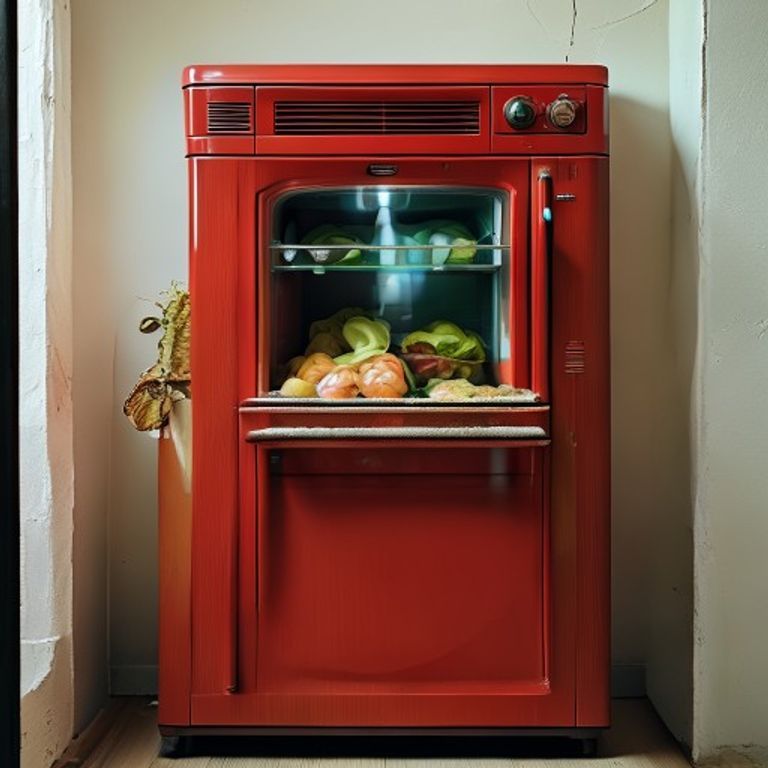
Kerosene Refrigerator: An Overview
Kerosene refrigerators, also known as kerosene absorption refrigerators, represented an innovative solution for food preservation in remote areas or places without access to electricity. Unlike modern refrigerators that use electric compressors, this type of appliance operated based on an absorption cycle powered by the heat generated from burning kerosene.
Operating Principle: Absorption Cycle
The operation of a kerosene refrigerator is based on a thermodynamic cycle involving the evaporation and condensation of a refrigerant fluid, usually a mixture of ammonia and water. The heat from the kerosene flame is the main driver of this cycle:
- Heat Generation: A carefully regulated kerosene flame heats an aqueous solution of ammonia in a lower reservoir.
- Ammonia Evaporation: The heating causes ammonia to evaporate from the solution. Ammonia vapor is lighter than water and rises to a condenser.
- Condensation: In the condenser, the ammonia vapor comes into contact with a cold surface (usually passively cooled by ambient air). As it loses heat, the ammonia vapor condenses into a liquid.
- Evaporation in the Freezer: This liquid ammonia moves to the refrigeration compartment (the freezer). There, it encounters a low-pressure area where it can easily evaporate. Evaporation is a process that absorbs heat, thus cooling the inside of the freezer and keeping food chilled.
- Absorption: The ammonia vapor resulting from evaporation in the freezer is then absorbed back by the original aqueous solution (water) in an absorber. This concentrated ammonia solution is then pumped back to the heating reservoir, completing the cycle.
Main Components
Kerosene refrigerators had several key components:
- Kerosene Burner: Responsible for generating the necessary heat for the cycle.
- Solution Reservoir: Where the ammonia and water solution is heated.
- Condenser: Transforms ammonia vapor into liquid.
- Evaporator (Freezer): Where ammonia evaporates, absorbing heat and cooling the interior.
- Absorber: Where ammonia vapor is reabsorbed by water.
- Piping and Valves: Responsible for directing fluids through the cycle.
Advantages and Disadvantages
Advantages:
- Energy Autonomy: Ideal for locations without access to the electrical grid.
- Mechanical Simplicity: Fewer moving parts compared to electric refrigerators, which could mean less maintenance.
Disadvantages:
- Kerosene Consumption: Requires constant refueling and can be expensive.
- Gas Emissions: Burning kerosene generates byproducts that can be harmful to health and the environment.
- Variable Performance: Efficiency and cooling capacity could vary depending on ambient temperature and flame regulation.
- Maintenance: Cleaning the burner and checking fluid levels were essential.
Despite their limitations, kerosene refrigerators were a technological milestone, enabling food preservation and improving the quality of life in many communities for decades.





