



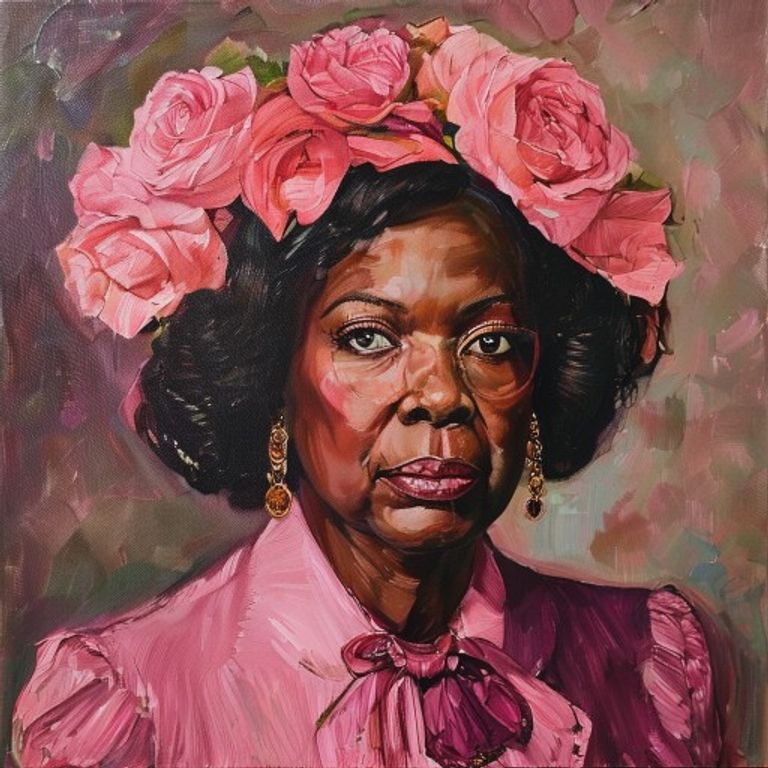
The seamstress who, in 1955, refused to give up her seat on a bus to a white man in Alabama, triggering the boycott that brought down segregation laws in public transportation.
⚠️ Research conducted with the aid of Deep Research is subject to referential ambiguity.
🖥️ Clean HTML code using a proprietary tool.
👥 Research by Guilherme Felipe, Curation by Sílvio Lôbo
The Stop Enigma: Unraveling the True Mystery Behind Rosa Parks' Act
The story is known to millions: December 1, 1955, Montgomery, Alabama. A Black woman, Rosa Parks, refuses to give up her seat to a white passenger on a segregated bus. An act of silent defiance that ignited the flame of the civil rights movement in the United States. However, behind the popularized narrative lies an intricate mosaic of proven facts, diverse interpretations, and gaps that, for a senior investigator of cold cases, represent a true historical mystery.
This article aims to go beyond the myth, scrutinizing the "Rosa Parks Case" with the analytical rigor it deserves, separating the factual from the speculative, and uncovering the layers of complexity that make it a persistent enigma.
1. The Context and the Incident: Where, When, and How the Mystery Began
Racial segregation was the norm in Montgomery, Alabama, in the year 1955. Jim Crow laws imposed separation in virtually every aspect of public life, including transportation. Buses were divided: the front seats were reserved for whites, the back for Blacks, and the middle section was for mixed occupation, but with the implicit rule that a Black person should give up their seat to a white person if the bus became full. It was a system of daily oppression, a silent stage of humiliation.
On that Thursday afternoon, Rosa Parks, a 42-year-old seamstress and secretary for the NAACP (National Association for the Advancement of Colored People), boarded the Cleveland Avenue bus. She sat in the first row of the "colored" section. As the route progressed, the bus filled up. At a certain point, the driver, James F. Blake, ordered four Black passengers, including Parks, to stand up to make room for a white passenger. Three of them obeyed. Rosa Parks remained seated. Blake, confronted with the disobedience, called the police. Rosa Parks was arrested and charged with violating segregation laws.
The mystery does not lie in the act itself, but in the deep motivations and the circumstances that preceded and surrounded it. The simplified narrative of a tired woman who simply did not want to give up her seat, while partially true, obscures a strategic and personal complexity that is still a subject of debate today.
2. Timeline of Events: A Chronological Reconstruction of Key Facts
- December 1, 1955, around 6:00 PM: Rosa Parks boards the Cleveland Avenue bus in Montgomery, Alabama.
- December 1, 1955, after a few stops: The bus fills up, and driver James F. Blake demands that Parks and three other Black passengers give up their seats for a white person.
- December 1, 1955, around 6:30 PM: Rosa Parks refuses to stand. Blake confronts her and then calls the police.
- December 1, 1955, around 7:00 PM: Two police officers, F. B. Day and D. W. Miller, arrive and take Rosa Parks to the police station.
- December 1, 1955, night: Rosa Parks is booked and released on bail.
- December 2, 1955: Leaders of the Black community in Montgomery, including Reverend Martin Luther King Jr. and E. D. Nixon, organize the first call for a boycott of Montgomery buses.
- December 5, 1955: The Montgomery Bus Boycott begins, which would last for 381 days.
- November 13, 1956: The United States Supreme Court declares segregation on Montgomery buses unconstitutional.
- December 20, 1956: The boycott is officially ended.
- December 21, 1956: Rosa Parks and Martin Luther King Jr. are the first to sit on Montgomery buses without segregation.
3. Main Theories: Possible Explanations and Hypotheses
Although the most widespread version is that of a spontaneous act of exhaustion and dignity, several theories attempt to explain the context and depth of the incident:
3.1. The Official and Popular Theory: Fatigue and Dignity
- Description: Rosa Parks, after a long day of work as a seamstress, was genuinely tired and simply decided not to move. Her act was a manifestation of personal dignity in the face of racial humiliation.
- Evidence: Accounts from Parks herself in her autobiography ("My Story") and in various interviews. The simplicity and emotional resonance of the story contributed to its wide acceptance.
- Analysis: This theory is the foundation of the heroic narrative. However, ignoring Parks' history of activism and the context of NAACP mobilization raises questions.
3.2. The "Professional Activist" Theory: Consciousness and Strategy
- Description: Rosa Parks was not just a tired seamstress. She was an experienced activist, secretary of the local NAACP in Montgomery, and had participated in civil disobedience training. Her act was deliberate and planned, as a trigger for the boycott, for which preparations were already underway.
- Evidence:
- Parks' prior activism: She had already worked on cases of racial injustice, including the rape case of Recy Taylor.
- Civil disobedience training: Reports indicate that Parks participated in workshops on non-violent protest at the Highlander Folk School.
- NAACP involvement: E. D. Nixon, president of the local NAACP, had a history of attempting to use segregation cases to challenge the laws. He once said that "the NAACP was looking for a case, a case to rebel against segregation."
- Availability of leaders: The speed with which the boycott was organized suggests that plans were already in motion.
- Analysis: This theory is supported by strong documentary and testimonial evidence. It does not diminish Parks' heroism, but contextualizes it as a strategic action by an experienced militant, rather than an isolated impulse.
3.3. The "Trap" Theory: The Possibility of Provocation
- Description: A more conspiratorial strand suggests that the incident may have been instigated or tolerated by authorities to arrest a prominent Black leader and, thus, intimidate the civil rights movement. Alternatively, that the driver Blake, known for his truculence with Black passengers, acted deliberately to create an incident.
- Evidence:
- Blake's history: Reports from Black passengers indicated that Blake had been hostile on previous occasions.
- Authorities' motivations: The intention to suppress growing Black activism could have led authorities to "turn a blind eye" to a provocation, or even encourage it.
- Analysis: Although Blake's hostility is documented, the idea of a deliberate "trap" by authorities to arrest Parks specifically is difficult to prove. The arrest was real, and the opportunity for the boycott arose from it. This theory tends to attribute an excessive degree of manipulation, without solid evidence of a pre-conceived plan to frame Parks.
3.4. Alternative and Speculative Theories (with little or no solid factual basis)
- Paranormal/Supernatural: Rarely mentioned, but in more esoteric circles, some speculations may arise about "external" influences or predestination.
- Hidden Medical Causes: A hypothesis without any foundation would be that of a sudden malaise of Parks, which prevented her from standing up for health reasons.
- Analysis: These theories lack any scientific, historical, or documentary basis. They are pure speculation without investigative merit.
4. Controversies and Blind Spots: Inconsistencies and Gaps
The analysis of a case, even a historical one, always reveals blind spots and inconsistencies that fuel the debate:
- The "Last Row of the Colored Section": Rosa Parks sat in the first row of the section designated for Blacks. The order to give up the seat usually applied when the white section was full and the "transition zone" (the middle section) needed to be cleared. Blake's order seems to have been stricter than usual, or perhaps Parks was in a more prominent position than the standard narrative suggests, making her refusal more audacious.
- Blake's Knowledge of the Law: There was ambiguity in Montgomery's laws regarding the exact order of giving up seats. Although the practice was clear, the written law could be interpreted differently. This raises the question of whether Blake was applying a strict rule or acting in an overly zealous manner.
- Official Police Reports: Montgomery police reports on Parks' arrest exist. However, the depth of the police investigation into Parks' motivations, or her history of activism, seems to have been minimal. The focus was on disobedience to the law, not the investigation of a "crime."
- The Absence of a "Mastermind": The "professional activist" theory implies a level of planning, but the exact extent of Parks' prior knowledge of the intention to use her case as a spark for a boycott on December 1st, specifically, remains an area of interpretation. E. D. Nixon and other leaders were ready, but the exact moment may have been fortuitous.
- Blake's Silence: The driver James F. Blake was a central figure in the incident. Although known for his behavior, his statements about the specific event are limited compared to those of Parks. He passed away in 2001, taking his personal perspectives with him.
5. Curiosities and Legacy: Cultural Impact and Current Status
The "Rosa Parks Case" transcends a mere police incident to become one of the pillars of American history.
- The Legacy: Rosa Parks' act is widely celebrated as a defining moment in the fight for civil rights. It catalyzed the Montgomery Bus Boycott, a monumental protest that lasted over a year and resulted in the desegregation of buses in the city. This event, in turn, boosted the career of Martin Luther King Jr. and strengthened the national civil rights movement.
- Awards and Recognition: Rosa Parks received numerous honors, including the Presidential Medal of Freedom and the Congressional Gold Medal.
- Current Status of the Case: The legal case that led to Rosa Parks' arrest was resolved with the Supreme Court's decision. There is no "open case" in the criminal sense. However, the "mystery" of the incident remains alive in historical and academic debates about the motivations and complexity of the act.
- The Transformation of a Myth: The initial narrative of Parks as a "mother of the movement" who acted purely out of fatigue, while inspiring, has given way to a deeper understanding of her militancy and her strategic role. The transformation of myth into history, with all its nuance, is the most intriguing legacy of this case.
- Disinformation and Revisionism: Unfortunately, Parks' story has also been the target of disinformation, seeking to trivialize her act or attribute it to less noble motivations, which highlights the importance of rigorous research and factual presentation.
In short, the "Rosa Parks Case", far from being a simple police record, is a fascinating case study on history, activism, strategy, and the complexity of collective memory. The woman who, "tired," refused to give up her seat, became, with her wisdom and courage, the spark that lit the fight for justice for millions.





