



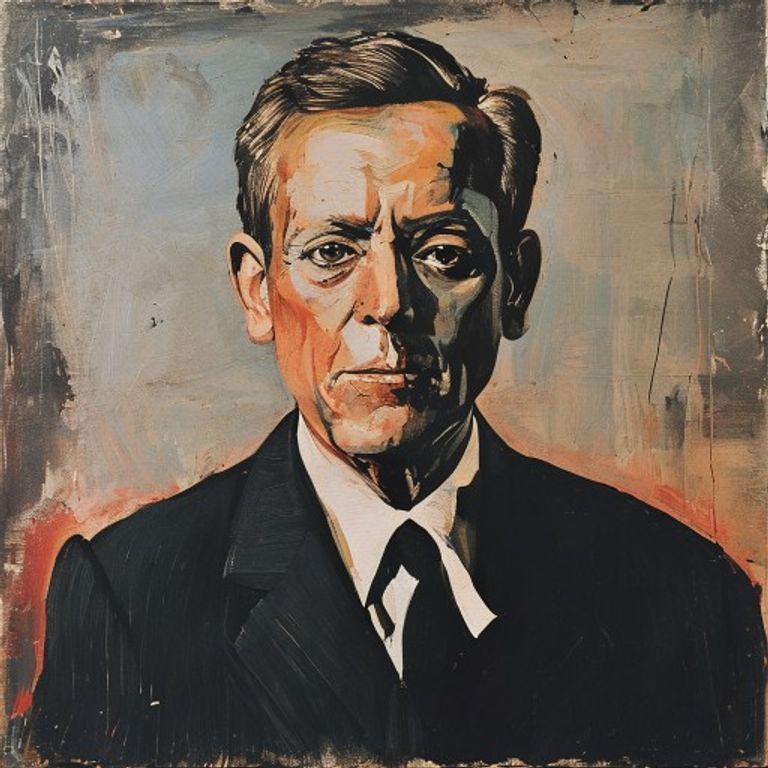
The senator was shot in 1968 shortly after winning the California primary; the case is marked by audio recordings that suggest the presence of a second shooter at the crime scene.
⚠️ Research conducted with the aid of Deep Research is subject to referential ambiguity.
🖥️ Clean HTML code using a proprietary tool.
👥 Research by Guilherme Felipe, Curation by Sílvio Lôbo
The Robert F. Kennedy Assassination Case: A Legacy of Unanswered Questions
The night of June 5, 1968, at the B'nai B'rith Temple in Los Angeles, California, sealed the fate of Robert F. Kennedy, one of the most promising political leaders in the United States. His death, resulting from gunshot wounds following his victory in the California presidential primary, not only shook the nation but also sowed fertile ground for one of the most persistent mysteries in American history. What appeared to be the isolated act of a deranged individual quickly unfolded into a labyrinth of inconsistencies and doubts that, decades later, still echo.
1. The Context and the Incident: Where, When, and How the Mystery Began
In 1968, the United States was experiencing a period of intense turmoil. The Vietnam War was dragging on, the civil rights movement was gaining strength, and the country was still recovering from the assassination of John F. Kennedy, Robert's brother, in 1963. Robert F. Kennedy, a senator from New York, emerged as a central figure in the Democratic presidential race, representing a hope for change and progress for many. His message of social justice and ending the war resonated deeply in a divided country. In the early hours of June 6, 1968, after celebrating his victory in the California primary at an event at the B'nai B'rith Temple, Kennedy was walking through the Ambassador Hotel kitchen corridor, greeting voters, when he was shot.
2. Timeline of Events
- June 5, 1968, night: Robert F. Kennedy delivers his victory speech for the California primary at the Ambassador Hotel.
- June 6, 1968, approximately 12:10 AM PST: Kennedy walks through the hotel kitchen corridor greeting people.
- June 6, 1968, approximately 12:15 AM PST: Sirhan Sirhan, a Palestinian immigrant, opens fire. Kennedy is struck by multiple bullets. Several other people are wounded.
- June 6, 1968, hours after the shooting: Kennedy is taken to the Central Receiving Hospital in Los Angeles, where he undergoes emergency surgery.
- June 6, 1968, approximately 1:44 AM PST: Robert F. Kennedy is pronounced dead.
- June 6, 1968: Sirhan Sirhan is arrested at the scene, carrying a .22 caliber pistol.
- 1969: Sirhan Sirhan is tried and convicted of first-degree murder, sentenced to death (later commuted to life imprisonment).
3. The Main Theories
The official narrative points to Sirhan Sirhan as the sole shooter. However, the complexity of the events and the inconsistencies found have fueled various theories:
3.1. Official Theory: The Lone Act of Sirhan Sirhan
Proven Facts: Sirhan Sirhan was caught in the act at the crime scene with the weapon in hand. He confessed to the crime, and his stated motivations involved Kennedy's support for Israel and his opposition to the Vietnam War. Several witnesses place him as the shooter. The recovered weapon was his property.
Logic: This is the official conclusion of the police investigation. The presence of the shooter and his confession seem to corroborate this hypothesis, being the most direct and supported by immediate material evidence.
3.2. Conspiracy Theory: Multiple Shooters and Third-Party Involvement
Points of Controversy: The main basis for this theory lies in the number of Kennedy's wounds. He was struck by at least four bullets. Testimonies, including that of former FBI agent Paul Schrade (wounded in the same attack), indicate the possibility of shots coming from different directions, suggesting the presence of a second shooter. Initial forensic analysis was inconclusive regarding the origin of all projectiles. The possibility of involvement by intelligence agencies (such as the CIA or KGB), the mafia, or anti-Castro groups due to Kennedy's support for Cuba has been speculated.
Logic: The logic behind this theory lies in the idea that a figure as prominent and politically influential as RFK would be a target for various factions with powerful interests. The number of shots and the confusion at the scene could have been exploited to cover up a larger plan.
3.3. Sirhan Sirhan's Mental State Theory: Coercion or Hypnosis
Points of Controversy: In later moments, Sirhan Sirhan raised doubts about his own memory of the events, suggesting he might have been hypnotized or drugged to commit the crime. His brother, Munir Sirhan, also testified about possible third-party involvement in manipulating Sirhan.
Logic: This theory suggests that Sirhan may not have been the primary architect of the crime, but rather a puppet controlled by external forces that desired Kennedy's death.
3.4. Paranormal or Esoteric Theories (Less Common)
Speculation: Although less robust in terms of evidence, some theories suggest supernatural influences or unfulfilled premonitions.
Logic: Based on coincidences, dreams, or interpretations of signs. These theories, while fascinating, lack any empirical or scientific basis.
4. Controversies and Blind Spots
The police investigation, although it led to the conviction of Sirhan Sirhan, was marked by:
- Inconsistencies in the number of shots: Initial ballistics forensics could not determine with certainty how many bullets hit Kennedy and from which direction. The official conclusion that all shots came from the front, fired by Sirhan, has been questioned.
- Lost or unexplored evidence: Reports suggest that the crime scene was not properly secured, and some evidence may have been lost. Sirhan's weapon was not found with him immediately after the arrest, raising questions about its handling.
- Conflicting testimonies: Several eyewitnesses presented divergent accounts regarding the number of shooters and the dynamics of the shots.
- The "additional firearm": There are persistent allegations that a second weapon, which was never found, was present.
- Intelligence reports: Files declassified later raised suspicions about the prior knowledge of some intelligence agencies regarding threats to Kennedy.
- The role of security: The effectiveness of the security detail around Kennedy that night has also been questioned.
Although some later reports and analyses have attempted to reopen or re-examine the case, the decisive evidence to change Sirhan Sirhan's conviction or confirm a conspiracy has never been conclusively presented to the general public.
5. Trivia and Legacy
The assassination of Robert F. Kennedy is often compared to that of his brother, symbolizing the loss of a generation of leaders and a political idealism that seemed to be shaping the future of the United States. The case fueled a lasting skepticism regarding official narratives and inspired countless works of fiction, documentaries, and independent investigations.
- The legacy of uncertainty: The RFK case, like the JFK case, became an icon of conspiracy theory, perpetuating the idea that crucial events in American history are kept secret by powerful forces.
- The fate of Sirhan Sirhan: He remains in prison, having had his parole requests denied repeatedly. In recent years, his family has expressed an intention to reopen his case, citing new evidence or doubts about his full culpability.
- The search for "the other shooter": The idea of a second shooter persists, fueled by reports and analyses that seek conclusive evidence.
- Cultural impact: The death of RFK is remembered as a turning point, marking the end of an era of optimism and hope for many Americans.
The death of Robert F. Kennedy is, ultimately, an American tragedy with an epilogue that continues to challenge the conventions of truth. While the official history points to a single culprit, the shadows of doubt and the unanswered questions persist, keeping the case alive in the collective memory and the investigative imagination.





