



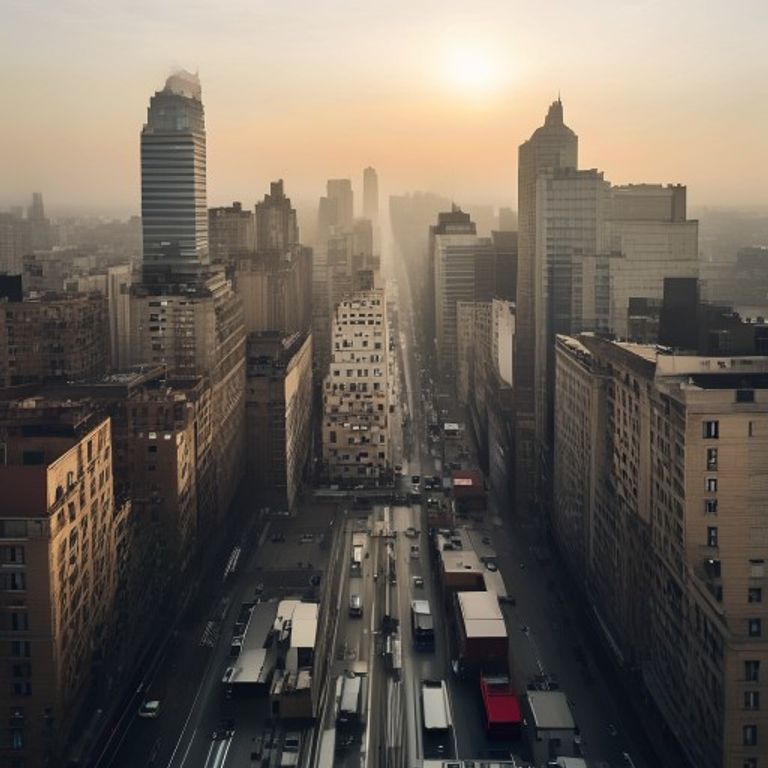
The theory regarding an advanced global empire that was allegedly erased from official history, based on ancient maps and similar classical architecture across different continents.
⚠️ Research conducted with the aid of Deep Research is subject to referential ambiguity.
🖥️ Clean HTML code using proprietary tools.
👥 Research by Guilherme Felipe, Curation by Sílvio Lôbo
The Mystery of the City of Tartaria: A Veil of Silence over a Forgotten Empire
By [Your Senior Investigative Journalist Name]
In the intricate labyrinth of history, some chapters seem to have been deliberately erased, leaving a trail of unanswered questions and a thick veil of mystery. Among them, the case of the "City of Tartaria" stands out as a persistent enigma, fueling speculations that range from the most rigorous historical investigation to the most fantastic conspiracy theories. This article aims to unravel the layers of this intricate puzzle, separating what has been consolidated as fact from what remains in the realm of hypothesis.
1. The Context and the Incident: A Redefined Empire and a Historical Void
The mystery of the "City of Tartaria" does not refer to a single isolated incident, but rather to a radical and controversial reinterpretation of a vast territory and, by extension, of a history that, according to some researchers and enthusiasts, was intentionally suppressed or rewritten. Tartaria, in its broadest historical sense, referred to a vast region of Central Asia, vaguely defined and inhabited by Turkic and Mongol peoples, which was widely mapped and documented by European explorers and cartographers over the centuries. Accounts from travelers and cartographic images from the 17th and 18th centuries frequently depicted "Grand Tartaria" as a colossal domain, with opulent cities and an advanced civilization.
The "incident," therefore, lies in the way this geographical and cultural entity seems to have disappeared from conventional historical records. The transition from a recognized "Grand Tartaria" to a collection of historically less prominent or distinct regions, such as Siberia, Kazakhstan, Mongolia, and parts of China, raises questions about the nature of historical information and who holds the power to shape it.
2. Timeline of Events (Reconstruction and Questioning)
Reconstructing a timeline for this "mystery" is, in itself, a challenge, as it is not a single event, but a historical process that is being reinterpreted. However, we can trace relevant milestones:
- Medieval and Renaissance Period: European cartographers, based on travelers' accounts and traditions, begin to delineate the vast and little-known region of Central Asia as "Tartaria." Myths and realities blend in these representations.
- 17th and 18th Centuries: "Grand Tartaria" is depicted on prominent maps, often describing an empire with significant administrative and cultural structures. Explorers' accounts describe surprising cities and technologies.
- 19th Century: With imperialist expansion, especially Russian, the region is gradually explored, mapped, and incorporated into new empires. The historical narrative begins to focus more on regional divisions and specific ethnicities.
- 20th and 21st Centuries: Emergence of alternative theories and independent studies that question the prevailing historical narrative about Tartaria. The internet and the digitization of historical archives allow for the dissemination of these new interpretations.
It is crucial to note that the "disappearance" of Tartaria as a unified whole is not a specific date, but a slow erosion of its representation as a coherent entity in favor of more modern geographical and political divisions.
3. The Main Theories: From Skepticism to the Grand Conspiracy
The mystery of Tartaria is fertile ground for various theories, each with its own logic and level of evidence.
3.1. The Conventional Historical Explanation (Proven Fact)
The prevailing view among academic historians maintains that "Tartaria" was a generic and often imprecise geographical designation used by Europeans to refer to vast areas of Central Asia that they did not fully understand. With the advancement of exploration, mapping, and the rise of modern empires and nations in the region, the need for such a broad designation diminished, being replaced by more specific and politically defined names. The "opulent cities" described would, in many cases, be the capitals of historical empires like the Mongol, or important trade centers that flourished and declined over time, part of the natural cycle of history.
3.2. The "Grand Tartaria" Theory as a Unified Empire (Alternative Hypothesis)
This theory, popular among independent researchers and enthusiasts, posits that Tartaria was not just a geographical term, but the designation of a powerful and technologically advanced empire that covered much of Eurasia. Its proponents argue that:
- Architecture and Technology: Many monumental architectural structures around the world, such as buildings with domes, arches, and details that seem "out of place" in their local historical context, actually belong to the Tartarian civilization. The technology required to build these edifices would have been lost or suppressed.
- Global Cataclysm: The destruction or suppression of this empire would have been the result of a cataclysmic event, such as a large-scale war, a global flood, or a destructive technology used to erase its existence.
- Historical Reset: After the collapse of Tartaria, global elites would have orchestrated a "historical reset," rewriting records, suppressing the true history, and presenting an alternative timeline to maintain control.
Logic of the Theory: The theory seeks to explain perceived inconsistencies in historical records, architectural anomalies, and the apparent lack of continuity of certain civilizations. It is based on the interpretation of ancient maps, the analysis of architectural styles, and a general distrust of official historical narratives.
3.3. Conspiracy and Paranormal Theories
Within the spectrum of alternative theories, some more extreme versions suggest the intervention of extraterrestrial entities in the Tartarian civilization, or that the empire still exists secretly, with its remnants operating in the shadows. These hypotheses lack any factual evidence and enter the realm of the paranormal and fiction.
4. Controversies and Blind Spots: What Do the Records Hide?
The controversies surrounding Tartaria arise from the divergent interpretation of the same "facts." Significant blind spots include:
- The Nature of Ancient Maps: The accuracy and intent behind the 17th and 18th-century European maps that depict "Grand Tartaria" are a point of contention. Were they scientific representations or based on legends and speculation? Official reports of expeditions from the time are rare or incomplete.
- Architectural Evidence: The attribution of certain structures to a hypothetical Tartarian civilization lacks conclusive archaeological expertise. Attributions are often based on perceived stylistic similarities, without in-depth analysis of materials, construction techniques, and carbon-14 dating in specific Tartarian contexts.
- Official Silence: What led to the devaluation and eventual obliteration of the term "Tartaria" in formal historical records? The lack of official investigation reports explaining this transition fuels theories of suppression.
- Loss of Artifacts and Documents: The alleged loss of artifacts and documents crucial to the history of Tartaria is a central argument for conspiracy theories, but the lack of concrete proof of this loss makes verification difficult.
5. Curiosities and Legacy: A Living Enigma in the Digital Age
The mystery of Tartaria, despite its ethereal nature, has left a significant cultural legacy, especially with the rise of the internet:
- Online Communities: Platforms like YouTube, Reddit, and forums dedicated to alternative history are filled with discussions, videos, and theories about Tartaria. These communities act as repositories of information and debate, often mixing facts with speculation.
- Aesthetics and Inspiration: The idea of a lost empire with grand architecture inspires artists, writers, and content creators, giving rise to works of fiction and creative debates.
- Distrust in Established Narratives: The case of Tartaria reflects a growing trend of distrust toward official historical narratives, encouraging the search for "hidden truths."
- Current Status: The case of Tartaria is not a "reopened" case in a police or judicial sense. It remains a topic of marginal academic research and a significant cultural phenomenon in the spheres of alternative history and conspiracy theories. There are no recent official reports on the subject, as Tartaria is widely considered an obsolete historical geographical convention by academia.
The "Mystery of the City of Tartaria" remains, therefore, a fascinating case study on how history can be interpreted, contested, and, for some, deliberately erased. While academia clings to conventional geographical and historical explanations, the popular imagination continues to build a lost and powerful empire from the shadows of a poorly understood past, a lasting testament to the persistence of the enigma and the eternal human search for answers.





