



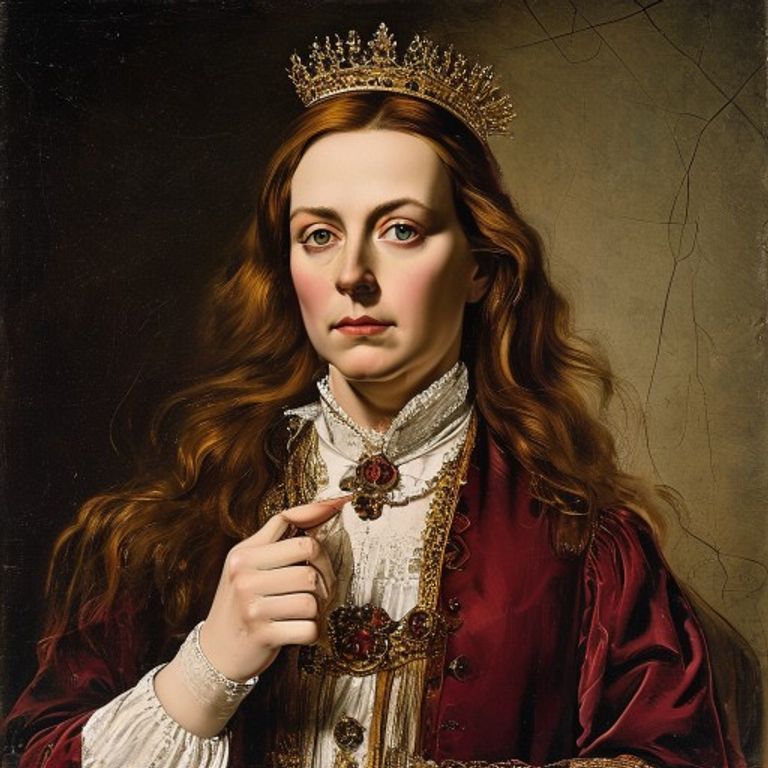
The pioneering film inventor who vanished on a train in France in 1890, shortly before patenting his work and conducting public demonstrations in the USA.
⚠️ Research conducted with the aid of Deep Research is subject to referential ambiguity.
🖥️ Clean HTML code using a proprietary tool.
👥 Research by Guilherme Felipe, Curation by Sílvio Lôbo
The Le Prince Enigma: The Inventor Who Disappeared on the Eve of the Cinematographic Revolution
In a world on the verge of a visual revolution, where the magic of moving images was taking its first trembling steps, one man stood out as a visionary pioneer. Louis Le Prince, a French inventor based in England, was about to cement his place in history, but his fate was sealed by a disappearance as abrupt as it was inexplicable. On September 12, 1890, aboard a train from d'Orsay, Paris, Le Prince evaporated, leaving behind a legacy of innovation and one of the most intriguing mysteries of the late 19th century.
1. The Context and the Incident: The Beginning of the Abyss
Louis Le Prince was not an unknown name in the universe of photography and invention. He had been developing, with surprising success, prototypes of cinematographic cameras and projectors, surpassing in some aspects the experiments that would later be credited to names like the Lumière brothers. His journey in 1890 was crucial: he intended to travel from Dijon to London, where he would present his latest innovations in a public demonstration that promised to revolutionize how the world viewed and recorded reality.
The plan was simple: take a train from Dijon to Paris, where he would spend the night before boarding a ship to England. Accompanied by his son, Adolphe Le Prince, the inventor boarded the train at the Dijon station on the morning of September 12. However, upon arriving at the d'Orsay station in Paris, something went wrong. Louis Le Prince disembarked from the train, but his son Adolphe, who was accompanying him to ensure he reached the Parisian hotel and, subsequently, the port, found himself faced with his father's absence. The police were notified, but the inventor had vanished without a trace.
2. Timeline of Crucial Events
- 1888: Louis Le Prince films the first moving images in Leeds, England, with his Single-Lens Camera. These films, such as the famous "Roundhay Garden Scene," are considered by many to be the birth of cinema.
- Early 1889: Le Prince obtains a provisional patent in the United States for his "apparatus for the recording and reproduction of moving images," but funding for large-scale production becomes an obstacle.
- Late 1889: Aiming to secure funds and demonstrate his innovations, Le Prince decides to return to Europe to conduct a series of presentations.
- September 1890: Le Prince travels to France, visiting family in Dijon and preparing for his trip to London.
- September 12, 1890: Louis Le Prince boards a train from Dijon to Paris. He is last seen disembarking at the d'Orsay station, Paris.
- After September 12, 1890: The disappearance of Louis Le Prince is reported to the authorities. Initial investigations find no concrete leads.
- 1891: The French police declare the case closed due to a lack of progress.
- 1897: The Lumière brothers hold their first public exhibition of moving images in Paris, cementing their name in the history of cinema.
3. The Main Theories: Weaving Hypotheses about the Void
The absence of a body and the sudden nature of Le Prince's disappearance gave rise to a myriad of theories, ranging from the plausible to the fantastic.
Most Likely Hypotheses (Scientific and Police):
- Suicide: A theory considered, but without concrete evidence. Le Prince faced financial difficulties and professional pressure, which could have led to such an act. However, his enthusiasm for the upcoming presentations makes this hypothesis less convincing.
- Accident: It is possible that Le Prince suffered a serious accident at the station or nearby, and his body was not identified. The heavy traffic at a train station could have facilitated a tragic event.
- Deliberate Escape: Another possibility is that Le Prince, anticipating problems or seeking a new life away from his responsibilities, orchestrated his own disappearance. However, the absence of any subsequent communication or apparent planning weakens this thesis.
Alternative and Conspiracy Theories:
- Murder by Competitors: This is one of the most persistent theories. Many believe that Thomas Edison, a fierce rival in the field of moving image technology, might have orchestrated Le Prince's disappearance to eliminate competition and ensure market dominance. Le Prince's absence allowed the Lumières and Edison to consolidate their inventions without the direct threat of Le Prince and his patents. There are speculations that Le Prince might have been lured into an ambush in Paris.
- Murder for Debts or Revenge: Le Prince had debts and family disputes, including a scandal involving his wife and one of his employees. These tensions could have led to an attempt on his life, possibly orchestrated by someone with whom he had conflicts.
- Industrial Espionage: In an era of intense technological racing, the possibility that Le Prince was captured by agents of a foreign power interested in his inventions cannot be entirely ruled out. However, there is a lack of evidence to corroborate this idea.
- Paranormal/Supernatural Theories: At one extreme, some contemplate the idea of a supernatural disappearance, perhaps through a portal or an inexplicable phenomenon. This thesis, while attractive to the folklore of mystery, lacks any empirical basis.
4. Controversies and Blind Spots: The Cracks in the Investigation
The investigation into the disappearance of Louis Le Prince was marked by failures and omissions that fueled conspiracy theories:
- Lack of Police Rigor: Reports from the time suggest that the Parisian police did not demonstrate the necessary commitment to the search for Le Prince. The speed with which the case was closed is a point of great questioning.
- Role of Adolphe Le Prince: Le Prince's son, Adolphe, was primarily responsible for reporting the disappearance and participating in the searches. His collaboration with the authorities is fundamental, but the way he handled the situation and the possible motives behind some of his actions continue to generate speculation. Some suggest that Adolphe might have had some involvement, intentional or not, in his father's disappearance.
- Lost or Ignored Evidence: There are no clear records that a thorough forensic examination of the station or Le Prince's belongings was carried out. Potential clues could have been lost to time and the lack of an adequate investigation protocol for the era.
- Conflicting or Incomplete Testimonies: The lack of reliable eyewitnesses regarding the exact moment and circumstances of Le Prince's disappearance at the d'Orsay station contributes to the cloudiness of the case.
5. Curiosities and Legacy: The Echo of a Silenced Visionary
The disappearance of Louis Le Prince cast a shadow over his legacy, but it did not erase it completely:
- The Forgotten Inventor: For decades, Le Prince's name was relegated to footnotes in the history of cinema, overshadowed by the Lumière brothers and Thomas Edison. Only with more in-depth research in the late 20th and early 21st centuries was his importance as a precursor to cinema duly recognized.
- Inspiration for Fiction: The mystery of Le Prince's disappearance has inspired books, documentaries, and even episodes of television series, perpetuating the fascination surrounding his figure and his enigma.
- Current Status of the Case: The case of Louis Le Prince remains officially closed. There has been no formal reopening of the investigations by the authorities. However, the community of cold case researchers and cinema history enthusiasts continues to debate and seek new interpretations, fueling the flame of a mystery that, perhaps, will never be completely unraveled.
The case of Louis Le Prince is a poignant reminder of how history can be shaped not only by achievements but also by the silences and voids left behind. The inventor who was about to show us the world in motion disappeared in motion, becoming himself part of one of the most enduring enigmas in history.





