



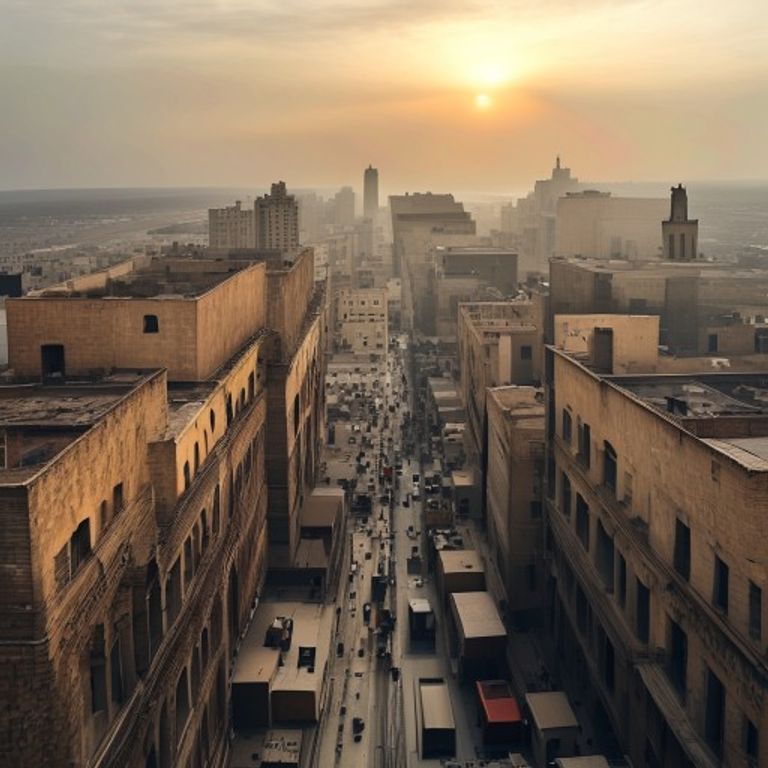
A civilization mentioned in ancient texts that supposedly existed in southern Spain and disappeared suddenly, being associated by some with the legend of Atlantis.
⚠️ Research conducted with the aid of Deep Research is subject to referential ambiguity.
🖥️ Clean HTML code using a proprietary tool.
👥 Research by Guilherme Felipe, Curation by Sílvio Lôbo
The Mystery of Tartessos: The Lost Civilization and Its Shadows
As a senior investigative journalist, I have spent years unraveling the veils that cover historical mysteries and inexplicable phenomena. Few cases, however, exert the fascination and enigma of Tartessos – a legendary civilization, whispered in ancient chronicles, whose sudden and mysterious disappearance continues to challenge archaeologists, historians, and the most astute investigators.
1. The Context and the Incident: Where, When, and How the Mystery Began
The mystery of Tartessos is not an isolated incident with a set date and time, but rather the deafening silence that followed a vibrant existence. Located in the southwest of the Iberian Peninsula, more specifically in the region of modern-day Andalusia, Spain, Tartessos flourished between the 9th and 6th centuries BC. The first references to this rich and advanced civilization, known for its opulence in precious metals, especially silver, and for its advanced trade routes with the eastern Mediterranean, appear in ancient Greek texts, such as the works of Herodotus.
The "incident" that marks the beginning of the mystery is its gradual, yet definitive, disappearance from historical and archaeological records around the 6th century BC. There is no single recorded cataclysmic event that explains the collapse of such a prominent society. Instead, the traces of its culture and presence become increasingly scarce until they vanish almost completely, opening space for speculation about what really happened to the Tartessians.
2. Timeline of Key Events
- 9th Century BC: First signs of cultural and commercial development that can be associated with Tartessos. Consolidation of trade routes with Phoenicians and Greeks.
- 8th-7th Centuries BC: Peak of the Tartessian civilization. Economic prosperity driven by the extraction and trade of silver, gold, and other ores. Development of its own writing system (still partially deciphered).
- 6th Century BC: Beginning of the decline. Archaeological evidence shows a decrease in activities and standard of living. References in ancient sources become sparse or cease.
- Post-Tartessos Period: The region becomes dominated by other powers, such as Carthage, and the Tartessian culture seems to have merged or been assimilated, without leaving an easily identifiable cultural legacy.
3. The Main Theories
The absence of definitive answers regarding the fate of Tartessos has generated a range of theories, from the most plausible, based on scientific evidence, to the most fantastic.
3.1. Scientific and Archaeological Hypotheses
- Natural Catastrophe: The most frequently raised hypothesis is that of a devastating natural event. The geographical location, near the coast, suggests the possibility of a major tsunami or an earthquake followed by one, capable of destroying cities and drastically changing the region's geography. The geological formation of the area and recent and past seismic activity are points of investigation.
- Climate and Environmental Changes: Drastic changes in climate, leading to desertification or scarcity of water resources, could have made the region uninhabitable. The overexploitation of natural resources, especially minerals, may also have led to depletion, culminating in an economic and social collapse. Paleoclimatology reports of the region are crucial here.
- Conquest and Assimilation: The rise of neighboring powers, such as Carthage, with their expansive commercial and military interests, may have led to the defeat and eventual cultural assimilation of the Tartessians. The lack of evidence of large-scale war can be explained by gradual subjugation or peaceful absorption through marriages and alliances.
- Forced or Voluntary Migration: Faced with environmental or political pressures, the Tartessians could have migrated en masse to other regions, taking their culture and technology with them. This migration, however, left no clear marks of settlements with distinct Tartessian characteristics in other known areas.
3.2. Alternative, Conspiracy, and Paranormal Theories
- Extraterrestrials: A fringe theory suggests that the advanced technology and knowledge of the Tartessians (their metal artifacts and writing) were influenced or even brought by extraterrestrial beings, and that the disappearance may have been a "retrieval" by these entities. This theory lacks any scientific evidence and is based on speculative interpretations of artifacts.
- Dimensional Portal or Passage to Another World: Inspired by myths and legends, some fanciful speculations propose that the Tartessians found a way to transcend to another dimension or plane of existence, whether intentionally or accidentally.
- Conspiracy to Conceal Knowledge: A strand of conspiracy theories suggests that Tartessian knowledge, particularly in metallurgy and astronomy, was so advanced that an elite or secret organization took it upon itself to "hide" it from the public, eliminating or dispersing the Tartessians to prevent such secrets from being shared.
4. Controversies and Blind Spots
The main blind spot in the investigation of Tartessos is the scarcity and dispersion of archaeological evidence. Despite significant discoveries, such as the Treasure of El Carambolo, near Seville, which presents an unmistakable style and impressive wealth, the exact location of a Tartessian capital is still debated and has not been definitively confirmed.
Inconsistencies:
- The Interpretation of Tartessian Writing: The Tartessian script, known as "Paleohispanic," is known for some signs, but its complete decipherment and the ability to read it as a language are still limited, preventing direct access to Tartessian thought and history.
- Fragmented Historical Records: The ancient sources that mention Tartessos are few and often written by peoples who interacted with it externally, offering an incomplete and potentially biased point of view.
- Destruction or Concealment of Evidence: The lack of traces of large-scale cities and extensive necropolises raises the question of whether there was a deliberate destruction of habitation and burial sites, or if many of them were simply swallowed by the sea or sand, becoming inaccessible.
Key Testimonies: Accounts by Herodotus, who describes Tartessos as a kingdom of great wealth, are crucial, but they may also be embellished or based on second-hand rumors. Excavations carried out by archaeologists such as Jürgen Untermann and, more recently, by Spanish teams at sites like Cancho Roano, have revealed aspects of Tartessian life and culture, but not the mystery of its end.
5. Curiosities and Legacy
The legacy of Tartessos lies in its aura of mystery and the fascination it exerts on the collective imagination. The idea of an advanced civilization that disappeared without a trace, as if swallowed by the earth or time, fuels a sense of loss and admiration for what could have been.
- The Treasure of El Carambolo: One of the most spectacular archaeological discoveries associated with Tartessos, this treasure consists of a solid gold pectoral and other precious objects, evidencing the wealth and artistic mastery of the civilization.
- Influence on Popular Culture: Tartessos has inspired countless works of fiction, historical novels, and documentaries, fueling the idea of an Iberian Atlantis.
- Current Status: The Tartessos case is not a "cold case" in the criminal sense, but rather an active field of research. New excavations and prospecting technologies, such as the use of drones and ground-penetrating radars, continue to reveal new traces and refine existing theories. The scientific community remains divided on the exact cause of the collapse, but the mystery of Tartessos remains one of the most intriguing in world archaeology, a constant invitation to investigation and reflection on the cycles of rise and fall of civilizations.
As the sands of time continue to bury and reveal secrets, the enigma of Tartessos remains a testament to the fragility of human existence in the face of the forces of nature and the inexorability of history.





