



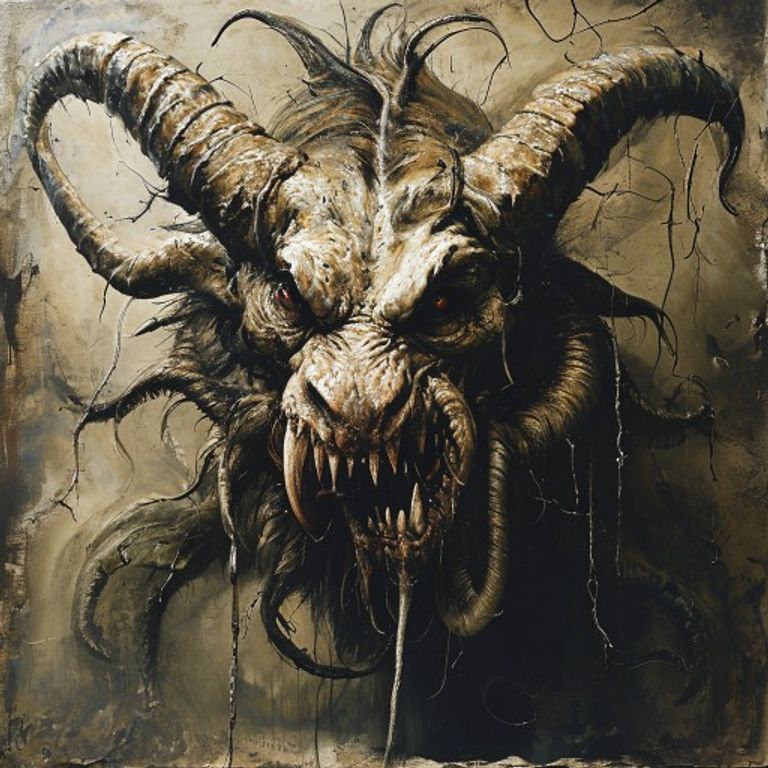
A legend about a deformed heir who was allegedly kept in a secret chamber in a Scottish castle for his entire life, a secret shared only by the Earls of Strathmore.
⚠️ Research conducted with the aid of Deep Research is subject to referential ambiguity.
🖥️ Clean HTML code using a proprietary tool.
👥 Research by Guilherme Felipe, Curation by Sílvio Lôbo
The Enigma of the Glamis Monster: A Silenced Horror in the Heart of Scotland
By [Your Senior Investigative Journalist Name]
Glamis, Scotland. A name that evokes images of imposing castles, ancient histories, and, for some, a primal terror that haunts the corridors of one of the most celebrated Scottish castles. The "Glamis Monster" is not just a regional legend; it is a persistent mystery that defies rational explanation, fueled by decades of official silence and rampant speculation. This article delves into the depths of this cold case, separating fact from fiction in search of the truth hidden in the shadows of Glamis Castle.
The Context and the Incident: Where, When, and How the Mystery Began
Glamis Castle, a historic landmark with origins dating back to the 14th century, has been the epicenter of dark narratives for centuries. However, the specific focus on the "Glamis Monster" crystallized in the late 19th and early 20th centuries, although reports of a "deformed" or "abnormal" child existed more diffusely before then. The central story revolves around a secret member of the Bowes-Lyon family, the Earls of Strathmore and Kinghorne, owners of the castle.
The alleged incident that gave rise to the most popular legend refers to the birth of an heir with severe deformities, who was reportedly kept in absolute secrecy. It is believed that this child, whose exact name and fate are the subject of intense debate, lived and died within the castle walls, subsequently being "forgotten" or omitted from family and public records. The opacity surrounding their existence and treatment is the seed of the mystery that endures.
Timeline of Events: A Fragmented Reconstruction
Reconstructing an accurate timeline for the Glamis Monster case is inherently difficult due to the scarcity of official documentation and the anecdotal nature of many reports.
- 14th Century onwards: Construction and occupation of Glamis Castle, which becomes a center of aristocratic activity and, consequently, family secrets.
- Late 19th / Early 20th Century (speculative period): Alleged birth and concealment of the "Glamis Monster," an heir with deformities. This is the most cited period for the incident that underpins the modern legend.
- Subsequent decades: Rumors and whispers about the existence of a "monster" or "dark secret" within the castle begin to circulate, fueled by dismissed staff, employees, and curious visitors.
- 1920s-1930s: The case gains notoriety with more detailed and persistent reports, often linked to bets made by family members about who could spend the night in a certain room without hearing noises.
- 1950s - 1970s: Continued popularity of the legend. Attempts to obtain concrete information about the individual in question and the family history fail to break the established silence.
- Recent decades: The case remains a cultural enigma and a point of interest for paranormal investigators, historians, and the general public, but without significant new official developments.
The Main Theories: Unraveling the Hypotheses
The search for an explanation for the Glamis Monster spans a spectrum of theories, from the most rational and scientific to the most esoteric.
Scientific and Police Theories (Most Likely)
- Genetic Diseases and Deformities: The most plausible hypothesis, from a medical and scientific standpoint, is that a family member suffered from a rare genetic disease that resulted in severe physical deformities. Conditions such as extreme hydrocephalus, severe achondroplasia, or other genetic syndromes could explain the "monstrous" appearance. The concealment would be an attempt to avoid social stigma and protect the family reputation at a time when such conditions were less understood and more stigmatized.
- Stillborn or Prematurely Deceased Children: It is possible that the "story" was romanticized or distorted from the birth of a child who passed away shortly after birth or who presented severe anomalies incompatible with life. The difficulty in obtaining accurate medical records from past centuries contributes to this uncertainty.
- Abuse and Concealment: In past eras, individuals considered "different" were often subject to mistreatment and isolation. The concealment may have been a way to hide an inconvenient family secret, possibly related to unrecognized mental or physical health issues.
Alternative, Conspiracy, or Paranormal Theories
- Gamblers and the "Secret Man": A popular theory suggests that the legend arose from bets made by family members to test the courage of guests. It was said that there was a "secret man" (the alleged monster) living in the corridors, and bets were made on who could find him or hear his sounds. This narrative, while intriguing, lacks robust documentary evidence.
- A Survivor of a Family Tragedy: Some speculate that the story could involve a family member who survived a tragedy that resulted in disfigurement or severe psychological trauma, being kept in seclusion to avoid suffering and exposure.
- Ghosts and Paranormal Activity: The atmosphere of the castle, filled with history and legends, naturally attracts paranormal explanations. Reports of apparitions, strange sounds, and feelings of oppression are often attributed to the "spirit" of the monster, trapped in a cycle of suffering and seclusion.
- Conspiracy and State Secrets: More conspiratorial theories suggest that the concealment of the individual was to protect a state secret or a family member involved in illicit activities, and the "monster" legend was a smokescreen to divert attention.
Controversies and Blind Spots: Gaps in the Investigation
The main obstacle to resolving the Glamis Monster case lies in the extreme lack of concrete evidence and the persistence of family secrecy.
- Absence of Official Records: There are no birth, death, medical, or census records for an individual who fits the description of the "monster." Police reports or formal investigations into the matter appear to be non-existent.
- Conflicting and Anecdotal Testimonies: The existing reports come largely from the memories of dismissed employees, popular rumors, and narratives that have transformed over time. The veracity and accuracy of these testimonies are difficult to verify.
- The Silence of the Bowes-Lyon Family: The Bowes-Lyon family, owners of Glamis Castle, has always maintained a strict silence on the matter. This refusal to comment or provide information fuels suspicion and speculation, but it can also be interpreted as an attempt to protect privacy or preserve the dignity of ancestors.
- Ignored or Missing Clues: Over the years, there have been allegations that certain documents or evidence that could clarify the mystery were deliberately destroyed or kept secret. The lack of access to specific private or historical archives complicates the investigation.
- Inconsistency of Descriptions: Descriptions of the "monster" vary significantly between reports, from a deformed baby to an adult with a grotesque appearance. This inconsistency suggests the evolutionary nature of the legend rather than an accurate factual record.
Curiosities and Legacy: A Terror That Persists
The cultural impact of the Glamis Monster case is undeniable. The story has become an icon of Scottish folklore, inspiring books, documentaries, and fueling the reputation of Glamis Castle as one of the most haunted locations in Great Britain.
- The Queen Mother's Home: Curiously, Glamis Castle was the birthplace of the Queen Mother, Elizabeth Bowes-Lyon. This adds a layer of royal fascination to the mystery, suggesting that royalty could have direct or indirect knowledge of the secret.
- The "Secret of Glamis": The legend is often referred to as the "Secret of Glamis," capturing the essence of the story: an intimate horror kept under lock and key.
- Tourism and Marketing: The mystery, while tragic for whoever the individual in question may have been, has become a tourist attraction. Visits to the castle often include narratives about its legends, including that of the monster.
- Current Status: The case remains largely "shelved" in the sense that there are no ongoing official investigations. However, public interest and the search for answers continue, keeping the mystery alive in the minds of many. The possibility of new information emerging from declassified archives or personal discoveries is a glimmer of hope for resolution, but the probability decreases as time passes.
The Glamis Monster is more than a ghost story; it is a testament to the complexities of family history, the power of secrecy, and the persistence of human curiosity in the face of the unknown. Without the revelation of concrete evidence, this Scottish enigma will continue to haunt the corridors of Glamis Castle and the imagination of those who dare to look into the shadows in search of the truth.





