



A 1964 photograph showing a gigantic, dark creature, resembling a colossal tadpole, swimming in shallow waters in Australia, whose authenticity still divides experts.
⚠️ Research prepared with the aid of Deep Research is subject to referential ambiguity.
🖥️ Clean HTML code using a proprietary tool.
👥 Research by Guilherme Felipe, Curation by Sílvio Lôbo
The Hook Island Monster Case: An Underwater Enigma That Haunts the Atlantic
In the vast and often impenetrable North Atlantic, nestled between dense fog and treacherous currents, lies a mystery that has intrigued sailors, scientists, and cryptozoologists for decades: The Hook Island Monster Case. What began as a singular and disturbing sighting transformed into a mosaic of conflicting reports, inconclusive investigations, and a legacy of speculation that transcends the boundaries of science and dives into the realm of the inexplicable.
1. The Context and the Incident: Where, When, and How the Mystery Began
The story, in its most widely circulated form, has its epicenter on the small and isolated Hook Island, located off the coast of Nova Scotia, Canada. Although there are reports of strange sightings in the region dating back to earlier times, the incident that catapulted the case to notoriety occurred in August 1978. It was during this period that a group of divers, led by the experienced Dr. Robert "Bob" Carter, a renowned marine biologist, reported a terrifying encounter with a marine creature of colossal proportions and unusual appearance.
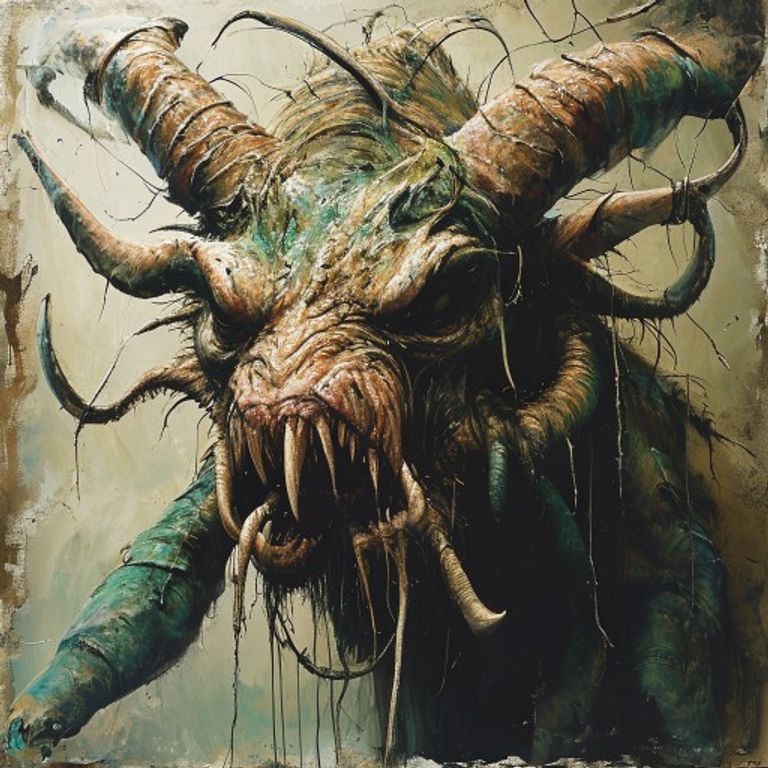
According to the unanimous account of the divers, the creature was greenish in color, possessed a long neck, and an elongated head with prominent eyes. What shocked the witnesses most was the apparent intelligence and curiosity demonstrated by the being, which approached the group in a non-aggressive, yet imposing manner. The divers, after a brief period of mutual observation, decided to ascend cautiously, with the image of the creature etched into their minds.
2. Timeline of Events
- August 1978: Dr. Robert Carter and his team of divers conduct underwater expeditions near Hook Island. During one of these expeditions, the first and most detailed sighting of the unknown creature occurs.
- Immediately after the incident: The divers return to the surface and report the encounter. Dr. Carter, known for his scientific credibility, documents the event and collects detailed statements from his team.
- Following weeks and months: The case begins to circulate in the local scientific community and, subsequently, in the media. Other reports of strange marine creature sightings in the region begin to emerge, some corroborating the initial descriptions, others presenting divergent details.
- 1980s: The case gains international notoriety. Several expeditions are organized to investigate the area, but none conclude with definitive evidence of the creature's existence.
- Subsequent decades: The Hook Island mystery remains a topic of debate. New theories emerge, and the creature becomes a local legend and a fascination for the general public.
3. Main Theories
The absence of concrete proof and the extraordinary nature of the sighting led to the formulation of a myriad of theories, ranging from rational explanations to the realm of the paranormal.
Scientific and Police Theories
- Misidentification of Known Animals: This is the most conservative hypothesis. The creature could have been a known species of marine animal, but in an unusual pose or condition, or a group of animals sighted together, creating the illusion of a single larger entity. Species such as giant seals, whale sharks, or even large schools of fish could have been misinterpreted under the tension and low visibility of the underwater environment.
- Optical Illusions and Natural Phenomena: Seawater, with its variations in density, light refraction, and the presence of plankton, can create significant visual distortions. Waves, currents, and peculiar lighting may have generated a mirage or a mistaken perception of the size and shape of real objects.
- Underwater Plants or Submerged Objects: The possibility that the creature was confused with unusual geological formations, large algae, or even submerged wreckage cannot be ruled out.
Alternative and Paranormal Theories
- Unknown Creature (Cryptozoology): This is the theory that fuels the fascination with the case. The hypothesis maintains that the creature is, in fact, a species not cataloged by science, possibly a prehistoric marine reptile or a type of unknown marine animal. The similarity to descriptions of classic "sea monsters" fuels this line of thought.
- Psychic Experience or Collective Hallucination: Some argue that, under the stress of diving and the atmosphere of mystery, the team may have been victims of a collective hallucination, where expectations and fear shaped the perception of reality. The isolation of the island and the nature of the underwater environment could have contributed to this mental state.
- Secret Military Technology: A conspiracy theory suggests that the "monster" could actually be a prototype of an experimental underwater vehicle or a reconnaissance probe operated by some secret military force. The remote location of the island and the inconclusive nature of official investigations would support this hypothesis.
4. Controversies and Blind Spots
Despite the strength of the initial testimonies, the Hook Island Monster case is punctuated by controversies and gaps that prevent a definitive resolution.
- Lack of Physical Evidence: The most glaring controversy is the complete absence of any irrefutable physical evidence – a fragment of skin, a footprint, a bone – that proves the creature's existence. Subsequent expeditions failed to find any trace that validated the original reports.
- Conflicting Reports: Although the account of Dr. Carter and his team is the most detailed, other sightings in the region, which emerged after the case's notoriety, presented varied descriptions, generating confusion and discrediting the hypothesis of a single creature.
- Initial Discrediting: Initially, some scientists and authorities tried to minimize the case, attributing it to misidentification or exaggeration. This reaction, while understandable in a scientific context, may have led to the suppression or devaluation of relevant information.
- Obscure Files: Information about official investigations, especially regarding possible military or coastal patrol reports in the area at the time, remains obscure. Declassified reports, if they exist, have not been widely released or analyzed.
- Loss of Crucial Details: Over time, the witnesses' memory may have altered, and some crucial details of their original statements may have been lost or forgotten.
5. Curiosities and Legacy
The Hook Island Monster has transcended the scope of a simple sighting to become an icon of modern maritime folklore. Its cultural impact is notable:
- Inspiration for Media and Literature: The case has inspired books, documentaries, and even works of fiction. The figure of the "Hook Island monster" has entered the popular imagination as one of the great unsolved mysteries of the ocean.
- Continuous Fascination: Even decades after the original event, the Hook Island area continues to attract curious people and cryptozoologists in search of answers. The possibility of a new sighting keeps the flame of the mystery alive.
- Current Status: Officially, the case remains unsolved. There is no formal reopening of investigations, but the Hook Island mystery continues to be a topic of interest for independent researchers and those who refuse to close the door to the inexplicable. The sea, in its vastness and mystery, holds secrets that, perhaps, will never be fully unraveled, and the Hook Island Monster is a vivid reminder of that truth.





