



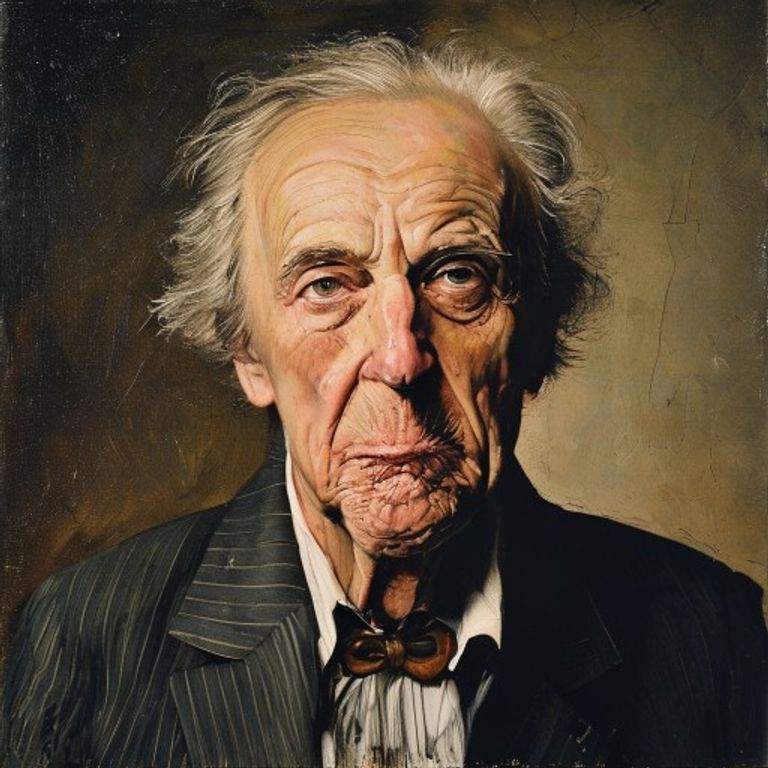
The brutal lynching of a fourteen-year-old Black teenager in Mississippi in 1955, whose open casket revealed the cruelty of racism and propelled the civil rights movement.
⚠️ Research conducted with the aid of Deep Research is subject to referential ambiguity.
🖥️ Clean HTML code using a proprietary tool.
👥 Research by Guilherme Felipe, Curation by Sílvio Lôbo
The Silenced Cry of Emmett Till: A Mystery That Echoes in Scars
The name Emmett Till, a 14-year-old Black youth, resonates through the decades as a visceral lament, a brutal turning point in the history of civil rights in the United States. What began as a summer visit to relatives in Mississippi in August 1955 turned into one of the most heinous and iconic crimes of American racial segregation. The mystery surrounding his death and the subsequent acquittal of his executioners remains, even after years of investigation and cries for justice.
1. The Context and the Incident: Where, When, and How the Mystery Began
Emmett Till, known for his playful nature and a slight stutter, was from Chicago. On August 21, 1955, he arrived at the home of his great-uncle, Moses Wright, in Money, Mississippi. The region was the stage for a strict regime of racial segregation, where intimidation and violence against Black people were common and rarely punished. Emmett's visit, a break from urban life, would soon become the prelude to an unimaginable tragedy.
The spark that ignited the horror was an alleged incident that occurred on August 24, 1955, at the convenience store owned by Roy Bryant and his wife, Carolyn Bryant. The official version, widely disseminated and which served as the basis for the prosecution of those involved, is that Emmett whistled and made inappropriate comments to Carolyn Bryant. What exactly happened inside the store, and the nature of those comments, remain obscure and are one of the crucial points of contention in the case.
2. Timeline of Events
- August 21, 1955: Emmett Till arrives in Money, Mississippi, to visit relatives.
- August 24, 1955: Emmett, accompanied by cousins and friends, visits Roy Bryant's store. The most accepted version is that Emmett whistled at Carolyn Bryant, the owner's wife.
- August 28, 1955: About three days after the incident at the store, Roy Bryant and his half-brother, J.W. Milam, kidnap Emmett Till from his home. Moses Wright attempts to intervene but is threatened with a gun.
- August 31, 1955: The mutilated body of Emmett Till is found in the Tallahatchie River.
- September 1955: Emmett's body is taken back to Chicago. His mother, Mamie Till-Mobley, insists on an open-casket funeral so the world could see the brutality of the crime. The shocking photos are published in Black newspapers and spread rapidly.
- September 1955: Roy Bryant and J.W. Milam are arrested.
- September 1955: The trial of Roy Bryant and J.W. Milam takes place in Sumner, Mississippi.
- September 23, 1955: After a quick trial influenced by the latent racism of the era, Roy Bryant and J.W. Milam are declared innocent by an all-white jury.
- January 1956: In an interview with Look magazine, Roy Bryant and J.W. Milam confess to the murder of Emmett Till, detailing the brutality of the crime. However, due to the "double jeopardy" rule, they cannot be tried again for the same crime.
3. Main Theories
Despite the killers' later confession, the Emmett Till case is shrouded in an aura of mystery regarding the full extent of third-party participation and the exact motivation that led to the barbarity. Theories range from straightforward explanations based on confessions to darker speculations about conspiracies and cover-ups.
Official and Evidence-Based Theories
- Primary Theory (Officially Accepted): Roy Bryant and J.W. Milam kidnapped and murdered Emmett Till in retaliation for the alleged incident at the convenience store. The motivation was to punish the Black youth for "insulting" a white woman, an insurmountable racial taboo in the segregated South at the time. Their subsequent confession corroborates this theory, detailing the torture and murder. The cause of death, as reported by the forensic reports of the time, was a gunshot wound to the head and drowning.
Alternative Theories and Speculations
- Expanded Third-Party Participation: Although Bryant and Milam confessed, some historians and researchers raise the possibility that other individuals, possibly other members of the local community or even figures of authority, were involved in the kidnapping and murder. The speed with which the body was hidden and the initial reluctance of authorities to conduct a thorough investigation fuel this speculation. However, concrete evidence to support this hypothesis beyond the direct involvement of Bryant and Milam is lacking.
- Cover-up Theory: Some argue that the judicial system and local authorities acted to protect the white killers, ensuring their acquittal. The composition of the jury, the rapid conclusion of the trial, and the subsequent impunity, even after the confession, suggest a clear racial bias and a desire to maintain the status quo of white supremacy.
- Paranormal or Supernatural Theories: Although completely devoid of any empirical or scientific evidence, in more speculative circles, theories arise that attempt to attribute the mystery to inexplicable forces. However, these have no basis in the investigation of the case and are generally rejected by the serious academic and journalistic community.
4. Controversies and Blind Spots
The Emmett Till case is full of inconsistencies and flaws that fuel doubts and a sense of injustice, even decades after the events.
- The Nature of the "Incident" at the Store: The exact description of what Emmett Till said or did inside Carolyn Bryant's store is confusing. Carolyn Bryant herself changed her version of the facts over time, and the force of Emmett's whistle is debated. This initial ambiguity was exploited to justify the brutality against the boy.
- Conflicting Testimonies: Witnesses, including Emmett's cousins, gave accounts that presented small variations regarding the events that led to the kidnapping. Although natural in trauma situations, these differences were used by the defense to sow doubt.
- Missing or Ignored Evidence: There are reports that some crucial evidence may have been lost or neglected during the initial investigation. The rush to judge and the lack of adequate resources for a complete forensic examination at the time also contributed to gaps in the understanding of the crime.
- The Influence of Racism: The main controversy lies in how the systemic racism of the time determined the outcome of the case. The absence of Black witnesses on the jury and the social pressure to protect white people created an environment where justice for Emmett Till was impossible.
- The Confession: The confession of Roy Bryant and J.W. Milam in Look magazine, despite detailing the crime, did not lead to any additional punishment due to the legal protection of "double jeopardy." This left a bitter taste of impunity.
5. Curiosities and Legacy
The Emmett Till case transcends the mere chronicle of a heinous crime. It became a catalyst, a warning cry that echoed deeply in the hearts of many and propelled the civil rights movement.
- The Open-Casket Funeral: Mamie Till-Mobley's decision to hold an open-casket funeral, despite the decomposed state of her son's body, was an act of extraordinary courage. The photographs taken at the funeral, which exposed the brutality inflicted on Emmett, were published on a large scale in Black newspapers, shocking the nation and galvanizing public opinion against racial violence.
- The Impact on the Civil Rights Movement: The murder of Emmett Till is widely considered one of the events that sparked the modern civil rights movement in the United States. The outrage generated by the case inspired activists, and many saw it as a call to action.
- Reopenings and New Investigations: Over the years, the case was reopened and investigated by the FBI and the U.S. Department of Justice. In 2004, the FBI declassified documents related to the case, and in 2007, Emmett Till's body was exhumed for a new autopsy in the hope of obtaining more information. In 2017, the U.S. Department of Justice closed an investigation that had been reopened, concluding that there was insufficient evidence to prosecute anyone for Till's death. However, the door to future reopenings was not completely closed.
- Legacy in Culture: The story of Emmett Till continues to be told in books, documentaries, films, and songs, serving as a grim reminder of the injustices of the past and the ongoing fight for racial equality. The memory of his brutality and the failure to bring his killers to full justice remains an open wound in the American conscience.
The case of Emmett Till is a testament to the persistence of injustice and the power of memory. Although the veil of uncertainty still hangs over some details, the fundamental truth about the barbarity and the systemic failure to provide justice remains undeniable. His silenced cry continues to resonate, a perpetual call to vigilance and the fight for a world where such horrors never happen again.





