



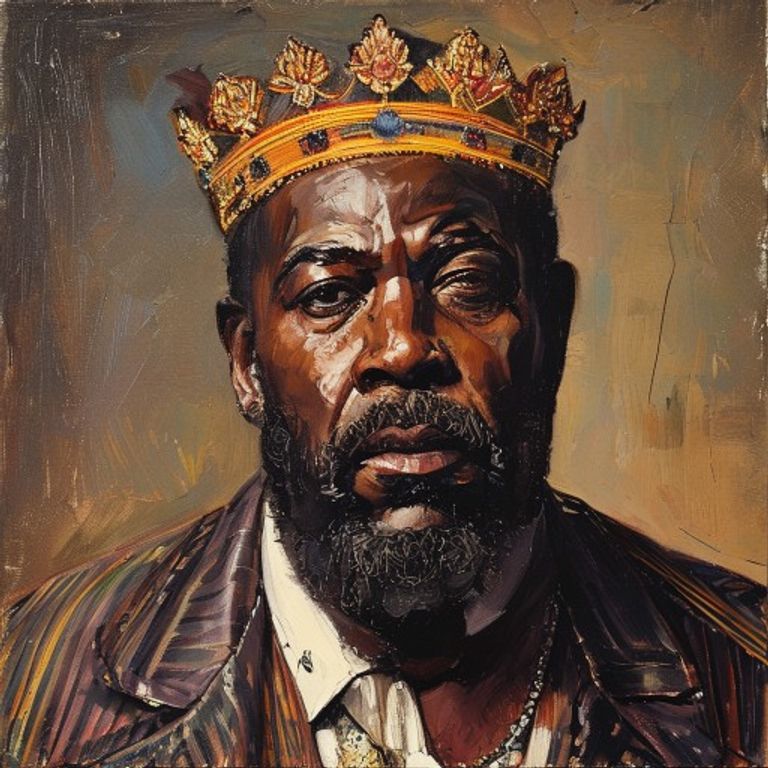
The beating of a Black motorist by Los Angeles police officers in 1991, whose subsequent acquittal in court sparked the violent 1992 civil unrest in the city.
⚠️ Research prepared with the aid of Deep Research is subject to referential ambiguity.
🖥️ Clean HTML code using a proprietary tool.
👥 Research by Guilherme Felipe, Curation by Sílvio Lôbo
The Martyrdom of Rodney King: A Silent Cry in the Streets of Los Angeles
On March 3, 1991, the city of Los Angeles became the stage for an event that would resonate for decades, a brutal spectacle captured on amateur video that would expose the deep fissures in its society and the latent tensions between the police and the Black community. The name Rodney King, an African-American delivery driver, would forever be synonymous with police abuse and injustice. But what exactly happened that night, and why do the official responses seem to have left more questions than answers?
The Context and the Incident: The Night the World Watched
The incident occurred in the early hours of March 3, 1991, following a high-speed police chase that extended along Highway 101 in Los Angeles. Rodney King, 25 years old at the time, was visibly intoxicated and fled from a police stop on suspicion of driving under the influence of alcohol. The chase ended on a residential street in Lake View Terrace.
What followed, and what was documented by a local resident, George Holliday, was a scene of disproportionate violence. King was removed from his vehicle and, despite initially not resisting, was brutally beaten by several officers from the Los Angeles Police Department (LAPD). The video, with its 12 seconds of pure brutality, would show King being struck repeatedly with batons and stomped on. The mystery, however, began to form not in the violence itself, but in the contradictory narratives and the subsequent investigations that sought to justify or dilute the severity of the acts witnessed by the world.
Timeline of Key Events
- March 3, 1991, approx. 12:30 AM: Police chase of Rodney King after he failed to stop for a traffic stop.
- March 3, 1991, approx. 12:50 AM: Rodney King is removed from his vehicle in Lake View Terrace.
- March 3, 1991, approx. 12:50 AM - 12:55 AM: George Holliday films the beating of Rodney King by multiple officers.
- March 3, 1991: Rodney King is taken to the hospital, where he is diagnosed with a skull fracture, orbital fracture, broken teeth, and various contusions.
- March 15, 1991: The video of the beating is released to the national press, causing public outrage.
- August 20, 1991: A grand jury indicted four LAPD officers: Stacey Koon, Laurence Powell, Timothy Wind, and Melvin Brown, for excessive use of force.
- March 3, 1992: Start of the officers' trial in Simi Valley, California.
- April 29, 1992: Officers Stacey Koon, Laurence Powell, and Timothy Wind are acquitted of all charges. Melvin Brown is acquitted of one charge.
- April 29, 1992: The Los Angeles riots begin, lasting six days, resulting in more than 60 deaths and billions in property damage.
- April 17, 1993: A second federal trial is held, focusing on civil rights violations.
- February 3, 1994: Stacey Koon and Laurence Powell are convicted of violating Rodney King's civil rights.
- June 17, 1994: Rodney King is injured in a car accident and subsequently prosecuted and convicted for violating his probation.
- April 26, 2012: Rodney King dies of accidental drowning, with traces of cocaine and alcohol in his system.
The Main Theories
The explicit brutality captured in the video seemed, at first, to leave little room for interpretation. However, the theories that emerged throughout the case, and especially during the trials, sought to explain the officers' actions and justify the judicial decisions, generating a spectrum of explanations:
- Official Theory (Self-Defense and Resistance): The officers' defense argued that Rodney King posed a constant threat and that the actions were a justifiable use of force to contain him and ensure the officers' safety. The thesis was that King had resisted and attempted to attack the officers, necessitating the response used. The interpretation of parts of the video and testimonies were crucial in this line of argument.
- Theory of Racial Tension and Abuse of Power: This theory, widely supported by the community and outside observers, posits that the incident was a reflection of a pattern of systemic racism within the LAPD and an extreme example of police abuse of power against a Black citizen. The LAPD's history with the Black community, marked by previous incidents, provided fertile ground for this interpretation.
- Theory of the Need for Rapid Control: Some argue that, in the chaotic dynamics of a chase and approach of an individual believed to be under the influence of drugs or alcohol, the officers reacted instinctively and with the force they deemed necessary to neutralize a perceived threat in a short amount of time. This theory does not exclude excess, but focuses on the urgency of the situation.
- Alternative/Conspiracy Theories (speculation): Over the years, speculations have arisen about the possibility of video manipulation, suppression of evidence, or even the collusion of elements of the system to protect the officers. These theories, lacking concrete evidence, fuel distrust and the belief in a cover-up.
- Paranormal Theories (extremely speculative): Although there is no evidence to support it, the inexplicable nature of the violence and the unfolding of the case sometimes leads to speculation about external influences or negative energies, common in discussions about events of great emotional and social impact. These theories, however, do not fit into serious journalistic scrutiny.
Controversies and Blind Spots
The investigation and trials that followed the Rodney King case were filled with controversies and blind spots that fueled the perception of injustice:
- The Trial Venue: The decision to hold the first trial in Simi Valley, a predominantly white county with a public perception favorable to the police, was seen by many as an attempt to obtain a verdict favorable to the officers.
- Video Editing and Interpretation: The officers' defense focused on specific parts of the video that, in isolation, could suggest resistance by King. The interpretation of the actions of the officers and King was highly contested, with experts presenting conflicting views.
- Conflicting Testimonies: There were testimonies from officers who maintained the necessity of the force, contrasting with the brutal images and testimonies from civilians who described an unnecessary assault.
- Ignored or Missing Evidence: Questions arose about the completeness of the investigations, with allegations that certain evidence or testimonies might have been neglected or minimized.
- The Christopher Commission Report: After the riots, the "Christopher Commission Report" detailed systemic failures in the LAPD, including a pattern of misconduct and limited accountability in cases of excessive force, partially validating the community's concerns, but without altering the initial verdict of the 1992 trial.
Curiosities and Legacy
The Rodney King case transcended the judicial and police spheres, becoming a cultural landmark and a catalyst for discussions about race, justice, and police brutality in the United States and the world.
- The Legacy of the Video: George Holliday's amateur video is considered one of the most important moments in media history, demonstrating the power of casual recordings to expose inconvenient truths and shape public opinion.
- The 1992 Riots: The acquittal of the officers triggered the worst civil unrest in the U.S. since the 1960s, revealing the deep frustration and anger accumulated in marginalized communities.
- The Cry of Rodney King: Rodney King's iconic question, asked to the heavens amidst the riots: "Can we all get along?", became a motto of appeal for peace and reconciliation, but also a painful questioning about the distance to be traveled.
- Impact on Policy and Legislation: The case influenced debates on police reform, civil liability, and the use of force.
- Current Status: The Rodney King case, in its essence, remains a grim reminder of the complexities of justice and race relations. Although the officers involved were tried and convicted in a subsequent federal process, the perception of complete and equitable justice for Rodney King and his community was never fully achieved. The case was not reopened in the sense of new criminal investigations against the acquitted officers, but its legacy continues to be debated, studied, and to inspire activism, ensuring that Rodney King's cry is not forgotten.





