



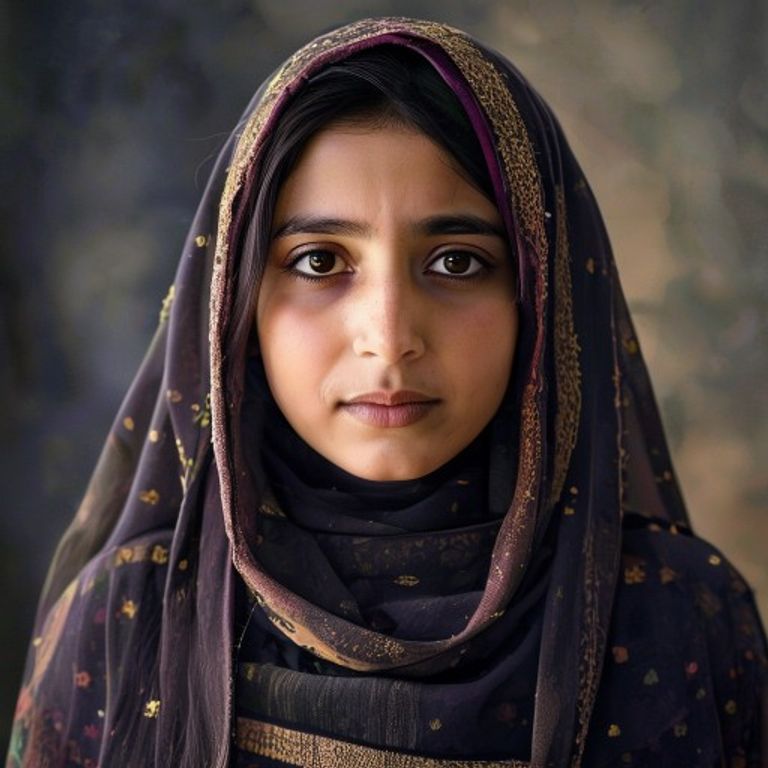
The young Pakistani woman who survived a Taliban attack in 2012 after defending women's right to education, becoming the youngest Nobel Peace Prize laureate.
⚠️ Research conducted with the aid of Deep Research is subject to referential ambiguity.
🖥️ Clean HTML code using a proprietary tool.
👥 Research by Guilherme Felipe, Curation by Sílvio Lôbo
The Case of Malala Yousafzai: The Attack that Echoed Around the World
The name Malala Yousafzai has become synonymous with courage and resistance. The young Pakistani woman, who dared to defend the right to education for girls in a region dominated by the Taliban, was the victim of a brutal attack on October 9, 2012. The attack, far from silencing her, ignited a global flame of solidarity and activism. However, as in many cases involving ideological conflicts and extreme violence, some aspects of the incident continue to generate questions and deep analysis, fueling the search for a more complete understanding of how such a public and shocking attack unfolded.
1. The Context and the Incident: Where, When, and How the Mystery Began
Malala's story unfolded in the Swat Valley, a mountainous region in northwestern Pakistan, which in 2009 was briefly controlled by the Taliban. Under Taliban rule, schools were closed, especially for girls, and social life was brutally restricted. It was in this scenario of oppression that a young Malala, only 11 years old at the time, began writing an anonymous blog for BBC Urdu, detailing her life under the Taliban regime and her passion for education.
The attack occurred when Malala, then 15, was returning home on a school bus after finishing her classes in Mingora, the main city of the Swat Valley. Around 2:00 PM, a masked man boarded the bus and fired at Malala and two other students. The shots hit Malala in the head and neck, leaving her in critical condition. The attack shocked the world and sparked a wave of international condemnation.
2. Timeline of Events
- 2009: Malala Yousafzai begins writing anonymously for BBC Urdu about life under the Taliban in the Swat Valley.
- Early 2012: Malala's identity as the BBC blogger is revealed. She becomes a public figure and a target for threats.
- October 9, 2012, approximately 2:00 PM: A masked man enters the school bus in Mingora and fires at Malala and two other students.
- October 9, 2012, night: Malala is taken in critical condition to the Swat Military Hospital.
- October 10, 2012: Due to the severity of her injuries, Malala is transferred to the Peshawar Military Hospital.
- October 15, 2012: Malala is evacuated to the United Kingdom for specialized medical treatment, being taken to the Queen Elizabeth Hospital in Birmingham.
- Late 2012 - Early 2013: Malala undergoes several surgeries and a long recovery process.
- July 2013: Malala makes her first public speech after the attack at the UN headquarters in New York.
- October 10, 2014: Malala Yousafzai receives the Nobel Peace Prize, becoming the youngest person to receive such an honor.
3. Main Theories
The authorship of the attack was never truly a mystery to the authorities. The Pakistani Taliban claimed responsibility for the attack, viewing Malala as an enemy who promoted "secularism" and opposed their religious values.
Official and Police Theories:
- Taliban Responsibility: The most accepted and proven theory by authorities. The Taliban publicly declared that the attack was retaliation for Malala's campaign in defense of girls' education and her growing influence. Several militants linked to the Taliban were identified, and some were arrested and convicted. The Taliban spokesperson at the time, Ehsanullah Ehsan, even admitted to the authorship and justified the act as a response to Malala's campaign against the group.
Alternative and Conspiracy Theories:
Although the Taliban's claim is widely accepted, in more skeptical or conspiratorial circles, other speculations have emerged, which, however, lack concrete evidence:
- False Flag Operation: Some theories suggest that the attack could have been orchestrated by Western intelligence agencies to discredit the Taliban and justify military interventions in the region. The logic behind this hypothesis is that such a barbaric act against an innocent child would create a global public outcry against the extremist group. However, there is no evidence to support such an allegation.
- Strategic Disinformation: A variation of the false flag theory, where the goal would be to create a heroic narrative for Malala, catapulting her to international fame and, consequently, to a global platform that would serve specific geopolitical agendas.
- Involvement of Other Factions: Although the Pakistani Taliban claimed the act, some theorize that other factions or even elements within the Pakistani government itself could have played a role, whether for political convenience or hidden interests. This is an area of pure speculation.
- Paranormal/Supernatural Theories: In the most extreme spectrum, although unlikely and without any scientific or factual basis, in some discussion circles about unexplained mysteries, hypotheses may arise that attribute the event to unknown forces or non-human interventions. These are dismissed by the overwhelming majority of investigators and experts.
4. Controversies and Blind Spots
Despite the rapid identification and conviction of the direct perpetrators of the attack, some aspects of the incident and its subsequent investigations were subject to debate and scrutiny:
- Speed of Medical Evacuation: The rapid decision to transfer Malala to the United Kingdom raised questions for some about the capacity of the Pakistani healthcare system or the strategic interest of foreign powers in ensuring her treatment. However, given the severity of the injuries, the transfer to a center with more advanced technology was a logical measure.
- Third-Party Involvement in the Attack: Although the direct shooter was identified, the exact dynamics of the attack, including who ordered it directly on the ground or if there was broader planning, were not always fully detailed in public reports. The disintegration of factions within the Taliban and the complexity of the security landscape in Pakistan may have hindered deeper investigations into the chain of command.
- Allegations of Media Manipulation: Critics of Malala and her cause occasionally raise the possibility that her story was excessively amplified by Western media for ideological purposes. This line of argument, however, tends to disregard the severity of the attack and the strength of her testimony.
- Security After the Attack: The threats against Malala and her family were known. The lack of more robust security on the school bus raised questions about the effectiveness of protection measures for activists in conflict zones.
5. Trivia and Legacy
The case of Malala Yousafzai transcended the scope of local conflict and became a global symbol of the fight for education and women's rights. The attack, instead of silencing Malala, amplified her voice to unprecedented levels.
- Nobel Peace Prize: The ultimate recognition with the Nobel Peace Prize in 2014, at age 17, cemented her status as one of the most important humanitarian figures of the 21st century.
- Malala Fund: Together with her father, Ziauddin Yousafzai, Malala founded the Malala Fund, an organization that works to ensure that all girls have access to 12 years of free, safe, and quality education.
- Cultural Impact: Malala's story has inspired books, documentaries, and countless debates about women's rights and the importance of education in conflict regions. Her resilience and determination have made her an icon for millions of people around the world.
- Current Status: The case of the direct perpetrators of the attack was closed with convictions and executions. However, the fight for education in regions under the influence of extremist groups continues. Malala, now an adult, remains a tireless advocate for these rights, traveling the world and using her platform to promote change. The official investigation into the masterminds and the Taliban's chain of command may continue to be a complex and prolonged process, given the fragmented and secretive nature of these organizations.
The case of Malala Yousafzai is a somber reminder of the brutality that extremism can inflict, but, above all, it is a powerful testament to the strength of the human spirit and the unwavering importance of fighting for a future where education is a right, not a forbidden privilege.





