



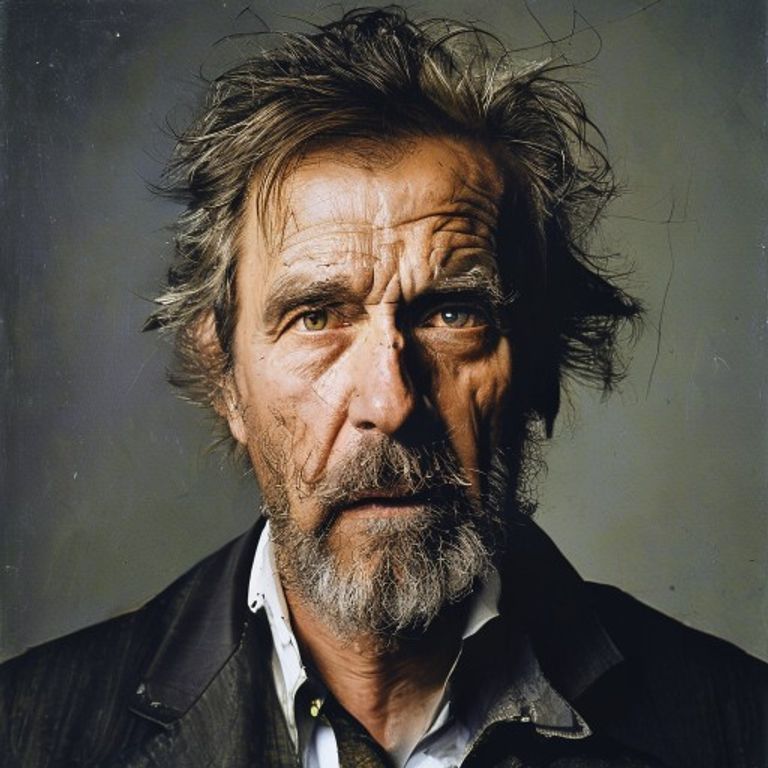
The teenager who traveled by train to London in 2007 and was filmed leaving King's Cross station, disappearing completely despite not having taken a cell phone or extra clothes.
⚠️ Research conducted with the aid of Deep Research is subject to referential ambiguity.
🖥️ Clean HTML code using a proprietary tool.
👥 Research by Guilherme Felipe, Curation by Sílvio Lôbo
The Silent Enigma: The Disappearance of Andrew Gosden
Amidst the apparent monotony of an autumn afternoon in York, England, on September 14, 2007, an intricate and persistent mystery began. Andrew Gosden, a 14-year-old teenager with remarkable intelligence and a life seemingly free of major turmoil, vanished without a trace, defying logic and the capabilities of the authorities. The case, which quickly escalated from a local alert to a national search, remains to this day one of the most baffling unsolved enigmas in the United Kingdom.
Timeline of Events: An Invisible Trail
The meticulous reconstruction of the events surrounding the disappearance of Andrew Gosden is fundamental to understanding the complexity of the case.
- September 14, 2007, Morning: Andrew Gosden missed school, an unusual event for the dedicated student. His parents were not initially overly alarmed, assuming he might be ill.
- September 14, 2007, Afternoon: Around 2:30 PM, Andrew left his home in Bramley, Leeds, wearing a band t-shirt, jeans, and a dark jacket. He told his mother he was going to the library, but he never arrived.
- September 14, 2007, Late Afternoon: After hours without news, Andrew's family reported him missing to the police. Initial searches focused on Leeds and the surrounding areas.
- September 14, 2007, Night: CCTV footage from York train station showed an individual, believed to be Andrew, boarding a train to London. This was the last confirmed sighting.
- September 15, 2007: Yorkshire police issued a public appeal, releasing photos of Andrew and requesting information. The search expanded to the capital.
- Following Weeks and Months: Various theories emerged, and the police investigated hundreds of leads, including sightings in different cities, but none led to Andrew. His parents, Kevin and Glenys Gosden, embarked on an incessant public campaign, appealing for any information.
- 2008 - Present: The case of Andrew Gosden remains officially cold, but the persistence of his family and the mystery surrounding it ensure he is not forgotten. Official reports, such as those from the South Yorkshire Police, detail the investigations carried out.
Main Theories: Deciphering the Disappearance
The absence of concrete evidence opened a range of speculations, varying from rational hypotheses to more fantastic scenarios. We will analyze the most prominent ones:
1. Voluntary Runaway and New Life
Logic: Andrew was an intelligent teenager, but also described as reserved. The theory suggests he planned his disappearance, possibly to escape family, school, or social pressures, or simply to start a new life far from everything he knew. His trip to London may have been a starting point to blend into a big city. Police reports indicate he withdrew a significant amount of money from a bank account before disappearing, which may support this hypothesis.
2. Accident or Involuntary Tragedy
Logic: A tragic possibility is that Andrew suffered an accident during his trip to London, or was the victim of a crime. The absence of any body or forensic evidence, however, makes this theory difficult to prove, but not impossible, especially in a vast and complex urban environment like London.
3. Involvement of Third Parties (Crime or Trafficking)
Logic: Although there is no direct evidence of a crime, the possibility that Andrew was kidnapped or lured by someone for criminal purposes (such as human trafficking) cannot be ruled out. His relative naivety and the sudden nature of his disappearance could, theoretically, make him a target. However, again, the lack of a ransom demand or any contact with criminals weakens this line of investigation without additional leads.
4. Psychological Crisis or Suicide
Logic: Young people at Andrew's age can face psychological crises. The possibility that he entered a state of deep disorientation or made a drastic decision like suicide is a painful hypothesis, but one considered in cases of unexplained disappearances. However, the apparent planning of his trip (buying a ticket, withdrawing money) does not align perfectly with an acute psychotic break.
5. Alternative and Conspiracy Theories
Logic: The mysterious nature of the case gave rise to more extravagant speculations. Some theories suggest that Andrew was recruited by some secret organization, that he ran away to join a cult, or that there is a government conspiracy involving his disappearance. Other speculations, although without any factual basis, include paranormal or alien abduction scenarios. The absence of concrete proof fuels this type of speculation, as there are no elements that categorically refute such ideas.
Controversies and Blind Spots: Gaps in the Investigation
The official investigation, although extensive, was not free from criticism and blind spots that fueled the mystery:
- Speed of Absence: The speed with which Andrew moved from Leeds to York and then to London suggests prior planning or a response to an unexpected trigger, which the police were unable to identify promptly.
- Initial Misinformation: The initial belief that he was just at the library may have delayed the activation of more urgent alerts.
- Lack of Leads in London: Despite being a vast city, the difficulty in tracking Andrew after his arrival in London, even with the vast network of security cameras, raises questions. Did authorities have limited access to certain footage, or was there difficulty in cross-referencing information effectively?
- Limited Banking Information: Although there was a significant withdrawal of money, access to full details of a minor's bank transactions may have been restricted, hindering the financial tracking of his steps.
- The Silence of Andrew: Perhaps the biggest blind spot is the lack of any communication from Andrew since his disappearance. For a teenager, such prolonged silence is, in itself, an enigma.
Curiosities and Legacy: The Echo of a Mystery
The case of Andrew Gosden transcended the police realm, becoming a symbol of human fragility in the face of the unknown and a test of family resilience.
- Cultural Impact: The disappearance inspired documentaries, news articles, and discussions on online forums dedicated to cold cases. It became a case study on the difficulty of solving modern mysteries in an increasingly digitized world, where the absence of digital traces can be deliberate.
- Family Campaign: The tireless dedication of Kevin and Glenys Gosden in keeping the case alive, through social media campaigns and constant appeals to the media, demonstrates remarkable strength and hope. They have never given up on finding their son.
- Current Status: The case of Andrew Gosden remains officially cold, meaning there is no active investigation underway based on new leads. However, authorities have stated that if new information emerges, the case will be reopened. The mystery of his location and fate remains an open wound for the family and a disturbing fascination for the public.
The disappearance of Andrew Gosden is a grim reminder that, even in the information age, there are veils that technology and human logic still struggle to penetrate. The silence surrounding his whereabouts is, perhaps, the most disturbing clue of all.





