



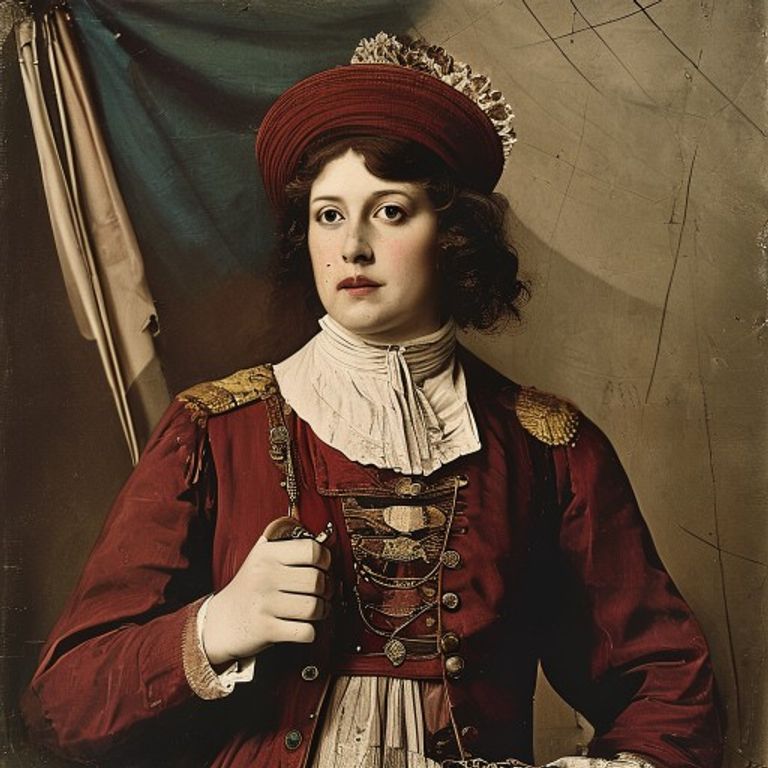
The emancipationist and republican movement that managed to seize power in Pernambuco for over two months before being suppressed by imperial forces.
⚠️ Research prepared with the aid of Deep Research is subject to referential ambiguity.
🖥️ Clean HTML code using a proprietary tool.
👥 Research by Guilherme Felipe, Curation by Sílvio Lôbo
The Suffocated Cry of 1817: The Pernambucan Revolution and Its Enigmas
Amidst the fervor of Napoleonic Europe and the imminent transfer of the Portuguese court to Brazil, a whirlwind of dissatisfaction was bubbling in Pernambuco. The Pernambucan Revolution of 1817, an uprising that nearly freed Brazil from the colonial yoke, remains to this day an intricate historical puzzle, full of nuances not fully unraveled and speculations that span the centuries. What began as a cry for freedom echoed into silence and mystery, leaving behind a legacy of unanswered questions.
This article investigates the dark corners of this seminal event, seeking to uncover what really happened, separating the thread of proven facts from the mists of speculation.
The Context and the Incident: Where, When, and How the Mystery Began
The outbreak of the Pernambucan Revolution was not a bolt from the blue. Discontent with the Portuguese colonial administration, exacerbated by the tax burden and scarcity of resources, had been building for decades. The agrarian and commercial elite of Pernambuco, especially those in Recife and Olinda, felt marginalized by the metropolis, which seemed to prioritize the interests of other provinces or the Court itself.
The spark was lit on March 6, 1817, when a group of conspirators, led by figures such as Domingos José Martins, Manuel Carvalho Paes de Andrade, and Father Miguel do Sacramento Lopes Gama, stormed barracks and public buildings in Recife. The revolt spread rapidly, culminating in the proclamation of a provisional government that sought the independence of Pernambuco and the formation of a republic.
The mystery, however, lies not so much in its outbreak, which was planned and executed with some audacity, but in its rapid consequences and the way the movement was brutally suppressed, leaving a trail of uncertainty regarding the extent of the conspiracies and the true depth of the regional and international alliances that could have been forged.
Timeline of Key Events
The short but intense life of the Pernambucan Revolution can be traced through the following milestones:
- 1817 (January-February): Intensification of conspiratorial activities in Pernambuco.
- 1817 (March 06): Seizure of barracks and public buildings in Recife. Proclamation of the Republic.
- 1817 (March-May): Establishment of the Provisional Government. Attempts to expand the movement to other provinces.
- 1817 (May 17): Arrival of troops loyal to the Crown, led by Brigadier Luís do Rego Barreto.
- 1817 (May 19-20): Crucial battles that culminated in the defeat of the revolutionaries.
- 1817 (May 21): Leader Domingos José Martins is captured.
- 1817 (June-August): Severe repression of those involved. Executions, imprisonments, and confiscation of property.
- 1817 (September): The movement is formally suffocated.
Main Theories
The complexity of the Pernambucan Revolution Case has given rise to various lines of interpretation, ranging from pragmatic explanations to more esoteric views:
Historical and Sociopolitical Theories (Most Likely)
- Theory of Strategic Inviability: The main hypothesis is that the movement, although audacious, lacked a solid strategic plan and sufficient resources to sustain itself in the long term against the military might of the Portuguese Crown. The lack of effective support from other provinces and the delay in the arrival of external aid (especially from Great Britain, in whom the revolutionaries had placed their hopes) sealed its fate.
- Theory of Internal Division: Historical accounts suggest tensions and disagreements between different revolutionary factions. These internal divisions, ranging from military organization to the vision for the future of the new republic, may have undermined the movement's cohesion at crucial moments.
- Theory of Limited External Influence: Although there were rumors and hopes of support from foreign nations (such as the United States and Great Britain), analysis of documents from the period suggests that this support was, at best, incipient and insufficient to confront the Portuguese war machine.
Conspiracy and Hidden Plot Theories
- Theory of External Manipulation: Some speculations point to the possibility that other powers, dissatisfied with Portugal's growing power or potential French influence on the continent, may have orchestrated or at least fostered the uprising with the goal of destabilizing the region, without any real intention of promoting long-term independence. Declassified documents from foreign embassies of the time, however, do not offer concrete evidence to support this thesis in a robust way.
- Theory of Internal Betrayal: It is suspected that informants or individuals with ulterior motives within the movement itself may have leaked crucial information to the Portuguese government, accelerating the repression. Analysis of post-revolution testimonies, often obtained under coercion, presents gaps and contradictions that could be interpreted as signs of this betrayal.
Alternative or Paranormal Theories (Without Scientific/Historical Support)
- Theory of Supernatural Phenomena: In a context where mysticism and popular faith were mixed with daily life, it is not uncommon to find accounts, albeit anecdotal and without official record, about omens or inexplicable events that allegedly preceded or accompanied the revolution. These accounts, however, lack any type of factual or documentary validation.
Controversies and Blind Spots
The official investigation, conducted by the Portuguese Crown after the repression, was marked by a series of failures and omissions that fuel the mystery:
- Loss of Crucial Evidence: Historical accounts indicate that many important documents, both from the revolutionary side and from the initial investigations, disappeared or were deliberately destroyed, making it difficult to reconstruct the events in detail and identify everyone involved.
- Coerced and Inconsistent Testimonies: The confessions and testimonies taken from the imprisoned revolutionaries were, in many cases, obtained under torture or threats, which raises serious doubts about their veracity and completeness. The variety of contradictory accounts regarding the same situations is an indication of this problem.
- Ignorance of Relevant Clues: There are indications that some clues about the extent of the conspiratorial network, including possible contacts in other provinces or even abroad, were not properly investigated by the colonial administration, either due to lack of interest or fear of exposing even greater fragility.
- The Fate of Key Figures: The whereabouts and final fate of some lesser-known revolutionary leaders or people simply suspected of involvement remain obscure in various reports. The lack of conclusive records regarding their trials or executions contributes to this gap.
Curiosities and Legacy
The Pernambucan Revolution of 1817 left an indelible legacy in the history of Brazil, serving as a beacon for future revolts and emancipationist movements.
- The Hymn of Liberty: The melody and lyrics of the "Hymn of Liberty," composed during the provisional government, became symbols of Pernambucan resistance and were later adapted to become the Anthem of the State of Pernambuco, immortalizing the memory of the uprising.
- The Flag of the Republic: The tricolor flag (blue, white, and red) of the Republic of Pernambuco, with the rainbow and the lone star, is one of the most iconic symbols of the movement and is still revered today in cultural and political demonstrations.
- The Shelving of the Truth: Officially, the case has not been reopened in terms of new criminal investigations, as it is a historical event. However, academic interest and the search for a deeper understanding persist. Historical archives and documentation related to the Revolution are constantly studied and reinterpreted by historians.
- Inspiration for Independence: The audacity and republican ideals demonstrated in 1817 directly influenced the debates and actions that would culminate in the Independence of Brazil in 1822, showing that the dream of freedom, even when suffocated, can germinate in more fertile times.
The Case of the Pernambucan Revolution of 1817, in its essence, is a testament to the complexity of nation-building. An event that, despite its scars, continues to echo, challenging generations to unravel its final secrets and to truly understand the price of freedom and the costs of the silence imposed by history.





