



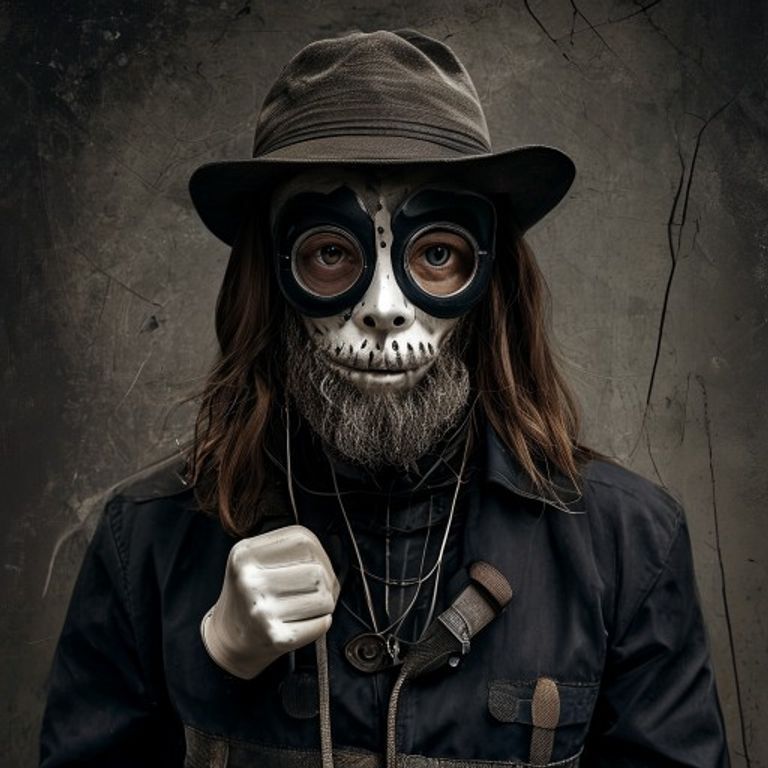
The anonymous prisoner held in various French prisons during the reign of Louis XIV, whose identity was protected by a mask and whose secret died with him.
⚠️ Research conducted with the aid of Deep Research is subject to referential ambiguity.
🖥️ Clean HTML code using a proprietary tool.
👥 Research by Guilherme Felipe, Curation by Sílvio Lôbo
The Case of the Man in the Iron Mask: The Shadow that Haunted the Reign of Louis XIV
By [Your Name], Senior Investigative Journalist
1. The Context and the Incident: Where, When, and How the Mystery Began
In the mists of 17th-century France, a persistent mystery began to weave its web of speculation: the identity and suffering of an anonymous prisoner, forced to wear a mask that concealed his face. The incident, which became one of the most enduring enigmas in European history, dates back to the reign of Louis XIV, the Sun King, a period of splendor and intrigue in the French court. It is not a single explosive event, but a series of confinements and transfers that, for over three decades, kept a man under the yoke of royal authorities, shrouded in absolute secrecy.
The first concrete reports about the masked prisoner emerge around 1669. He was initially detained in Pignerol (modern-day Pinerolo, Italy), a fortress that served as a maximum-security prison. The order for his custody emanated directly from the king or his most trusted ministers, such as the Marquis de Louvois, ensuring that no detail about the detainee's identity could escape. The order was clear and relentless: "No one must see him, no one must hear him speak, no one must know who he is." The mask, described as being made of black velvet or, in other versions, of a dark metal (hence the popularization of the idea of an "iron mask"), was a symbol of his total concealment.
2. Timeline of Events: A Chronological Reconstruction
The life of the Man in the Iron Mask, or at least his documented existence, is marked by a series of confinements and strategic movements, orchestrated to keep his secret at all costs.
- Around 1669: The prisoner appears for the first time in Pignerol, under the guard of governor Bénigne Dauvergne de Saint-Mars. His identity is unknown.
- 1681: With the transfer of Saint-Mars to the Fort of Exilles, the prisoner is taken with him.
- 1687: A new transfer. This time, to the island of Sainte-Marguerite, off the coast of Provence, where Saint-Mars assumes the governorship of the fortress. The prisoner is kept in a solitary cell, with very little human contact.
- 1698: The last and most famous transfer. Saint-Mars is appointed governor of the Bastille, in Paris, and the masked prisoner is taken there. He is housed in a specific room and kept under constant surveillance.
- 1703: The masked prisoner dies in the Bastille. His death is recorded under a false name, "Marchioly", and his belongings are confiscated. The death certificate, found in the Bastille archives, is dated November 19, 1703.
3. The Main Theories: Unmasking the Mystery
Over the centuries, countless theories have attempted to shed light on the identity of the man behind the mask. Some are more plausible, based on historical and documentary analysis, while others border on mysticism and conspiracy.
Most Likely Theories (Based on Documentary Evidence and Historical Analysis)
- A Twin Brother of Louis XIV: One of the most popular theories, popularized by Voltaire, suggests that the prisoner was a twin brother of Louis XIV. It is believed that, to avoid any dispute over the throne, the twin would have been kept secret and, subsequently, imprisoned. The logic lies in the fear of a potential pretender to the throne.
- An Illegitimate Son of Anne of Austria: Another hypothesis involves a secret son of Queen Anne of Austria, possibly with Cardinal Mazarin. This son could represent a threat to the legitimacy of Louis XIV.
- An Unpleasant Diplomat: A more pragmatic theory points to an Italian diplomat, possibly Eustache Dauger, who may have been detained for knowing state secrets. Louvois's correspondence, mentioning an individual named "Eustache Dauger," has been frequently cited as evidence. The idea is that he possessed compromising information for the crown.
- A Humiliated French Marshal: It is suggested that the prisoner was a marshal or general who fell from grace, perhaps due to conspiracy or incompetence, and that the king decided to hide him to avoid a public scandal or the loss of military prestige.
Alternative and Conspiracy Theories
- The Son of Oliver Cromwell: A more exotic theory, but one that circulated at the time, identified him as a son of the Lord Protector of England, Oliver Cromwell. This would imply a complex political plot involving rivalries between England and France.
- A Secret Marriage of Louis XIV: Some speculation suggests that the man was a secret husband of one of the king's mistresses, or even of the king himself, in the event of a secret and scandalous connection.
- An Unknown Noble Identity: The possibility of a high-ranking nobleman, whose identity needed to be erased for political or personal reasons, is also considered.
Paranormal or Supernatural Theories (Generally Dismissed for Lack of Evidence)
- Although there are no widely accepted paranormal theories or any basis in documentation, the aura of mystery and suffering of the case often inspires speculation about ghostly presences or non-earthly influences. These, however, remain in the realm of fiction.
4. Controversies and Blind Spots: The Gaps in the Investigation
The case of the Man in the Iron Mask is a tangle of gaps and inconsistencies, fueled by the very secret nature of the operations that surrounded it. The lack of official transparency and the deliberate concealment of information created fertile ground for speculation and conspiracy theories.
- Fragmented and Manipulated Records: Many of the documents that could clarify the prisoner's identity were lost, destroyed, or possibly altered to hide the truth. The very nature of the confinement suggests an active effort to erase traces of his existence.
- Conflicting Testimonies: The few accounts from witnesses or employees who served during the period of confinement often present vague or contradictory details, whether due to fear, deliberate misinformation, or the passage of time.
- The Nature of the Mask: The exact description of the mask is a point of contention. While Voltaire and others popularized the idea of an iron mask, documents suggest it could have been made of black velvet. The choice of material and its purpose (concealment versus punishment) are crucial to the interpretation of the case.
- The Relationship with Saint-Mars: The figure of governor Bénigne Dauvergne de Saint-Mars is central. His unwavering loyalty and his participation in all the prisoner's transfers raise the question of his knowledge and exact role in the concealment.
- The Name "Marchioly": The use of a false pseudonym on the death certificate raises the question: was it an attempt to mislead or a veiled reference to the prisoner's true identity? Later research has attempted to link "Marchioly" to historical figures, but without conclusive success.
5. Curiosities and Legacy: The Shadow that Does Not Fade
The Man in the Iron Mask transcended the prison walls to become an icon of oppression, state secrecy, and anonymous human suffering. His legacy is immortalized in literary and cinematic works and in the popular imagination.
- Cultural Impact: The story inspired countless adaptations, the most famous being the novel "The Vicomte of Bragelonne" by Alexandre Dumas, which popularized the twin brother theory and contributed enormously to the fame of the mystery.
- Inspiration for Other Cases: The case served as a model for narratives about hidden prisoners and identity enigmas in other stories and myths.
- Current Status: The case of the Man in the Iron Mask remains unsolved. Despite countless research and the declassification of archives, no definitive proof has emerged to unequivocally identify the prisoner. Official archives, although they have provided some glimpses into the prisoner's movements and the officials involved, have not unraveled the central identity of the mystery. The truth, if it ever existed in a single, irrefutable document, seems to have been carefully buried with the man himself.
The Man in the Iron Mask continues to haunt history, a grim reminder that, even at the height of power and light, the shadows of intrigue and secrecy can forever obscure the faces and lives of those who dare to challenge or simply annoy the powerful.





