



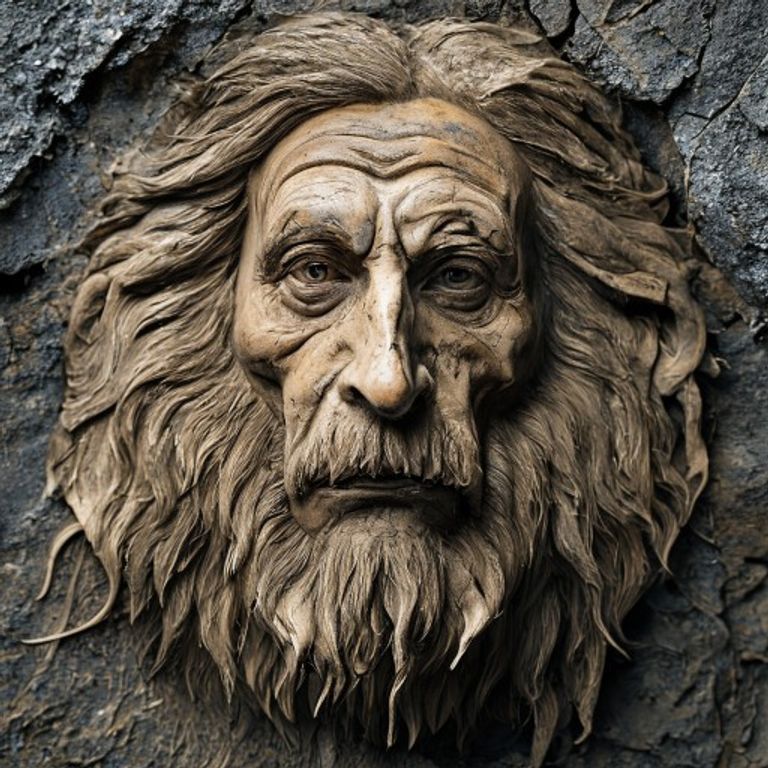
A five-thousand-year-old mummy found in the Alps with sophisticated equipment and an arrow in his back; the discovery was followed by an alleged 'curse' that reportedly affected several researchers.
⚠️ Research conducted with the aid of Deep Research is subject to referential ambiguity.
🖥️ Clean HTML code using a proprietary tool.
👥 Research by Guilherme Felipe, Curation by Sílvio Lôbo
The Frozen Enigma: Unraveling the Case of Ötzi, the Iceman
On September 19, 1991, a chance event in the glaciers of the Ötztal Valley, on the border between Austria and Italy, unearthed a centuries-old mystery. Two German mountaineers, Helmut and Erika Simon, stumbled upon what appeared, at first glance, to be debris from a recent expedition: a frozen human body, partially exposed by melting ice.
Little did they know they were standing before one of the most important archaeological finds of the 20th century, a time capsule that had remained untouched for over 5,300 years. The individual, who would be affectionately nicknamed Ötzi, the Iceman, carried with him a burden of enigmas that continue to intrigue scientists, historians, and mystery enthusiasts to this day.
Timeline of Events: A Chronology of the Awakening
The discovery of Ötzi was not an isolated event, but the culmination of a series of circumstances that imprisoned him in the ice for millennia.
- Approximately 3300 B.C.: The fatal event. Ötzi, a man appearing to be between 45 and 50 years old, is struck by an arrow in the back, dies, and his body is subsequently covered by ice, preserving him in astonishing detail.
- September 1991: Mountaineers Helmut and Erika Simon discover the body on the Tisenjoch glacier, at an altitude of 3,210 meters, on the Austrian side of the border. Initially, local authorities were notified, but removing the body from the remote and difficult-to-access area posed a logistical challenge.
- September/October 1991: The extraction of Ötzi from the ice is carried out in a somewhat improvised manner, using pickaxes and axes. The lack of scientific preservation methods during the extraction generates subsequent controversy regarding the integrity of certain evidence. The body is taken to Innsbruck, Austria.
- 1998: Through a bilateral agreement, jurisdiction over Ötzi is transferred to Italy, due to his precise location within Italian borders following new geographical measurements. He is transferred to the South Tyrol Museum of Archaeology in Bolzano, Italy, where he resides to this day.
- 1990s-2000s: Intensive scientific investigations are conducted. Radiocarbon dating confirms his ancient age. Detailed studies reveal his diet, clothing, tools, and, crucially, the cause of his death.
- 2010: Ötzi's DNA is sequenced for the first time, opening new avenues of research into his ancestry and possible family relationships.
- 2010 onwards: Advanced imaging techniques, such as CT scans and MRIs, are used to map every detail of his body and possessions, revealing new clues and deepening the mystery.
The Main Theories: Deciphering Ötzi's End
The final fate of Ötzi, over five millennia ago, is the core of the mystery. Scientific and police investigations, along with bolder speculations, offer a spectrum of explanations.
Scientific and Police Hypotheses (Most Likely)
- Ambush Attack Theory (Predominant Theory): This is the hypothesis most accepted by the scientific community and forensic experts. Key evidence includes:
- The flint arrow lodged in his left scapula, which caused a fatal internal hemorrhage.
- Defensive wounds on his hands and forearms, indicating that Ötzi tried to defend himself from an attacker.
- Traces of blood from at least four other people on his clothing and weapon, suggesting a previous conflict.
- A copper axe, a valuable item for the time, which Ötzi carried and which could have been a motive for an attack.
- A head injury, possibly caused after his fall or attack, which contributed to his death.
- Ritualistic Sacrifice Theory: Some speculations suggest that Ötzi's death could have been part of a ritual. However, the presence of combat wounds and the violent nature of the arrow tend to disfavor this theory, which lacks concrete evidence in the archaeological context.
- Fight Accident Theory: A variation of the ambush theory, where the initial conflict may have been less planned, perhaps a spontaneous fight that escalated.
Alternative, Conspiracy, or Paranormal Theories (Speculative)
- Ötzi's Curse Theory: One of the most popular theories in pop culture, which suggests that all people involved in the discovery and study of Ötzi, including Helmut Simon himself, suffered premature deaths or misfortunes. This theory is categorized as paranormal and has no scientific basis, being more of a media phenomenon fueled by coincidences and the fascination with the mystery.
- Tribal Conflict or Ancient Wars Theory: An extension of the ambush theory, which proposes that Ötzi was a victim of a large-scale conflict between rival tribes. Although the existence of conflicts in prehistory is proven, there is no direct evidence pointing to Ötzi as a participant in a generalized tribal war.
- "Ignored Clue" Theory of a Specific Suspect: The hypothesis that one or more individuals were identified as suspects at the time of death, but for some reason (hidden motive, lack of conclusive evidence, etc.) the case was "shelved." This theory is more speculative and relies on the idea that not all the truth has been revealed.
- Dangerous Journey or Ill-fated Expedition Theory: Ötzi could have been on an important journey, perhaps transporting something valuable or on a specific mission, and met his end due to unforeseen circumstances and hostility.
Controversies and Blind Spots: The Shadows of the Investigation
Despite the scientific rigor that has surrounded Ötzi in recent decades, the case is not free from dark spots and controversies that fuel investigative fascination.
- Extraction and Preservation Methods: The way Ötzi was removed from the ice in the 1990s is widely criticized for not following modern scientific protocols. The use of pickaxes and axes may have damaged delicate tissues and altered the position of certain evidence, sparking debates about the integrity of some findings. Reports and images from the time show a process more rudimentary than one would expect from such a significant discovery.
- Loss of Potential Evidence: It is believed that, due to the extraction and initial handling, some crucial evidence may have been lost or irreparably damaged. For example, organic traces or smaller artifacts that could have provided more context about his final moments.
- The Exact Nature of the Conflict: Although the arrow in his back is the cause of death, the exact identity and motivation of the attackers remain a mystery. Analysis of the blood on his possessions suggests multiple individuals, but the exact dynamics of the confrontation (whether there were one or more attackers, whether Ötzi knew them, etc.) are still subject to interpretation.
- The Absence of Missing Persons Reports: There are no records of disappearances or crime reports in the region that correspond to Ötzi in his time. This suggests that he may have been an isolated individual, traveling along less frequented routes, or that the crime occurred far from any settlement, making an official investigation at the time impossible.
- The "Curse" Controversy: Although not a blind spot of the investigation itself, the persistence of the curse theory, fueled by a number of "coincidental" deaths of people linked to the case (including mountaineer Helmut Simon), casts a shadow of superstition over the objectivity of the scientific narrative.
Curiosities and Legacy: The Iceman in the Pantheon of History
Ötzi has transcended the field of archaeology to become a cultural icon, a window into a distant past that still echoes in our understanding of humanity.
- A Precious Survival Kit: Ötzi was not found naked. He possessed an impressive set of tools and clothing, including a leather cloak, leggings, insulated shoes, a fur hat, a bow and arrows, a copper axe, a flint knife, and a container for carrying embers. This collection offers invaluable insights into the technology and way of life of the Copper Age.
- Health and Ancient Diseases: Medical analyses revealed that Ötzi suffered from health problems common today, such as osteoarthritis and Lyme disease. He also had several tattoos, whose positions coincide with acupuncture points, raising questions about medical treatments in antiquity.
- Diet and Migration: The study of his stomach contents revealed his last meal, consisting mainly of deer and goat meat, and grains. Isotope analysis of his bones suggests that he may have moved from a mountainous region to the location of his death.
- Cultural Impact: Ötzi has inspired books, documentaries, films, and countless scientific publications. He has become a symbol of the fragility of human life, the resilience of nature, and the ability of science to unravel ancestral secrets.
- Current Status: The case of Ötzi, from a criminal point of view, is effectively "frozen" due to the impossibility of identifying suspects and the impossibility of trial after millennia. However, scientific investigation into his life and death remains active, with new technologies and analytical approaches constantly uncovering new aspects of his enigmatic legacy. He rests in a refrigerated chamber at the South Tyrol Museum of Archaeology in Bolzano, where he is studied and exhibited, continuing to challenge us with every new discovery.





