



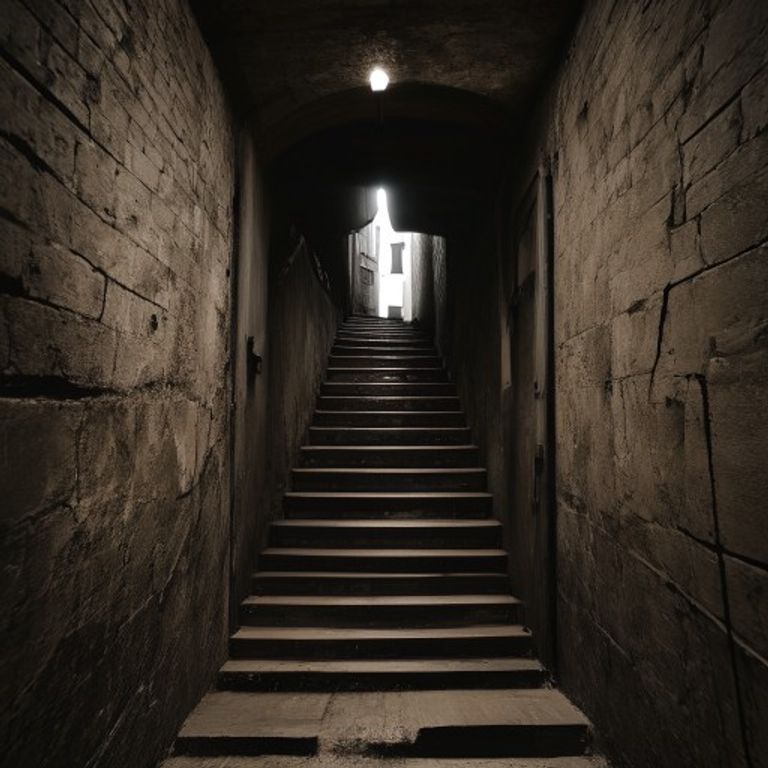
The structure in a chapel in New Mexico built by an anonymous carpenter without visible central support and without the use of nails or glue, defying the engineering laws of the time.
⚠️ Research conducted with the aid of Deep Research is subject to referential ambiguity.
🖥️ Clean HTML code using a proprietary tool.
👥 Research by Guilherme Felipe, Curation by Sílvio Lôbo
The Mystery of the Loreto Staircase: An Architectural and Spiritual Enigma
Amidst the serene landscape of Loreto, in Italy, lies one of the most intriguing and enduring architectural enigmas in history: the Holy House and its enigmatic staircase. What should be a sanctuary of peace and devotion has become the stage for a mystery that transcends rational understanding, challenging logic and fueling centuries of speculation.
1. The Context and the Incident: Where, When, and How the Mystery Began
The Holy House of Loreto, venerated as the birthplace and residence of the Virgin Mary, and where the Angel Gabriel is said to have announced the conception of Jesus, has been a pilgrimage destination since the 13th century. Legend has it that the house, made of bricks, was miraculously transported from the Holy Land to Italy in 1291, after the fall of Acre. The sanctuary, now a monumental basilica, houses the house as its sacred core.
However, the central mystery does not lie in the origin of the house, but rather in a carpenter's staircase, built internally, which leads to the upper floor. This staircase, of peculiar beauty and apparent simplicity, is the epicenter of an enigma that has intrigued the faithful, architects, and investigators for centuries. The fundamental question is: who built it, when, and how did it become an integral part of the Holy House without leaving traces of its construction or its original builders?
2. Timeline of Events
- 13th Century: Beginning of pilgrimages to the Holy House of Loreto, with the legend of the miraculous transport of the Virgin Mary's residence.
- Medieval Period: The Holy House is consolidated as one of the most important Marian shrines in Europe. The staircase was already present, integrated into the structure of the house.
- 17th Century: Documents and reports from the time already mention the staircase as a peculiar element of uncertain origin.
- Early 20th Century: The mystery of the staircase gains renewed prominence with architectural studies and more in-depth investigations.
- 1918: The staircase is dismantled to allow for the construction of a chapel and the subsequent restoration of the Holy House. This event becomes crucial for analysis, and the mystery intensifies.
- Subsequent Decades: Various analyses, expert examinations, and speculations regarding the origin and construction of the staircase.
- Present: The staircase continues to be an enigma, with debates between rational explanations and more mystical interpretations.
3. The Main Theories
The enigma of the Loreto staircase has generated a myriad of theories, ranging from prosaic explanations to supernatural visions. Below, we present the most prominent ones:
3.1. Scientific and Forensic Hypotheses (Most Likely)
- Integrated Original Construction: The most well-founded theory suggests that the staircase was built by the very craftsmen who erected the Holy House in Loreto, possibly after the miraculous transport. The idea is that the staircase was not added later, but was an integral part of the original architectural design. The absence of detailed records would be explained by the common practice of the time, where constructions were made based on practical knowledge and oral tradition, without the exhaustive documentation we know today. The fact that the staircase was dismantled in 1918 and reassembled without major difficulties supports the idea of a construction consistent with the house's structure.
- Relocation of Previous Elements: A less accepted, but possible, hypothesis is that the staircase, or parts of it, were pre-existing elements in the Holy Land that were transported along with the stones of the house. However, the nature of the wood and the complexity of the staircase's construction make this scenario less likely as a whole.
3.2. Alternative, Conspiracy, or Paranormal Theories
- Work of Unknown and Skilled Craftsmen: A popular view is that the staircase was built by a master carpenter, or group of craftsmen, whose identity was lost to time. The skill and perfection of the construction, considered unusual for the time, could have led to an aura of mystery surrounding its creators. The lack of specific tool marks or identification may have contributed to this speculation.
- Divine or Anachronistic Intervention: For the most devout, the staircase is seen as another element of the miracle of the Holy House. Some interpret the staircase as having been built by angels or through divine intervention, thus explaining its perfection and the lack of traces of its human construction. Other more esoteric theories suggest the possibility of time travel by builders from the future, who would have left the staircase as a "gift" or a sign.
- Mysticism and Occult Symbolism: There are those who believe that the staircase carries hidden symbolic meanings related to spiritual journeys or esoteric knowledge. The peculiar shape and the absence of explicit construction details could be seen as a code to be deciphered.
4. Controversies and Blind Spots
The investigation into the mystery of the Loreto staircase is permeated by significant controversies and gaps:
- Insufficient Official Reports: Although the Holy House is a site of great religious and historical importance, the official reports on the construction and origin of the staircase are mostly descriptive and lack in-depth technical analyses that could dispel the mystery.
- Missing or Poorly Documented Evidence: The dismantling of the staircase in 1918 offered a unique opportunity for study. However, the photographic documentation and technical descriptions from that period are sometimes considered incomplete by experts, hindering a precise comparative analysis with the original structure.
- Conflicting or Ambiguous Testimonies: Over the centuries, various reports and testimonies about the staircase have been recorded. Many are based on oral traditions and legends, making it difficult to discern facts from speculation.
- Limited Material Analyses: Although the wood of the staircase has been studied, more in-depth analyses, such as carbon-14 dating or detailed botanical origin analyses, have not always been performed with the scientific rigor that the mystery would require, partly due to the resistance to disturbing a sacred object.
- The Sacred Nature and Mysticism: The very sacred nature of the Holy House and the strong belief in miracles may have led to an interpretive bias, where rational explanations were less valued in favor of mystical interpretations.
5. Curiosities and Legacy
The Mystery of the Loreto Staircase has transcended the walls of the sanctuary, becoming a recurring theme in:
- Literature and Art: The staircase has inspired literary works, paintings, and other artistic formats, exploring the beauty, mystery, and symbolism of its construction.
- Documentaries and Television Programs: The enigma has been the subject of several documentaries and investigative programs, which seek to unravel its secrets from a scientific and historical perspective.
- Architectural Debates: Architects and art historians debate the ingenuity and possible genius of the original builders, regardless of their identity.
Currently, the case of the Loreto staircase remains "shelved" in terms of a formal and official investigation that could lead to a definitive conclusion. Religious authorities and the sanctuary's curators tend to preserve the mystery, seen as an intrinsic part of the site's holiness. The staircase, a remnant of a time when faith and architecture intertwined in inexplicable ways, continues to attract visitors and scholars, inviting reflection on the limits of human knowledge and the persistence of enigmas through the centuries.





