



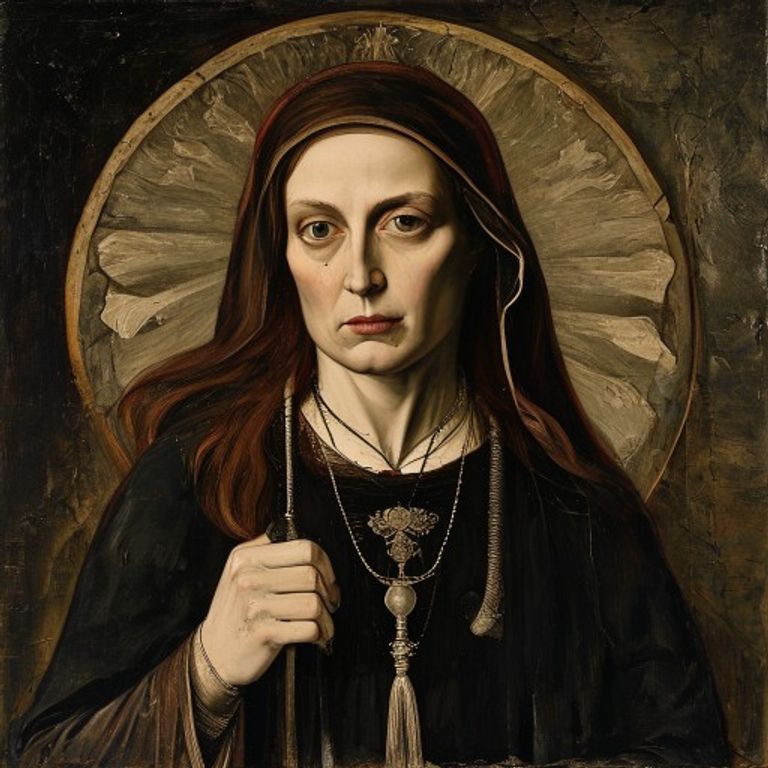
The 1975 murder of the journalist at the DOI-CODI facilities, whose staged suicide mobilized Brazilian civil society against the repression of the military dictatorship.
⚠️ Research conducted with the aid of Deep Research is subject to referential ambiguity.
🖥️ Clean HTML code using a proprietary tool.
👥 Research by Guilherme Felipe, Curation by Sílvio Lôbo
The Enigma of Vladimir Herzog: A Suspicious Whisper in Brazilian Democracy
The name Vladimir Herzog, a renowned journalist and director of journalism at TV Cultura, still resonates today in the corridors of Brazilian history, not for his investigative reports, but for the brutal and ambiguous circumstances of his death. On October 25, 1975, Brazil was living under a military dictatorship, a dark period where freedom of expression was suppressed and torture became a tool of the State. Herzog's death, officially recorded as suicide, is one of the greatest unsolved enigmas of that period, staining the memory of a nation that still seeks answers and justice.
The Context and the Incident: Where, When, and How the Mystery Began
The mystery began at the facilities of the DOI-CODI (Detachment of Information Operations - Center for Internal Defense Operations), in São Paulo. Vladimir Herzog, known for his critical and independent stance, was summoned to testify on the afternoon of October 24, 1975. The summons occurred in a context of intense political persecution, where opposition to the military regime was relentlessly repressed. Months earlier, Herzog had been accused of "subversion" due to an article published in Isto É magazine, which intensified the surveillance on him.
The official version, released by military authorities, stated that Vladimir Herzog had hanged himself in his cell at the DOI-CODI using a sheet. The report from the Legal Medical Institute (IML) pointed to mechanical asphyxia as the cause of death. However, from the very first moment, the story sounded implausible to many. The figure of Herzog, a man passionate about life and with strong family ties, did not align with the idea of a sudden and desperate suicide. The atmosphere of fear and oppression of the time fueled suspicions that the death could have had another, much more sinister nature.
Timeline of Events: A Chronological Reconstruction of the Main Facts
A meticulous reconstruction of the events is essential to unravel the layers of this mystery:
- October 24, 1975 (morning): Vladimir Herzog is summoned to appear at the DOI-CODI to testify.
- October 24, 1975 (afternoon): Herzog presents himself to the DOI-CODI and is detained.
- October 25, 1975 (early morning): The body of Vladimir Herzog is found in his cell. The official version is suicide.
- October 25, 1975 (day): The body is taken to the IML. The autopsy report is released, indicating mechanical asphyxia.
- October 26, 1975: The funeral of Vladimir Herzog, attended by a crowd demonstrating their grief and outrage.
- Subsequent years: Various investigations, testimonies, and legal milestones seek to clarify the circumstances of the death, but the case remains officially classified as suicide.
- 2012: The Federal Regional Court of the 3rd Region (TRF-3) in São Paulo, in response to a collective habeas corpus request, determines that the death of Vladimir Herzog should be investigated as a homicide, recognizing the legal impossibility of extinguishing punishability for the crime of torture and, consequently, for the death resulting from it.
The Main Theories: Hypotheses and Speculations
The Vladimir Herzog case generated a range of theories, each attempting to make sense of the tragedy. It is crucial to distinguish between hypotheses anchored in evidence and those that are more speculative:
Theory of Death by Torture (Most Likely Police/Judicial Hypothesis)
This is the theory that gained strength over time and was partially recognized by the Brazilian judiciary. The logic behind it is as follows:
- Physical evidence: Reports from witnesses (other political prisoners) about the inhumane conditions in the DOI-CODI cells and the systematic practice of torture.
- Context of the time: The DOI-CODI was known for its brutal interrogation methods, which frequently resulted in severe physical harm and, in some cases, the death of detainees.
- Motivation: The political persecution of Herzog, his refusal to collaborate with the repressive bodies, and the desire to silence him. Torture would have been used to obtain information or confessions, and the fatal outcome would have been accidental or deliberate.
- Concealment: The claim of suicide would be a way to cover up the torture and avoid the accountability of State agents.
Foundation: Testimonies from former detainees and former agents of the dictatorship, the legal reinterpretation that recognized torture as a probable cause, and the difficulty of explaining the motive for a suicide in such circumstances. The Truth Commission also corroborated this line of investigation.
Theory of Planned Suicide (Official Version)
This was the narrative presented by the military authorities at the time.
- Main argument: Herzog, pressured and disillusioned with his situation, would have opted for suicide to escape a future of trials or to avoid denouncing companions.
- Evidence presented: The IML report and the crime scene as described by the agents.
Criticisms: The lack of a psychiatric history of depression in Herzog, his strong sense of purpose, and the incongruity with his vibrant personality are the main points that weaken this theory. Furthermore, the rigidity of the DOI-CODI surveillance apparatus would make it unlikely that a prisoner could commit suicide without any immediate intervention or suspicion from the guards.
Conspiracy Theory and Superior Order (Speculation)
This theory suggests that Herzog's death was not just an isolated act of torture, but part of a larger strategy of the regime.
- Logic: The elimination of prominent figures who represented strong intellectual and moral opposition could have been orchestrated to send a message of intimidation to other opponents and to society in general.
- Involvement: It could involve high-ranking agents of the Armed Forces or security agencies, with the goal of destabilizing resistance to the regime.
Observation: This theory is more speculative, as it lacks concrete evidence pointing directly to a specific superior order for Herzog's death, although the context of systematic repression may support this line of thought.
Alternative or Paranormal Theories (Without Scientific Foundation)
Although less relevant to an investigative analysis, it is important to note that in cases of great mystery, theories arise without any scientific or factual basis, such as interventions from other dimensions or energies.
Observation: These theories are rejected by serious and objective investigation.
Controversies and Blind Spots: The Failures of the Official Investigation
The Vladimir Herzog case is full of controversies and blind spots that fuel distrust regarding the official version:
- IML Report: The forensic examination, carried out under suspicious circumstances, was questioned for its speed and for not having considered the possibility of previous injuries that could have been caused by torture. The position of the marks on Herzog's neck, for example, sparked debates.
- Omitted or Ignored Testimonies: Several political prisoners who were detained at the DOI-CODI at the same time as Herzog reported hearing cries for help and signs of suffering coming from his cell. These reports, however, were largely ignored or undervalued in the initial investigations.
- Missing or Destroyed Physical Evidence: The speed with which the body was released to the family and the hasty burial raised suspicions about the possibility of tampering with or concealing evidence.
- Resistance to Investigate: During the military regime, any attempt to reopen the case or deepen the investigation into Herzog's death was promptly blocked by the authorities. The validation of the suicide, despite the doubts, served to close the matter and protect those involved.
- Impunity: To this day, those directly responsible for the torture and death of Vladimir Herzog have not been properly punished, a reflection of the difficulty in obtaining justice in cases of crimes committed by the State during dictatorial periods.
Curiosities and Legacy: A Cry for Memory and Justice
The legacy of Vladimir Herzog transcends the tragedy of his death. His case became a symbol of the fight for freedom of the press and human rights in Brazil.
- Cultural Impact: Herzog's death mobilized civil society, artists, and intellectuals, intensifying opposition to the dictatorship. The funeral became a political act of repudiation.
- Popular Action: The Herzog family, especially Clarice Herzog, his widow, waged a tireless battle for justice and truth, appealing to various instances and denouncing the arbitrariness.
- Truth Commission: The National Truth Commission, created after the redemocratization, revisited the case, gathering new evidence and testimonies that reinforced the thesis of death by torture.
- Current Status: Although the Brazilian justice system has, in part, recognized the possibility of torture as the cause of death, the direct criminal accountability of those involved is still a challenge. The Vladimir Herzog case remains a painful reminder of the wounds opened by the dictatorship and a symbol of the incessant search for memory, truth, and justice in a country that still deals with its past. Herzog's story echoes as a cry for those whose voices were silenced by State violence, a perennial invitation to reflect on the dangers of intolerance and the non-negotiable importance of freedom.





