



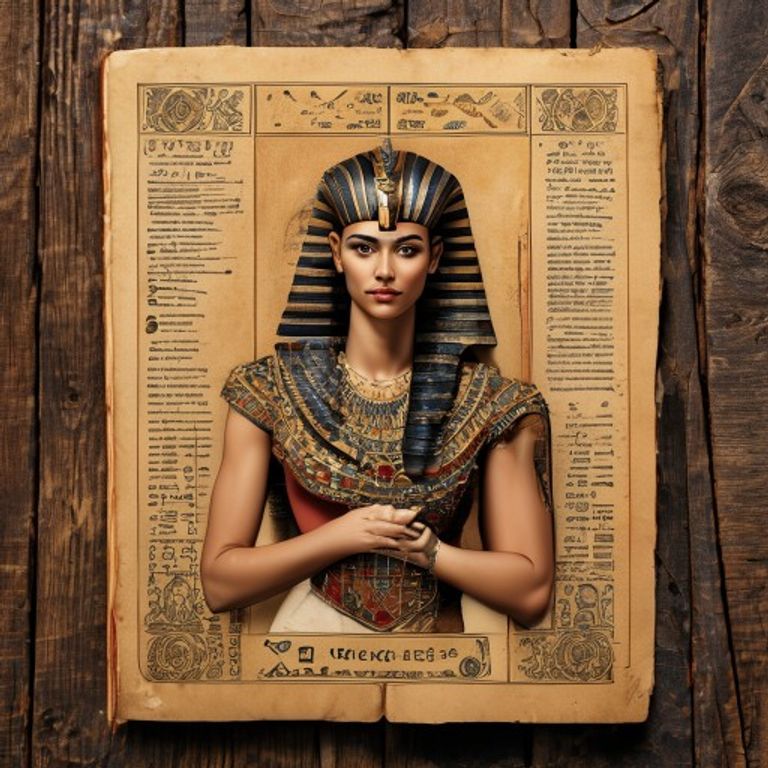
The legendary Egyptian text that supposedly contained secrets about the language of the gods and mastery over nature, becoming an object of search for occult orders.
⚠️ Research conducted with the aid of Deep Research is subject to referential ambiguity.
🖥️ Clean HTML code using a proprietary tool.
👥 Research by Guilherme Felipe, Curation by Sílvio Lôbo
The Case of the Book of Thoth: The Shadow of Lost Knowledge
In the depths of history, where the line between legend and reality blurs, emerges a mystery that defies logic and stirs the imagination: The Case of the Book of Thoth. This is not a common police case, nor a mere fairy tale. It is the saga of an artifact that, according to tradition, holds ancestral secrets capable of shaping the destiny of humanity, and from whose loss or concealment have arisen speculations that have endured for centuries.
1. The Context and the Incident: Where, When, and How the Mystery Began
The origins of the Book of Thoth date back to Ancient Egypt, a period of splendor and cultural complexity, where religion, magic, and science were intertwined. Thoth, the Egyptian deity of wisdom, writing, magic, and the moon, is credited as the author of a compendium of universal knowledge. The first references to a book, or set of papyri, containing sacred teachings attributed to Thoth, appear in Egyptian religious and esoteric texts dating back as far as the Old Kingdom (c. 2686–2181 BC).
The "incident" itself is not a singular, datable event like a theft or a sudden disappearance at a specific point in history. On the contrary, the mystery lies in the absence of a definitive physical copy and in the persistent discourse regarding its existence and power over millennia. The belief was that this book contained not only spells and rituals but also the secrets of creation, the language of the gods, and the knowledge to achieve immortality. Its loss or intentional concealment is often associated with an effort to prevent its power from falling into the wrong hands, or with a disaster that destroyed it.
2. Timeline of Events (Speculative Reconstruction)
It is crucial to emphasize that the following timeline is largely based on ancient texts, myths, and traditions, not on concrete historical records of a single artifact.
- c. 2686–2181 BC (Old Kingdom): First mentions of Thoth and his teachings, suggesting the existence of sacred writings attributed to him.
- Later Periods of Ancient Egypt: References in texts such as the "Book of the Dead" and other funerary papyri that allude to the power and wisdom contained in the writings of Thoth. It is believed that copies or fragments may have existed in temples and sacred libraries.
- Hellenistic and Roman Period (c. 332 BC – 641 AD): The figure of Thoth merges with the Greek god Hermes Trismegistus, giving rise to the Hermetic tradition. Hermetic texts, such as the "Corpus Hermeticum," incorporate the idea of primordial knowledge transmitted by a divine figure, but without explicit mention of a single physical "Book of Thoth."
- Middle Ages and Renaissance: The search for lost and hidden knowledge gains momentum. The Book of Thoth becomes a symbol of the Grail of esoteric knowledge, an object of desire for alchemists, mystics, and students of magic.
- 19th and 20th Centuries: Interest in occultism flourishes. The Book of Thoth is frequently mentioned in works of fiction, conspiracy theories, and studies on secret societies, solidifying its status as a cultural myth.
- Present: The Book of Thoth remains an enigma, without any conclusive archaeological evidence of its physical existence as a single tome.
3. The Main Theories
The elusive nature of the Book of Thoth has generated a myriad of theories, ranging from the pragmatic to the transcendental.
3.1. Scientific and Investigative Hypotheses (Probabilistic Approaches)
- Metaphor or Collection of Texts: The most rational explanation, from an academic perspective, is that the "Book of Thoth" was not a single physical book, but rather a metaphor for the vast wisdom and knowledge recorded by Egyptian scribes over centuries, or a collection of papyri and religious texts attributed to the deity. Similarly, knowledge of Egyptian astronomy, mathematics, and medicine could be interpreted as a "book" of wisdom.
- Destruction by Disasters: If significant physical copies existed, it is plausible that they were destroyed over time by fires in libraries such as Alexandria, floods, or the natural deterioration of organic materials (papyri) in a climate like Egypt's.
- Deliberate Concealment: The possibility that one or more copies were deliberately hidden to protect their knowledge is a recurring theory, present in many myths of powerful artifacts.
3.2. Alternative, Conspiracy, and Paranormal Theories
- Extraterrestrial or Atlantean Knowledge: Some more esoteric theories postulate that the Book of Thoth contained not only Egyptian wisdom but also knowledge from advanced civilizations (such as Atlantis) or even of extraterrestrial origin. In this view, Thoth would be a channel or transmitter of this knowledge.
- Key to Magic and Reality: The most popular theory among occultists and esotericists is that the book holds the key to unlocking latent psychic powers, manipulating reality, or even achieving immortality. The loss of the book would be a tragedy for humanity, preventing its access to a higher evolutionary potential.
- Living or Energetic Document: Some schools of thought believe that the Book of Thoth is not a common physical object, but rather an energetic concept or an Akashic record, accessible only to individuals with a high degree of spiritual development or esoteric knowledge.
- Secret Society Conspiracy: It is suspected that various secret societies throughout history (such as the Templars, the Freemasons, or the Hermetic Order of the Golden Dawn) may have had access to fragments or information contained in the Book of Thoth, keeping them secret for themselves.
4. Controversies and Blind Spots
The greatest controversy of the Case of the Book of Thoth lies, obviously, in the lack of concrete physical evidence. The absence of an irrefutable archaeological find is the main blind spot for any rigorous investigation.
- Varied Interpretations: The texts that mention Thoth and his writings are often ambiguous and subject to multiple interpretations, which leaves room for baseless speculation.
- Differences Between Sources: Descriptions of what the book contained vary enormously between different esoteric and religious traditions, raising the question of whether they all refer to the same entity or concept.
- Circumstantial Evidence and Second-Hand Testimony: Many of the "clues" about the existence and content of the book are based on indirect accounts, oral traditions, and writings that rely on other writings, creating a chain of information with potential for distortion.
- Lack of Conclusive Scientific Analysis: Naturally, there is no scientific analysis of an artifact whose existence has never been proven. Any analysis of alleged "fragments" or "copies" is inconclusive regarding their relationship to the legendary Book of Thoth.
5. Curiosities and Legacy
The Book of Thoth has transcended its Egyptian context to become an archetype of forbidden knowledge and supreme power, shaping the popular imagination and influencing culture in profound ways.
- Literary and Artistic Inspiration: The myth of the Book of Thoth has served as inspiration for countless novels, short stories, poems, films, and works of art, exploring the search for hidden knowledge and its dangerous consequences.
- Symbol of the Search for Knowledge: For many students of esotericism, the Book of Thoth represents the incessant search for universal truth and the understanding of the deepest mysteries of existence.
- Antiques and Occult Market: The legend has generated a considerable market for books and artifacts that claim to be copies, fragments, or inspired by the Book of Thoth, many of which are of dubious value.
- Current Status: The Case of the Book of Thoth has not been "reopened" or "closed" in the sense of a legal process or police investigation. It remains open in the realm of historical, philosophical, and esoteric speculation. The absence of concrete proof means it continues to be one of the great unsolved mysteries of history, an invitation to reflect on the limits of human knowledge and the nature of wisdom.
While science seeks tangible evidence and history relies on verifiable facts, the Book of Thoth resides on the threshold of belief, a testament to the human fascination with the unknown and the promise of knowledge that, perhaps, is better left veiled.





