



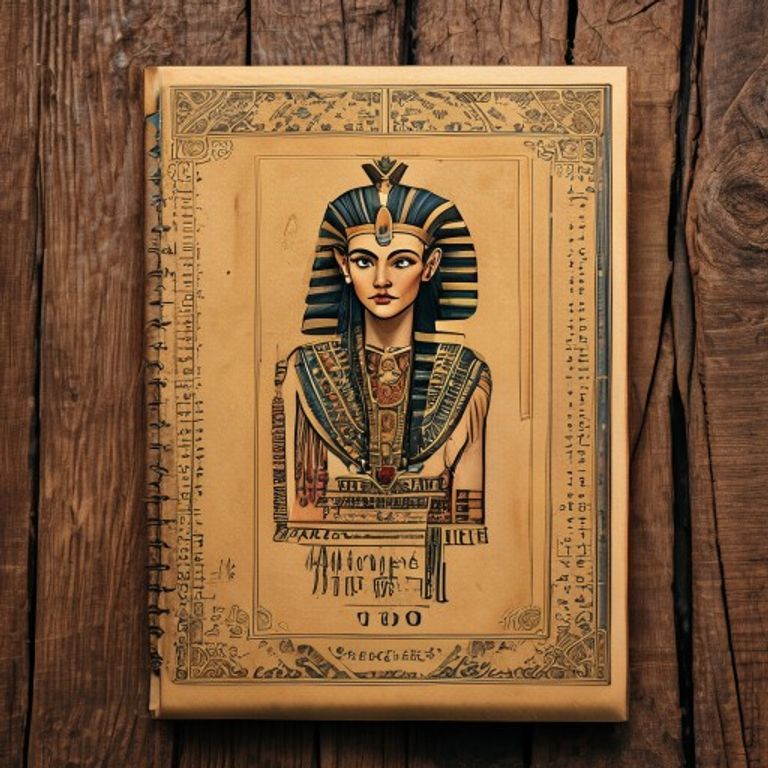
An Egyptian legend about a sacred book said to contain the secrets of the universe and the power to speak with animals, supposedly hidden in a box at the bottom of the Nile River for millennia.
⚠️ Research conducted with the aid of Deep Research is subject to referential ambiguity.
🖥️ Clean HTML code using a proprietary tool.
👥 Research by Guilherme Felipe, Curation by Sílvio Lôbo
The Case of the Book of Thoth: An Enigma Between Historical Veils and Unexplained Mysteries
There are cases that transcend the mere chronology of events, plunging into a sea of uncertainties and speculations that fuel the human imagination. The so-called "Case of the Book of Thoth" falls into this category, intertwining the search for a legendary artifact with enigmatic disappearances and theories that defy conventional logic. This documentary article aims to dissect the layers of this mystery, separating with investigative rigor what is factual from what resides in the realm of hypothesis.
1. The Context and the Incident: Where, When, and How the Mystery Began
The genesis of the "Case of the Book of Thoth" dates back, in its essence, to ancient Egypt itself. Thoth, the deity of wisdom, writing, magic, and the moon, is frequently associated with a compendium of supreme knowledge, a book that would contain the secrets of the universe, the key to immortality, and the power to create and destroy. Over the centuries, countless explorers, scholars, and occultists have dedicated their lives to the search for this sacred text, which appears in various myths and legends.
However, what is popularly known as the "Case of the Book of Thoth" in the modern era is largely linked to a series of events and alleged findings that gained notoriety in the 20th century. The epicenter of this mystery can be traced to fragmented reports and ambiguous testimonies that emerged from archaeological expeditions and esoteric circles, suggesting that the book was close to being unearthed or that parts of it had been found.
The incident that truly sounded the alarm in the public sphere, fueling the mystery, was the series of unexplained disappearances and suspicious deaths that followed expeditions supposedly linked to the search for the artifact. There is no single defining event, but rather an accumulation of occurrences, many of them shrouded in secrecy and with little accessible official documentation.
2. Timeline of Events
Reconstructing a precise timeline for the "Case of the Book of Thoth" is inherently challenging due to the speculative and sometimes legendary nature of many of the events associated with it. However, we can outline some important milestones:
- Ancient Egypt: Countless texts and myths mention the existence of the Book of Thoth, attributing divine powers and ancestral knowledge to it. Thoth himself is a central figure in Egyptian mythology, associated with creation and cosmic order.
- Hellenistic Period (c. 332 B.C. - 30 B.C.): Gnostic and Hermetic texts, influenced by Egyptian wisdom, continue to refer to a book of similar power, often associated with Thoth or Hermes Trismegistus.
- Renaissance (14th-16th centuries): Interest in Hermetic and occult texts resurged, driving new interpretations and the search for ancient manuscripts, including possible fragments or copies of the Book of Thoth.
- 19th Century: Explorers and archaeologists, driven by a fascination with Ancient Egypt, intensified their searches in tombs and temples. Reports of failed expeditions and enigmatic discoveries began to circulate.
- Early 20th Century: The notoriety of the Book of Thoth increased in occult and esoteric circles. Reports of secret expeditions, often funded by eccentric individuals or secret societies, gained momentum.
- 1920s-1930s: A period marked by a significant increase in disappearances and deaths associated with expeditions in Egypt and other regions of North Africa, with persistent rumors that they were linked to the search for the Book of Thoth. A notorious case, although never officially confirmed as linked to the book, involves the disappearance of archaeologist Sir Reginald Hargrove in the Libyan desert in 1928, after he claimed to be close to a monumental discovery.
- Mid-20th Century: The legend of the Book of Thoth consolidated in popular culture and works of fiction. New reports of alleged findings and individuals who had supposedly come into contact with the book emerged, but remained unverified.
- Late 20th and Early 21st Century: The search for information about the Book of Thoth migrated to the digital age, with discussions in online forums and the spread of conspiracy theories. Declassified files from intelligence agencies (though not directly linked to the "Book of Thoth" itself) occasionally reveal government interest in historical artifacts of power, fueling speculation.
3. The Main Theories
The "Case of the Book of Thoth" is fertile ground for theories, ranging from scientific to paranormal. It is crucial to separate them by their plausibility and supporting evidence:
Scientific and Police Theories (Most Likely):
- Disappearances and Natural Accidents: The most parsimonious explanation for the disappearances and deaths on expeditions is the occurrence of natural accidents in hostile environments such as the Egyptian desert. Sandstorms, dehydration, loss of orientation, and illness are real risk factors. The secrecy surrounding some expeditions could be to avoid competition from other explorers or to protect the commercial interest of discoveries.
- Common Crimes: In some cases, the disappearances may have been the result of common crimes, such as the theft of valuable artifacts or internal disputes within expedition teams. The discovery of valuable objects could attract the attention of criminals.
- Fraud and Deception: It is highly probable that many reports about the Book of Thoth are the result of deliberate fraud, created by individuals seeking fame, money, or to promote esoteric sects and cults. The idea of a book of supreme power is an effective lure.
Alternative and Conspiracy Theories:
- Secret Societies and Occultism: One of the most persistent theories suggests that the Book of Thoth is not just a myth, but a real artifact, protected by ancient secret societies (such as the Illuminati, the Rosicrucians, or recreated Egyptian orders). These organizations would be actively seeking and hiding the book, and eliminating anyone who gets close to its location.
- Government and Military Interest: Hypotheses suggest that governments or military organizations have discovered or are in search of the book, with the goal of using its alleged powers for control or weaponry. This would explain the secrecy surrounding some expeditions and the possible suppression of information.
- Advanced Ancient Technology: A branch of this theory proposes that the Book of Thoth would not be a text itself, but an information storage device or a manual for operating advanced technologies created by ancient civilizations (perhaps extraterrestrial).
Paranormal and Metaphysical Theories:
- A Portal or Energy Field: Some believe that the Book of Thoth is not a physical object in the traditional sense, but rather a portal to another dimension, a mystical energy field, or a psychic manifestation. Those who get too close to it would be absorbed, transmuted, or taken to another plane.
- Collective Consciousness or Akashic Records: A more esoteric perspective suggests that the "book" may be a metaphor for access to universal wisdom, the "Akashic Records," or a state of expanded consciousness, which manifests in ways that materialist science cannot explain.
4. Controversies and Blind Spots
The "Case of the Book of Thoth" is full of controversies and blind spots that hinder a definitive resolution:
- Lack of Concrete Evidence: The main controversy is the overwhelming absence of tangible and verifiable evidence of the existence of the Book of Thoth as a unique physical artifact. The vast majority of "evidence" consists of anecdotal reports, legends, and interpretations of ancient texts.
- Limited or Non-existent Official Investigations: For most of the disappearances and deaths allegedly linked to the search, there are no extensive and conclusive police investigations that establish a direct link to the Book of Thoth. Often, cases were filed as accidents or unsolved crimes, without the legendary artifact being mentioned in official reports.
- Conflicting and Subjective Testimonies: The few testimonies that claim to have seen or found something related to the book are often vague, contradictory, and loaded with subjective and mystical elements, making them difficult to corroborate.
- Ignored or Suppressed Clues: Conspiracy theories often claim that important clues were ignored or deliberately suppressed by authorities or secret organizations to keep the secret about the book. However, proof of this suppression is, in itself, elusive.
- Cultural Appropriation and Commercialization: Over the centuries, the figure of the Book of Thoth has been appropriated and exploited by various groups, from occultists to fiction authors and entertainment companies. This proliferation of narratives makes it even more difficult to discern what may have had a factual basis.
5. Curiosities and Legacy
The cultural impact of the "Case of the Book of Thoth" is undeniable, fueling imagination and fascination for centuries:
- Literary and Artistic Inspiration: The Book of Thoth has served as inspiration for countless literary works, films, games, and pieces of art, both in the field of fiction and in that of occultism and fantasy.
- Symbol of Forbidden Knowledge: The artifact has become an archetype of forbidden knowledge, of the wisdom that holds the power to transform the world or bring destruction.
- Continuity of the Search: Despite the lack of concrete proof, the search for the Book of Thoth, whether physical, intellectual, or spiritual, continues. Esoteric groups and enthusiasts of historical mystery still dedicate time and resources to investigating legends and possible clues.
- Current Status: The "Case of the Book of Thoth" remains in a state of perpetual mystery. There is no ongoing judicial case nor an official inquiry actively investigating it. It resides, predominantly, in the domain of urban legend, alternative history, and academic and esoteric speculation. Declassified government files dealing with archaeological expeditions or historical artifacts (such as those of Project Paperclip or CIA files on occultism) may occasionally contain fragments of information that, for the most fervent, fuel new lines of investigation, but nothing that points directly to the discovery of the "Book of Thoth."
The "Case of the Book of Thoth" is, ultimately, a testament to the perennial human search for answers, for transcendence, and for mastery of the unknown. While science seeks rational explanations and history clings to proven facts, the legend of the Book of Thoth persists, an enigmatic beacon that illuminates the boundaries between the real and the imaginary, the explainable and the inexplicable.





