



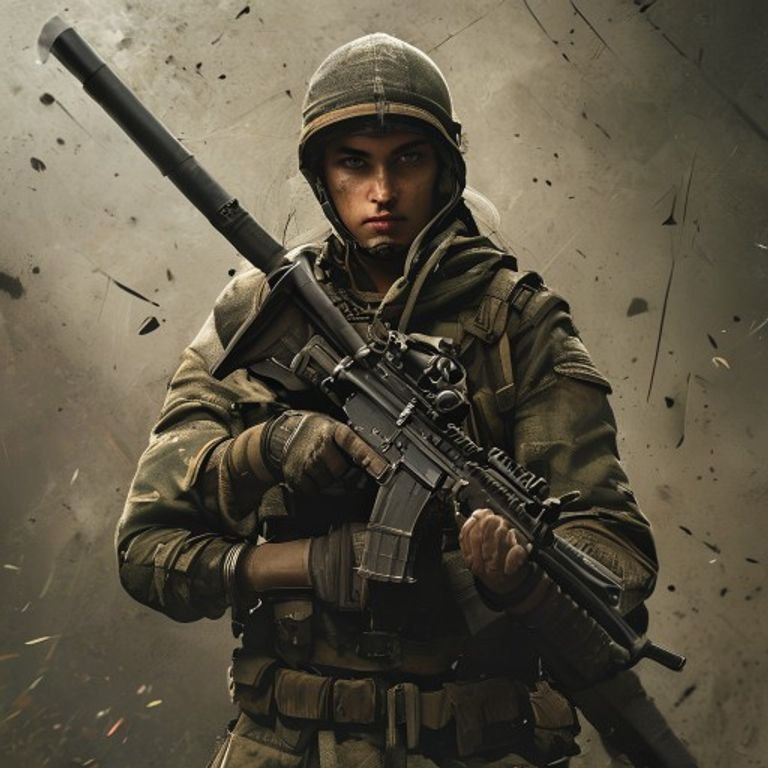
The military confrontation that never occurred during the 1930 Revolution in Brazil, becoming a popular expression for events that are widely announced but never take place.
⚠️ Research conducted with the aid of Deep Research is subject to referential ambiguity.
🖥️ Clean HTML code using a proprietary tool.
👥 Research by Guilherme Felipe, Curation by Sílvio Lôbo
The Enigma of the Battle of Itararé: The War That Didn't Happen and the Mystery That Remains
History teaches us that great conflicts are marked by bloody battles, bold strategies, and a trail of destruction. However, some of the most intriguing enigmas lie not in the confrontations that occurred, but in those that were avoided—or rather, that seem to have been avoided, yet left behind a trail of questions that echoes to this day. The Case of the Battle of Itararé is one of those dark and fascinating chapters of Brazilian history, where an imminent military confrontation dissolved under nebulous circumstances, opening space for a mystery that has resisted decades of attempts at elucidation.
In 1930, Brazil was on the verge of a civil war. The Revolution of 1930, led by Getúlio Vargas, promised to destabilize the Old Republic and impose a new political order. The epicenter of the tension was concentrated in Itararé, a strategic city on the border between São Paulo and Paraná, which became the stage for a clash that, theoretically, would define the country's path. What followed, however, was not a clash of armies, but a series of inexplicable events that led to the dismantling of the forces preparing for battle, leaving behind a legacy of speculation and few concrete answers.
Timeline of Events: A Race Against Time and the Unexpected
Reconstructing the chronology of events leading up to the supposed Battle of Itararé is crucial to unraveling the mystery. The period in question was one of intense military and political mobilization, with both sides preparing for confrontation.
- September 1930: Beginning of the 1930 Revolution. Legalist troops, loyal to the government of Washington Luís, begin to concentrate in the Itararé region.
- October 1930: Revolutionary forces, under the command of Getúlio Vargas and supported by troops from Minas Gerais and Rio Grande do Sul, advance toward São Paulo. Itararé becomes the focal point, the imaginary front line where the country's fate would be decided.
- October 24, 1930: Initial information indicates that legalist troops were positioned for defense. There are reports of a strong military presence and preparations for combat.
- October 24 to 26, 1930: What should have been the confrontation disintegrates. Instead of a pitched battle, what is observed is a progressive dismantling of the legalist forces. Fragmented reports describe confusion, desertion, and the sudden rout of the troops that were supposed to defend the region.
- October 27, 1930: The government of Washington Luís is deposed in Rio de Janeiro by an internal military coup, while Vargas heads to the capital. The "battle" in Itararé never actually takes place, and the country enters a new era.
The Main Theories: Unraveling the Inexplicable
The absence of a direct confrontation and the unusual circumstances under which the legalist troops dispersed gave rise to a myriad of theories, some based on military and political analysis, others steeped in the realm of speculation and the inexplicable.
Scientific and Police Hypotheses (Most Likely)
- The Victory of Revolutionary Tactics: The most historically accepted theory suggests that the intelligence and strategy of the revolutionary troops were decisive. The infiltration of agents, the dissemination of false information regarding the strength and morale of Vargas's troops, and the promise of amnesty or opportunities for the legalists would have demotivated and disorganized government troops, leading to mass desertions. Demoralization proved more effective than the use of weapons.
- Internal Coup and Betrayal: Some historians and period accounts suggest that the dismantling of legalist forces in Itararé may have been orchestrated by elements within the government or the army itself, dissatisfied with the political situation or aligned with Vargas's goals. The deposition of Washington Luís in Rio de Janeiro corroborates the idea of a coordinated coup.
- Lack of Leadership and Cohesion: Military analysis points to a possible failure in the chain of command and the morale of the legalist troops. Without strong, unified leadership, and facing the prospect of a bloody and potentially fruitless conflict, desertion and the abandonment of positions would have been natural consequences.
Alternative and Conspiracy Theories
- The Dark Role of Secret Services: Speculations circulate about the actions of intelligence services, perhaps even foreign ones, that may have acted behind the scenes to prevent a large-scale conflict in Brazil, ensuring regional stability or protecting economic interests. The lack of concrete evidence, however, keeps this theory in the realm of conjecture.
- Paranormal or Inexplicable Phenomena: In a context of extreme tension and uncertainty, reports—sometimes anecdotal—emerged of unusual phenomena that supposedly frightened and disoriented the troops. Inexplicable communication failures, visions, or events that led to generalized panic. These narratives, while part of the case's folklore, lack any verifiable empirical basis and are widely rejected by historians.
Controversies and Blind Spots: Gaps in the Official Narrative
Despite decades of study, the Case of the Battle of Itararé remains shrouded in controversies and blind spots that hinder a definitive understanding of the events.
- Inconsistencies in Official Reports: Reports from the time are often fragmented, contradictory, or incomplete. The urgency of the situation and the rapid transition of power may have compromised the collection and preservation of detailed evidence.
- Conflicting Testimonies: The narratives of the soldiers and officers involved show significant discrepancies. Some report confused orders, others speak of generalized panic, and some mention a "tacit agreement" to avoid bloodshed.
- Lost or Ignored Evidence: Over the years, it has been speculated that crucial documents may have been lost, destroyed, or deliberately hidden. Strategic maps, command orders, desertion records, and soldier interrogations might contain keys to solving the enigma, but their location or existence is uncertain.
- The Disappearance of Key Leadership: The sudden deactivation of legalist forces in Itararé, culminating in the deposition of Washington Luís, suggests a strategic coordination that may have involved secret actions and the "neutralization" of important military figures.
Curiosities and Legacy: The War That Wasn't and the Legend That Remained
The Case of the Battle of Itararé transcended the military and political spheres, becoming a symbol of the unpredictability of history and a recurring theme in discussions about the 1930 Revolution.
- Cultural Impact: The idea of a war that was avoided at the last minute fuels popular and literary imagination. The city of Itararé, in turn, carries the historical weight of having been the stage for a battle that never happened, but which shaped the destiny of Brazil.
- Current Status: The case itself is not a "criminal case" to be reopened, but a historical event that continues to be the subject of research and debate among historians and researchers. Declassified archives sporadically bring new information, but the essence of the mystery—the exact reason why an imminent confrontation dissipated without a shot being fired—remains largely unresolved.
- A Memorial of Doubts: The "mystery of Itararé" serves as a reminder of the complexity of historical events, where the absence of an event can be as significant as its occurrence, and where the search for answers can lead us down unexpected paths, confronting us with the power of strategy, betrayal, and, perhaps, the limits of our own understanding.





