



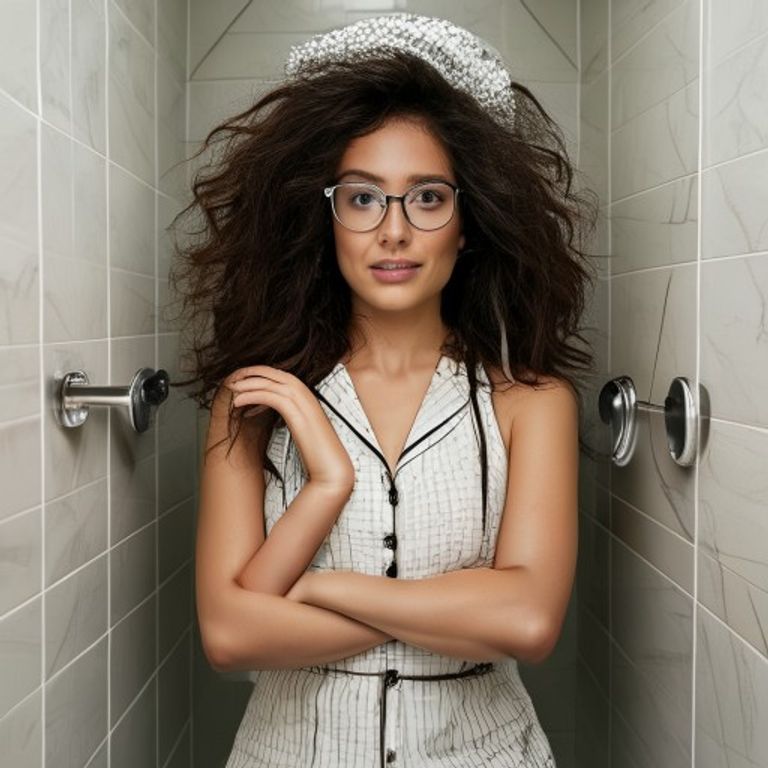
One of the most famous school myths in Brazil, based on the story of a young woman who allegedly died at school and began haunting the bathrooms.
⚠️ Research conducted with the aid of Deep Research is subject to referential ambiguity.
🖥️ Clean HTML code using a proprietary tool.
👥 Research by Guilherme Felipe, Curation by Sílvio Lôbo
The Enigma of the Bathroom Blonde: An Investigative Dossier
Brazil has a rich urban folklore, fueled by generations of stories told among friends, in bank queues, and, notoriously, in school hallways. Among these enigmas that populate the collective imagination, one of the most persistent and intriguing is the "Case of the Bathroom Blonde." Far from being just a legend, this case carries elements of mystery, alleged investigations, and a cultural legacy that defies time. This article seeks to unravel, with analytical rigor, the proven facts, speculations, and gaps that make the Case of the Bathroom Blonde one of the country's greatest unsolved enigmas.
1. The Context and the Incident: Where, When, and How the Mystery Began
The epicenter of the first occurrences and reports regarding the "Bathroom Blonde" dates back to the early 1980s, with reports concentrated in elementary and high schools, especially in the São Paulo region. The central narrative is almost always the same: a young woman, often described as blonde and of ethereal beauty, allegedly died tragically in a school bathroom. The trigger for her appearance, according to the myth, would be a prank, such as flushing the toilet repeatedly or slamming the door, "calling" the young woman.
It is crucial to note that, initially, this is not a single isolated incident, but rather a proliferation of reports that gradually consolidated into an archetype of school haunting. The lack of an official record of a specific event that gave rise to the legend makes it difficult to determine exactly "where" and "when" the mystery actually began, allowing the story to spread and adapt to different geographical and institutional contexts.
2. Timeline of Events (Chronological Reconstruction of Key Facts)
The folkloric nature of the case makes a precise timeline a challenge. However, we can outline the milestones of its dissemination:
- Early 1980s: First scattered reports of sightings and strange phenomena in school bathrooms, mainly in São Paulo. These narratives begin to circulate informally among students.
- Mid-1980s: The figure of the "Bathroom Blonde" gains more defined contours. Stories about her tragic origin (accident, suicide, assault) and the rituals to invoke her become common.
- Late 1980s and Early 1990s: The case reaches its peak popularity. Schools all over Brazil record cases of students who report having seen or felt the presence of the "Blonde." Incidents such as flickering lights, faucets turning on by themselves, and slamming doors are frequently attributed to her.
- 1990s and 2000s: The phenomenon is consolidated in popular culture, becoming the subject of news reports, TV shows, and even film adaptations. The lack of concrete proof for the events fuels debate and speculation.
- Current Period: Although less prominent in the media, the myth of the Bathroom Blonde remains alive, especially among younger generations of students, perpetuated in school environments and on the internet.
3. The Main Theories
The Case of the Bathroom Blonde, due to its ambiguous nature and the absence of conclusive evidence, has generated a myriad of theories, ranging from the skeptical to the paranormal.
3.1. Scientific and Police Hypotheses (Most Likely)
- Suggestion and Social Contagion Effect: This is the most accepted explanation from a psychological perspective. The strong belief shared among students creates an environment conducive to suggestion. An initial report, even if unfounded, can lead others to interpret normal phenomena (such as plumbing noises, drafts, or even their own imagination) as evidence of the "Blonde's" presence. Fear and group excitement amplify the perception. Reports from schools that investigated the cases at the time often pointed to collective behavior as the main cause.
- Unexplained Physical Phenomena (Initially): Structural problems in school bathrooms, such as old plumbing, faulty electrical systems, or leaks, can generate noises, dripping, and other occurrences that, in a context of fear and suggestion, are easily attributed to supernatural causes. Poor lighting or darkness in some bathrooms can also create an environment conducive to visual illusions.
- False Memories and Confabulation: Over time and with the repetition of the story, individuals may develop false memories or confabulate details to fit into the dominant narrative, sincerely believing they have experienced the events.
3.2. Alternative, Conspiracy, or Paranormal Theories
- Ghostly Apparition: The classic paranormal theory posits that the "Bathroom Blonde" is, in fact, the spirit of a young woman who died tragically on the premises and remains there, haunting the environment. The story of her death varies, but usually involves an elevator accident or a fall, followed by screams, which would lead her to become trapped. The logic lies in the belief that residual energies or discarnate spirits can interact with the physical world.
- Energetic or Elemental Entities: Some esoteric branches suggest that the figure may not be a human spirit, but rather an energetic or elemental entity attracted by the atmosphere of fear and emotional energy of the location.
- School Conspiracies or Invented Fear: Although less common as a primary theory, some speculate that the story may have been, in some cases, orchestrated by older students to scare younger ones, or even as a way to draw attention to specific problems at school (such as lack of security or the precariousness of the facilities).
4. Controversies and Blind Spots
The core of the mystery lies in the deep controversies and blind spots that have permeated the Case of the Bathroom Blonde since its emergence.
- Lack of Concrete Official Reports: Unlike documented crimes or accidents, there are no widely publicized official records of a specific incident that led to the death of a "blonde" in a school bathroom and that generated a formal investigation. Most schools that dealt with the reports did so through informal conversations with students and parents, or through security and maintenance measures, without the need to involve police authorities.
- Conflicting Testimonies and Amplification: Reports of sightings and phenomena are mostly anecdotal and based on student testimonies. The nature of these testimonies, especially in children and adolescents, is inherently susceptible to external influences and the amplification of details in groups. The absence of a core of consistent key witnesses in a single event makes verification difficult.
- Ignored Clues and Disappeared Evidence: As the phenomenon spread as folklore, there was no central "location" or "event" for the collection of concrete evidence. If there were forensic examinations in specific bathrooms where students claimed something happened, the results (if they were carried out) were never made public or became part of general knowledge. The main "evidence" has always been verbal reports and collective fear.
- Generalization and Cultural Appropriation: The term "Bathroom Blonde" has become generic, applied to various schools and narratives. This makes it difficult to investigate a single case and suggests that the phenomenon is more of a cultural construct than an isolated event.
5. Curiosities and Legacy
The cultural impact of the Case of the Bathroom Blonde is undeniable, shaping the imagination of several generations of Brazilians.
- Icon of Brazilian Urban Folklore: The Bathroom Blonde is undoubtedly one of the most iconic characters in Brazilian urban folklore, rivaling the Saci Pererê or the Headless Mule in popularity and recognition.
- Invocation Rituals: The dissemination of the myth was accompanied by invocation rituals, replicating the rituals of other urban folklore entities, such as Bloody Mary herself. Slamming the bathroom door, flushing the toilet, and calling the "Blonde's" name became common practices, fueling the cycle of fear and curiosity.
- Influence on Media: The case inspired books, films (such as "The Mystery of the Bathroom Blonde"), plays, and countless news reports and documentaries that attempt to demystify or explore the phenomenon.
- Current Status: The case has not been "reopened" or "shelved" in the sense of a formal criminal investigation, as there was never a proven crime or an official case for it. However, it remains "active" in culture, being constantly revisited and retold. The internet and social media keep the myth alive, allowing new generations to discover and participate in its narrative.
The Case of the Bathroom Blonde is a fascinating case study on how fear, suggestion, culture, and the absence of definitive explanations can create a lasting enigma. While science and logic point to more earthly explanations, the aura of mystery that surrounds the figure of the Bathroom Blonde continues to haunt the hallways of Brazilian schools, a testament to the power of narrative and the inexplicable in the heart of the popular imagination.





