



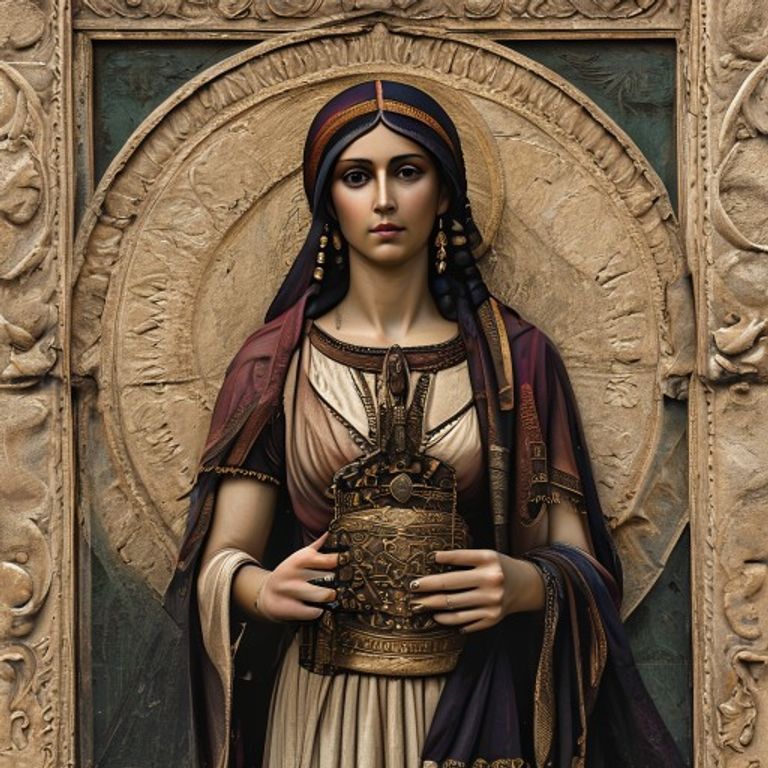
Ethiopian tradition claims that the original biblical artifact is kept in a small chapel guarded by a single guardian who never leaves the site, prohibiting any scientific or visual analysis.
⚠️ Research conducted with the aid of Deep Research is subject to referential ambiguity.
🖥️ Clean HTML code using proprietary tools.
👥 Research by Guilherme Felipe, Curation by Sílvio Lôbo
The Secret of Axum: The Ark of the Covenant and the Veil of History
In the heart of Ethiopia, where mountains rise in ancestral silence and history intertwines with legend, lies one of humanity's most enduring mysteries: the Ark of the Covenant. Although its existence is a dogma of faith for many, its whereabouts and the incident that allegedly rendered it unreachable have turned into an intricate historical puzzle, with echoes that resonate to this day. This article aims to unravel the layers of facts, speculations, and controversies surrounding the Case of the Ark of the Covenant in Axum.
1. The Context and the Incident: Where, When, and How the Mystery Began
The mystery of the Ark of the Covenant in Axum is intrinsically linked to the religious and historical narrative of Ethiopia, particularly the tradition dating back to the Queen of Sheba and King Solomon. According to Ethiopian tradition, the Ark of the Covenant was brought to Ethiopia by Menelik I, son of the Queen of Sheba and King Solomon, around the 10th century B.C.. From then on, it became the kingdom's most sacred treasure, venerated and guarded with unquestionable zeal.
The turning point that gave rise to the "case" as we know it today—that is, the difficulty of access and the aura of mystery surrounding its current location—does not refer to a single cataclysmic event, but rather to a gradual process of isolation and seclusion of the Ark, culminating in its placement in a location considered sacred and inaccessible to the vast majority, under the exclusive guard of a single custodian. It is believed that at some point in Ethiopian history, the Ark was transferred to the Church of Our Lady Mary of Zion in Axum, the ancient capital of the kingdom. From there, the circumstances that made its public access extremely restricted began to solidify.
Oral tradition and Ethiopian religious texts, such as the Kebra Negast (The Glory of Kings), narrate that the Ark was placed in a special chapel within the Axum church complex. However, from a certain point on, this sanctuary became the stronghold of a single guardian, designated to protect the Ark until the end of times. The identity of this guardian, their responsibilities, and the exact reason for this exclusivity remain shrouded in secrecy, fueling the mystery.
2. Timeline of Events (Chronological Reconstruction)
Reconstructing an exact timeline for events so ancient and shrouded in myth is a challenge. However, we can trace the main milestones of the Ethiopian narrative:
- c. 10th Century B.C.: According to tradition, the Ark of the Covenant is brought to Ethiopia by Menelik I, son of the Queen of Sheba and King Solomon.
- Ancient and Medieval Period: The Ark is venerated and kept in different sacred locations throughout Ethiopian history, becoming a central symbol of Ethiopian identity and royalty.
- Period of Seclusion (uncertain dating): It is believed that at some point, the Ark was transferred to the Church of Our Lady Mary of Zion in Axum and placed in a special sanctuary.
- Institutionalization of the Exclusive Guard (uncertain dating): Tradition establishes the figure of the sole guardian, responsible for the protection of the Ark and the only one to have access to it. This system of "lifelong" and exclusive guardianship seems to have consolidated in more recent periods of Ethiopian history.
- 20th and 21st Century: Access to the Ark remains restricted to the guardian. Attempts at independent verification or access by external authorities are consistently denied, solidifying the mystery.
3. Main Theories: Unraveling Possible Explanations
The lack of direct access to the Ark in Axum has opened up a range of theories, varying from deep theological interpretations to more earthly speculations.
3.1. Theory of Faith and Divine Protection (Ethiopian Orthodox Theory):
Logic: This is the central belief of the Ethiopian Orthodox Tewahedo Church. The Ark exists, it is safe in Axum, protected not only by a human guardian but by divine intervention. The impossibility of access for the outside world is seen as an act of God, preserving the sanctity and power of the Ark. Any attempt at unauthorized access would be prevented by supernatural means.
Basis: Religious texts such as the Kebra Negast, uninterrupted oral tradition, and the fervent faith of the Ethiopian Christian community.
3.2. Theory of Transfer and Strategic Concealment:
Logic: The Ark was indeed brought to Ethiopia and kept in Axum, but due to historical threats (invasions, religious conflicts), it was transferred to a safer and secret location inside or outside the country. The official version about its presence in Axum would be a smokescreen to protect its real location. Alternatively, it may have been hidden in a specific location within the Axum complex, but not accessible under current conditions.
Basis: Historical parallels with the concealment of religious treasures in times of crisis, the historical necessity of protecting sacred artifacts, and the impossibility of physical confirmation.
3.3. Theory of "Substitution" or "Symbolism":
Logic: Although the Ark was brought to Ethiopia, what is kept in Axum today may not be the original Ark. It could be a replica, a symbolic artifact that represents it, or even that the original Ark was destroyed, lost, or stolen at some point in history and the religious tradition adapted to maintain the continuity of faith.
Basis: The absence of irrefutable physical evidence and the possibility that the importance of the Ark transcended its physical materiality over the centuries.
3.4. Global Conspiracy Theory (less likely, but speculated):
Logic: Knowledge about the Ark and its whereabouts would be in the hands of a select group (governments, secret societies) that keeps it under control for purposes of power or hidden knowledge. The inaccessibility in Axum would be a staging to mislead the world.
Basis: Elements of global conspiracy theories that often involve historical artifacts of great power or significance.
3.5. Theory of Natural Disappearance/Loss:
Logic: The Ark may have been lost over time due to negligence, natural disasters, undocumented thefts, or simply deterioration. What remains is a narrative that keeps the belief alive, but the physical reality is one of disappearance.
Basis: The longevity of the artifact (if it exists) and the difficulty of preserving historical objects for millennia without incidents.
4. Controversies and Blind Spots
The "case" of the Ark of the Covenant in Axum is intrinsically a web of controversies and blind spots, where proven facts mix with faith and a lack of evidence.
- Absence of Independent Expertise: The main controversy is the impossibility for any external expert (archaeologists, secular historians, scientists) to have direct access to the Ark to perform analyses. This prevents the scientific validation of its existence, materiality, and provenance.
- Restricted Official Reports: Although the Ethiopian Orthodox Church possesses historical and religious records about the Ark, these are often kept in internal archives and are not widely accessible or subject to secular scrutiny.
- Conflicting Testimonies (potential): Throughout history, various figures (missionaries, explorers) have attempted to gain access or information. The accounts of these attempts, even if not directly about the Ark, may contain nuances about the guard system and the reasons for the inaccessibility. However, the hermetic nature of the access makes it difficult to obtain direct conflicting testimonies about the Ark itself.
- Missing Physical Evidence (or never publicly found): There are no clear photographs, videos, or any physical evidence of the Ark that has been independently verified and widely accepted by the scientific community. The little existing iconography is symbolic or artistic.
- The Role of the Sole Guardian: The figure of the exclusive guardian is central to the mystery. The lack of transparency about their identity, their succession, and their access raises questions about the authenticity of the guard and the veracity of what is being protected.
- Legend vs. Reality: The greatest controversy lies in separating what is an article of religious faith, based on ancient texts and oral tradition, from the possibility of a factual and rigorous archaeological investigation. Faith itself is not a blind spot, but its imposition as the only form of "evidence" in a context of historical investigation is a challenge.
5. Curiosities and Legacy
The Case of the Ark of the Covenant in Axum transcends religion and history, shaping culture and popular imagination.
- Cultural Impact: The story of the Ark in Axum has inspired countless books, documentaries, films, and debates. It has become a symbol of unwavering faith, eternal mystery, and the human search for sacred relics.
- Pillar of Ethiopian Identity: For Ethiopia, the Ark of the Covenant is not just a religious artifact, but a fundamental pillar of its national identity, its history, and its connection to biblical narratives.
- Current Status: The case remains "shelved" in the sense that there is no official investigation underway by secular bodies to uncover its whereabouts. The Ethiopian Orthodox Church maintains its position that the Ark is in Axum, under divine and exclusive protection. The mystery remains active, fueled by faith and the lack of public and scientific access.
- The Symbol of Inaccessibility: The physical inaccessibility of the Ark makes it a powerful symbol of the ineffable nature of certain elements of faith and history, which resist purely rational and material analysis.
- The Incessant Search: Over the centuries, adventurers, historians, and religious figures have tried to unravel the enigma, each attempt adding a new layer to the complexity of the case.
The Case of the Ark of the Covenant in Axum remains a lasting testament to the power of faith, the persistence of mystery, and humanity's eternal search for hidden truths. Until the veil over the sanctuary of Axum is lifted for unprecedented scrutiny, the Ark of the Covenant will continue to be one of the most fascinating and unreachable enigmas of our time.





