



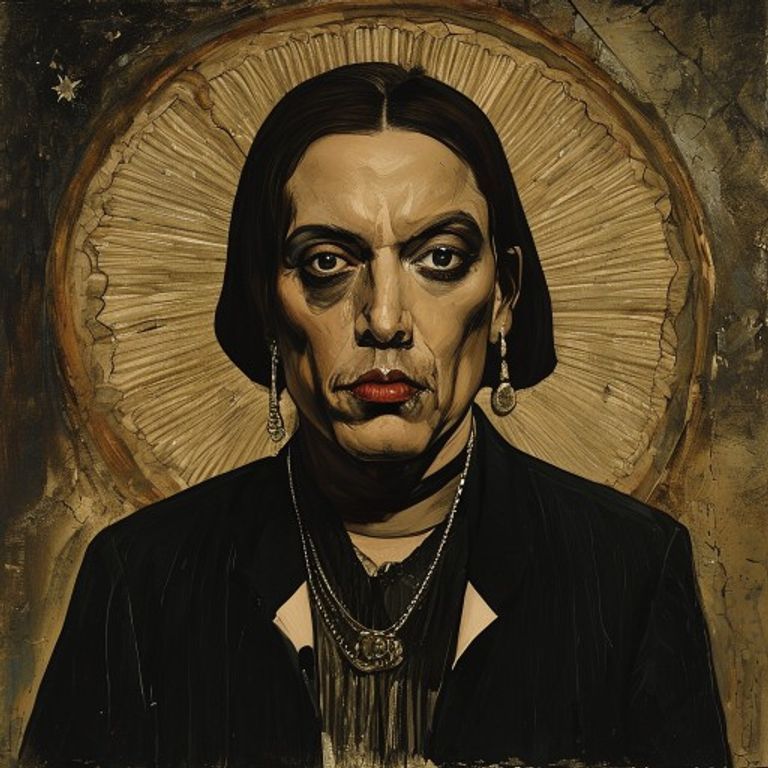
The assassination of the Chicago mob boss in 1975, just days before he was set to testify before the Senate regarding CIA conspiracies, suggests a strategic elimination of a witness.
⚠️ Research conducted with the aid of Deep Research is subject to referential ambiguity.
🖥️ Clean HTML code generated using a proprietary tool.
👥 Research by Guilherme Felipe, Curated by Sílvio Lôbo
The Case of Sam Giancana's Death: The Bullet That Silenced a Powerful Mobster
The name Sam Giancana evokes a time in the American underworld where organized crime shaped cities and intertwined with political power. His end, however, was not a power struggle between rivals, but a mystery that, decades later, still echoes in the shadows of criminal history. The death of the powerful Chicago Mafia boss in 1975 was shocking in its brutality and the depths of its intrigue, leaving behind a trail of unanswered questions.
1. The Context and the Incident: Where, When, and How the Mystery Began
The setting was the modest kitchen of Sam Giancana's residence in Oak Park, Illinois. On the night of June 19, 1975, while preparing a soufflé, Giancana was struck by multiple shots from a .22 caliber weapon. The crime was executed with precision and audacity, in a place where one would expect safety for a man of his caliber and notoriety. The house, although suburban, was the refuge of one of the most feared criminals in the United States, a man with connections that stretched from the streets of Chicago to the halls of power in Washington D.C.
The assassination of Giancana was not an isolated act of violence; it occurred during a period of increasing pressure on organized crime. Giancana was under intense FBI scrutiny and faced a potential subpoena to testify in investigations regarding illicit activities, including his alleged involvement in plots to assassinate foreign leaders during the Kennedy era. His death, therefore, can be seen as a strategic silencing.
2. Timeline of Events
- June 19, 1975, night: Sam Giancana is assassinated in his kitchen in Oak Park, Illinois.
- June 20, 1975: The Oak Park police begin investigations. The crime scene is examined, and initial statements are collected.
- June - July 1975: The FBI and other federal agencies, already interested in Giancana, also begin investigating the murder, suspecting motives linked to his criminal activities and potential testimony he could offer.
- 1970s and 1980s: Various theories emerge, some pointing to the Mafia, others to government agencies. However, no formal investigation culminates in an indictment.
- Later Years: Declassified files and accounts from former federal agents add new layers of speculation, but do not solve the mystery.
3. The Main Theories
The assassination of Sam Giancana generated a myriad of theories, some grounded in logic and evidence, others bordering on conspiracy.
3.1. Mafia Revenge
This is one of the most widespread theories. Giancana was a ruthless man and had many enemies inside and outside the organization. The logic here suggests that a rival within the Mafia, or even a disgruntled senior member, could have ordered his death to consolidate power, avoid retaliation, or due to territory or business disputes. The weapon and the execution, in a domestic setting, could indicate a hit ordered by someone who knew his habits, a common practice in the Mafia.
3.2. Government Involvement (Intelligence Agencies)
A prominent conspiracy theory suggests that American intelligence agencies, such as the CIA, could be behind the assassination. Giancana was linked to CIA plots to assassinate Fidel Castro. His potential cooperation with the government, or the fear that he might expose secret operations, is the driving force of this hypothesis. The FBI, in turn, was also a constant antagonist of Giancana, and some speculate that his death served the agency's interests, eliminating a target that was difficult to capture and keep under control.
Circumstantial evidence: Reports and books by former CIA and FBI agents, such as the book "The St. Valentine's Day Massacre" by Nick Tosches, which speculates about the involvement of federal agents.
3.3. Personal Grudges and Debts
Less spectacular, but no less plausible, is the possibility that Giancana was killed for personal reasons or due to gambling debts or other shady financial deals. A disappointed creditor or someone who felt betrayed by him could have orchestrated the assassination. This theory relies on the often volatile and treacherous nature of the criminal world.
3.4. Alternative/Paranormal Theories
Although less supported by evidence, some speculations include the possibility of involvement by unknown groups, or even, in more exotic circles, events that defy conventional explanations. These theories, however, lack substance and are generally based on urban folklore and imagination.
4. Controversies and Blind Spots
The official investigation into the assassination of Sam Giancana was marked by failures, inconsistencies, and, possibly, an intentional blockage of certain lines of inquiry.
- Missing evidence: Reports indicate that the murder weapon was never found. Crucial forensic evidence may have been compromised or never properly collected.
- Conflicting testimonies: Giancana's family and close witnesses offered narratives that, in some points, did not align perfectly, raising doubts about what really happened that night.
- The weapon: The weapon used was described as a .22 pistol. The failure to recover the weapon made it difficult to link it to a specific suspect.
- The presence of an "informant": There are rumors that an FBI informant may have been present at Giancana's house shortly before the assassination, but this information was never officially confirmed or thoroughly investigated, raising suspicions of a cover-up.
- Parallel investigations: The rivalry and lack of cooperation between the FBI and the local Oak Park police may have hindered the collection and analysis of evidence.
5. Trivia and Legacy
The assassination of Sam Giancana remains one of the most notorious unsolved mysteries of American organized crime. His violent end and the speculations surrounding it have consolidated his figure as a tragic and enigmatic icon of the underworld.
- Cultural impact: The story of Giancana and his death have been portrayed in books, documentaries, and films, fueling public fascination with organized crime and its legendary characters.
- Current status: The case was officially considered closed by the Oak Park police, with no primary suspect declared. However, the absence of a definitive resolution keeps the door open for new revelations, especially with the continued declassification of government documents that may contain keys to unraveling this enigma.
- The "hand that fired" the bullet: The identity of Sam Giancana's assassin, and who ordered his end, remains a subject of intense debate and speculation. The bullet that silenced him seems to have been fired from a source as powerful and hidden as the man himself.





