



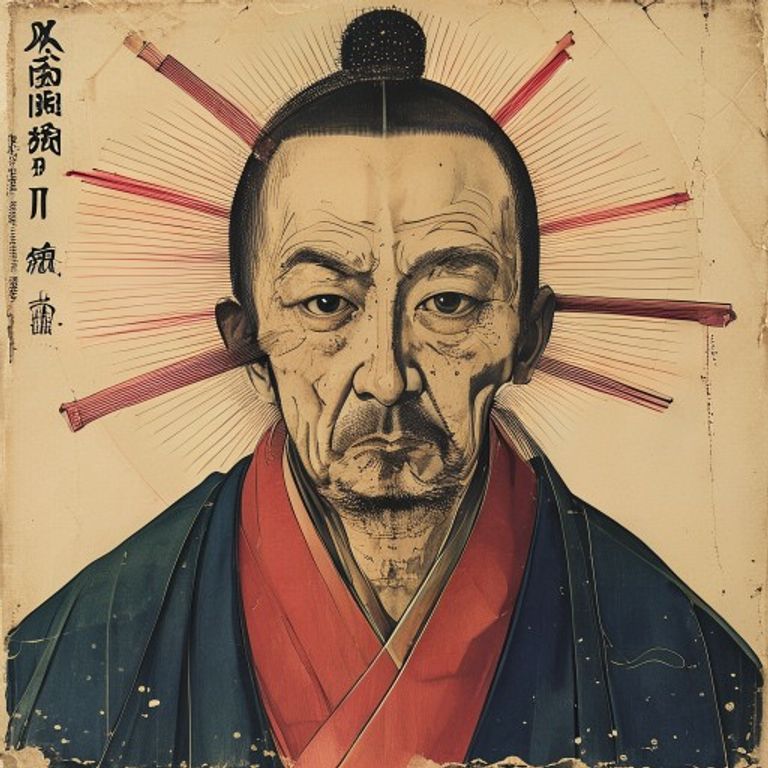
One of Japan's most famous swords and a symbol of the shogunate that disappeared mysteriously after World War II, becoming one of the most sought-after cultural treasures in the world.
⚠️ Research conducted with the aid of Deep Research is subject to referential ambiguity.
🖥️ Clean HTML code using a proprietary tool.
👥 Research by Guilherme Felipe, Curation by Sílvio Lôbo
The Impossible Theft: Unraveling the Mystery of the Honjo Masamune
On April 23, 1939, in the heart of Tokyo, an audacious crime defied the logic and security of the era. The legendary Honjo Masamune sword, a national treasure of Japan and a masterpiece by the legendary swordsmith Masamune, vanished without a trace. The theft, which occurred in broad daylight and in a supposedly impregnable location, not only shocked the nation but also cast a shadow of mystery that persists to this day.
The Context and the Incident: The Legend Disappears
The Honjo Masamune was not just a sword; it was a symbol of power and tradition, revered for its unparalleled beauty and its ancient history. Belonging to the collection of Tokugawa Ieyasu, the founder of the Tokugawa Shogunate, the blade passed through generations of samurai warriors, each leaving their mark on the tapestry of its legacy. Before its disappearance, the sword was under the custody of the Ministry of the Imperial Household, housed in facilities considered to have high security.
The theft occurred during a period of rising international tension, with World War II imminent. The absence of forced entry, eyewitnesses, or any sign of a struggle immediately raised suspicions of a complex scheme, possibly involving an inside job.
Timeline of Events
- Pre-Theft Period: The Honjo Masamune was on secure display at the Ministry of the Imperial Household in Tokyo. Security was strict, with guards and surveillance systems.
- April 23, 1939: The sword disappears. The exact details of how the theft occurred are scarce and contradictory, fueling the mystery. The lack of signs of forced entry is a crucial point.
- Immediately After the Theft: A police investigation is launched. The lack of concrete leads leads to a fruitless search.
- Post-War Period: With the surrender of Japan and the subsequent Allied occupation, records and investigations into the case become even more fragmented and difficult to access.
- Later Years: The Honjo Masamune was never recovered. The case remains one of Japan's great unsolved enigmas.
The Main Theories: Seeking a Trail in the Impossible
The enigmatic nature of the theft gave rise to a myriad of theories, each attempting to fill the gaps left by the original investigation.
Police and Scientific Theory (Most Likely)
- Inside Job: The absence of signs of forced entry suggests that someone with authorized access to the facilities may have been responsible or complicit. A disgruntled employee or a collector with resources could have planned the theft. The difficulty of access and the expertise required to handle such a delicate artifact reinforce this hypothesis.
- Opportunism During Chaos: Although the theft occurred before the large-scale war, the environment of growing instability in Japan may have created security breaches, allowing an experienced thief to exploit the situation.
Alternative and Conspiracy Theories
- Forced Disappearance by Foreign Powers: Some speculate that the Allied powers, fearing the symbolic power of the sword in Japanese hands, may have orchestrated its disappearance during or after the war to minimize Japan's cultural and historical influence. However, there is no concrete evidence to support this claim, and the absence of any claim or announcement makes this theory less plausible.
- Private Collector Motivation: An extremely wealthy and obsessed collector, with the means to bribe officials or plan a highly sophisticated theft, could have acquired the sword for their private collection, keeping it hidden. The rarity and priceless value of the Honjo Masamune make this theory attractive.
- The Theft of the Century: Some believe the theft was carried out by an international criminal organization specializing in high-value art and antiquities, with the capacity to move and hide such artifacts globally.
Paranormal or Mystical Theories
- The Power of the Sword: The Honjo Masamune is shrouded in legends of mystical powers and even being cursed. Some speculation suggests that the sword itself, in a supernatural act, could have "vanished" to escape its captivity or a fate imposed by human hands. This theory, while evocative, lacks any empirical basis.
Controversies and Blind Spots: Gaps in the Truth
The investigation into the theft of the Honjo Masamune is full of inconsistencies and blind spots that make it difficult to form a clear picture:
- Lack of Detailed Records: Many of the original investigation documents were lost or destroyed during World War II. The fragmentation of the archives makes a complete and objective analysis difficult.
- Contradictory Testimonies: The few eyewitnesses or people close to the event who were questioned presented accounts that sometimes contradict each other, adding more confusion to what actually happened on the day of the theft.
- Ignored Leads: Experts in stolen art cases point out that in many high-profile art theft investigations, crucial leads can be ignored due to a lack of resources, political pressure, or an inadequate focus on the evidence.
- The Difficulty of Tracking the Sword: Given its fame, any attempt to sell or display the Honjo Masamune publicly would be almost impossible. This suggests that if it was not destroyed, it is kept in a secret location, far from prying eyes.
Curiosities and Legacy: The Legend That Persists
The case of the Honjo Masamune has transcended the criminal sphere to become an icon of Japanese and world pop culture. The sword, even in its absence, continues to inspire stories, films, and fuel the imagination of history and mystery enthusiasts.
- Cultural Impact: The disappearance of the Honjo Masamune is frequently cited as one of the greatest unsolved art thefts in history, comparable to other famous cases like the theft of the Mona Lisa.
- Ongoing Research: Although the case has been officially shelved for decades, public curiosity and the fascination with the mystery keep the hope alive that the truth may one day come to light. Historians and enthusiasts continue to scour archives and debate theories.
- The Mystery of Absence: The strongest legacy of the Honjo Masamune is its own absence. The sword has become a ghost, a living legend in its own non-existence, a persistent reminder that some mysteries, no matter how much they are investigated, may remain forever in the realm of the inexplicable.





