



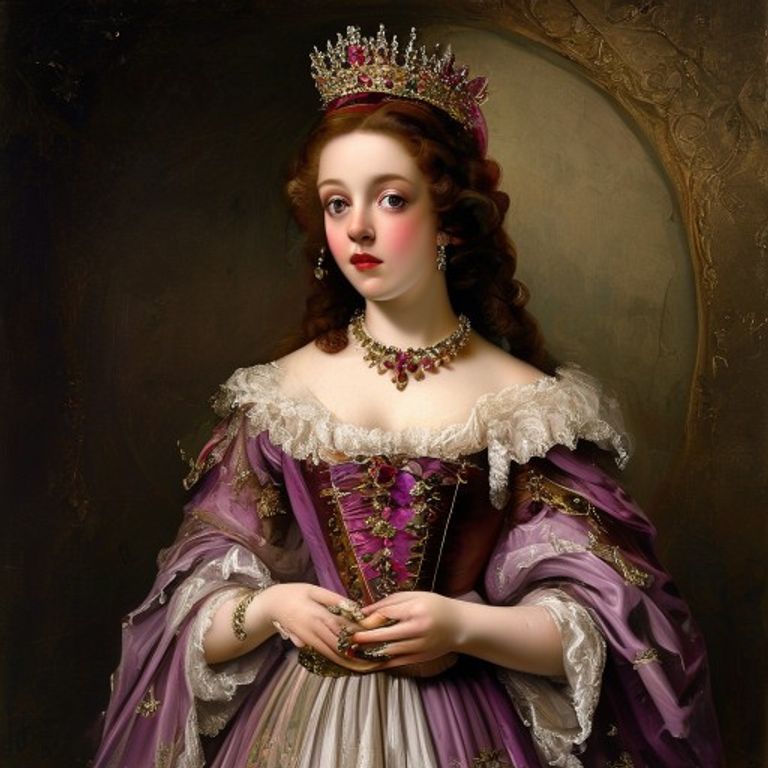
The 1817 childbirth death that changed the British line of succession and led to the birth of Queen Victoria, altering the course of the British Empire.
⚠️ Research conducted with the aid of Deep Research is subject to referential ambiguity.
🖥️ Clean HTML code using a proprietary tool.
👥 Research by Guilherme Felipe, Curation by Sílvio Lôbo
The Enigma of Princess Charlotte's Death: A Ghost in British History
In 1817, the British Empire prepared for a dynastic future amidst profound grief. Princess Charlotte Augusta of Wales, the only daughter of the future King George IV, a beloved figure expected to ascend the throne, died suddenly and inexplicably. Her premature death not only plunged the nation into mourning but also cast a veil of mystery that persists to this day. The circumstances of her passing, surrounded by contradictory medical reports and an unsettling official silence, fueled speculation and became one of the most enduring enigmas of British royal history.
1. The Context and the Incident: The End of a Promising Era
Charlotte Augusta of Wales was born on January 7, 1796, as the heir to the British throne. Her life, from an early age, was marked by public attention and the hope for a new generation of monarchs. She married Prince Leopold of Saxe-Coburg-Saalfeld in 1816, in a marriage that promised stability and continuity. The couple resided at Claremont House, in Surrey, a location that would become the stage for one of the saddest chapters of royalty.
On November 5, 1817, Princess Charlotte, five months pregnant, gave birth to a stillborn son. However, what followed that traumatic night was even more devastating. On the morning of the following day, November 6, 1817, Princess Charlotte was found dead in her bed. The news shocked Great Britain, which had celebrated the pregnancy as a harbinger of a glorious future. The death of a young woman in the prime of life, after a difficult birth but without complications previously indicated as fatal, raised a sea of questions from the very beginning.
2. Timeline of Events: A Crucial Sequence
- January 7, 1796: Birth of Princess Charlotte Augusta of Wales.
- May 2, 1816: Marriage of Princess Charlotte to Prince Leopold of Saxe-Coburg-Saalfeld.
- Autumn 1817: Confirmation of Princess Charlotte's pregnancy.
- November 5, 1817: Princess Charlotte goes into labor, which lasts over 50 hours. She gives birth to a stillborn son.
- November 6, 1817: In the morning, Princess Charlotte is found dead in her bed by her lady-in-waiting.
- November 19, 1817: Funeral of Princess Charlotte at St. George's Chapel, Windsor Castle.
3. The Main Theories: Seeking Truth in the Shadows
The rapid and unexpected death of Princess Charlotte generated a series of theories, which evolved from the medical realm to the conspiratorial:
3.1. Medical and Forensic Hypotheses (Most Likely Theories)
- Postpartum Hemorrhage or Childbirth Complications: This is the most traditional and clinically plausible explanation. The prolonged labor and significant blood loss, even if not openly declared as catastrophic, could have led to hypovolemic shock or infection. Medical reports of the time were often inaccurate, and hygiene practices were far from current standards. The absence of a detailed autopsy, by modern standards, makes confirmation difficult.
- Amniotic Fluid Embolism: A rare and often fatal complication where amniotic fluid enters the mother's bloodstream, triggering a severe inflammatory response. Although not a common diagnosis at the time, it is a medical possibility that fits a picture of sudden and unexplained death after childbirth.
- Pre-existing Condition or Undiagnosed Complication: It is possible that Charlotte suffered from an underlying medical condition, aggravated by pregnancy and the stress of childbirth, which was not identified by the doctors.
3.2. Alternative, Conspiracy, and Paranormal Theories
- Poisoning: This is one of the most persistent theories. The idea is that Princess Charlotte was poisoned, possibly to prevent the Hanoverian line from having a direct heir who could challenge or alter the established power. Suspects range from disgruntled court members to political figures who saw the birth of an heir as a threat. However, there is no concrete evidence to support this hypothesis, and the medical circumstances, although ambiguous, offer a more direct explanation.
- Botched Induced Abortion: Another sinister theory suggests that Charlotte attempted, or was forced to attempt, a clandestine abortion that resulted in fatal complications. However, the extent of the pregnancy (five months) and the development of the stillborn fetus make this hypothesis less likely, though not impossible.
- Supernatural/Voodoo Intervention: In a context of strong superstition and popular beliefs, paranormal theories emerged, suggesting that Charlotte was a victim of black magic or curses. These theories, lacking any factual basis, reflect the emotional impact of the loss and the search for explanations beyond the understandable.
4. Controversies and Blind Spots: The Cracks in the Investigation
The official investigation into the death of Princess Charlotte was, to say the least, opaque. Several aspects raise suspicions and continue to fuel the mystery:
- Ambiguous Medical Reports: The accounts of the doctors who attended her are contradictory and vague. Dr. John Sims and Dr. Richard Croft, who supervised the birth, presented opinions that do not conclusively explain the cause of death. Dr. Croft, in particular, was criticized for his handling of the birth and for failing to anticipate complications.
- Absent or Superficial Autopsy: There are no clear records of a complete forensic autopsy by modern standards. The lack of a detailed examination of the body prevented the definitive identification of a precise cause of death, leaving room for speculation.
- Political Pressure and Discretion: Charlotte's death had a significant impact on the line of succession. There was considerable interest in controlling the narrative and avoiding scandals. This may have led to a superficial investigation or the suppression of information that could implicate important figures or expose medical incompetence.
- Conflicting Testimonies: The accounts of the ladies-in-waiting and other servants present in the house offer diverse perspectives on the Princess's final moments, some indicating signs of suffering that could have been interpreted differently.
- Missing or Unrecorded Evidence: What happened to the more detailed medical records, if they existed? Was there any crucial communication that was not preserved? These questions remain unanswered.
5. Curiosities and Legacy: A Symbol of National Mourning
Princess Charlotte's death caused unprecedented commotion in the United Kingdom. The nation, which had placed so many hopes in her, plunged into deep mourning. The sadness was so intense that the period became known as the "Year Without a Summer" (due to a volcanic event in 1816 that caused a prolonged winter). Her death had a direct impact on the British succession:
- Succession Crisis: Without a direct heir, the crown would pass to King George III's older sons, none of whom had legitimate children. This led to a rush for marriages and the births of new princesses, ensuring the continuity of the dynasty. Queen Victoria, Charlotte's niece, would eventually ascend the throne.
- Cultural Impact: Princess Charlotte became a tragic icon. Her image was associated with purity, innocence, and a lost future. Poems, songs, and works of art were created in her memory, perpetuating her status as a figure of national mourning.
- Current Status of the Case: The "Case of Princess Charlotte's Death" is not a criminal case in the modern sense, as there is no formal suspect and the focus is on the cause of death. However, the mystery persists. Historical archives continue to be studied, but without new concrete evidence, the case remains shelved, a grim reminder of the fragilities of life and the inconsistencies of history. The story of Princess Charlotte is a cautionary tale about how a lack of transparency and political ambition can obscure the truth, leaving behind a legacy of unanswered questions and a ghost in the history of the British monarchy.





