



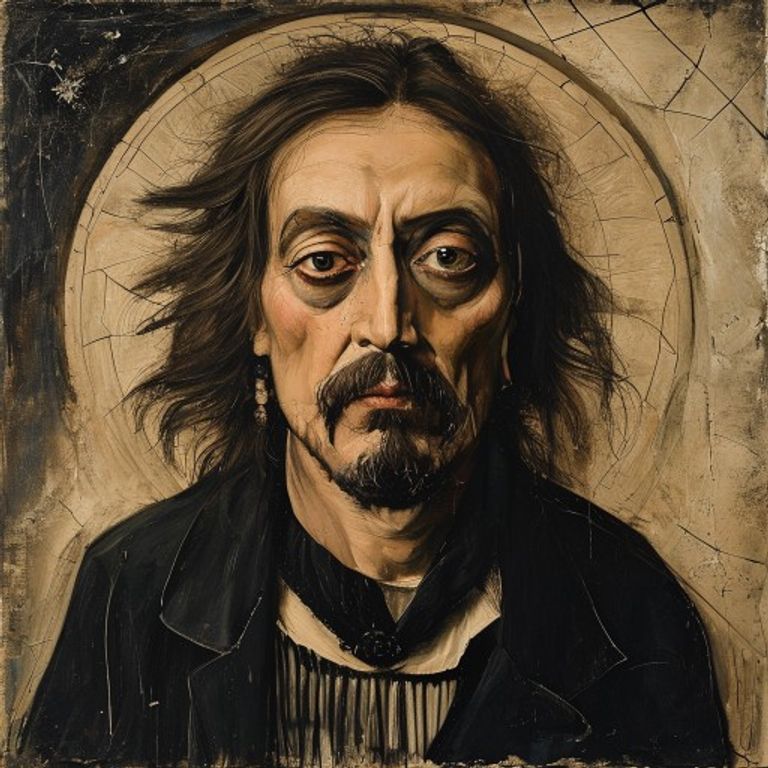
The hunt for the leader of the Medellín Cartel that ended with his death on a rooftop in 1993, marking the end of an era of terror and drug trafficking dominance in Colombia.
⚠️ Research conducted with the aid of Deep Research is subject to referential ambiguity.
🖥️ Clean HTML code using a proprietary tool.
👥 Research by Guilherme Felipe, Curation by Sílvio Lôbo
The Last Shot: Unraveling the Enigma of Pablo Escobar's Death
The figure of Pablo Escobar, the infamous head of the Medellín Cartel, is synonymous with violence, obscene wealth, and a relentless manhunt that marked Colombia's recent history. However, the way his empire crumbled and, above all, the event that sealed his fate on December 1, 1993, transcends narco-tales and enters the realm of mysteries not fully explained. The official version is a shot to the ear, a desperate suicide, but the complexity of the facts and the gaps left by the investigation fuel a debate that has persisted for decades.
1. The Context and the Incident: Where, When, and How the Mystery Began
Pablo Emilio Escobar Gaviria, "El Patrón," was the most wanted man in the world. After years of open war against the Colombian state, the American DEA, and internal rivals, he found himself isolated and cornered. The relentless search and international pressure forced him to flee, seeking refuge in safe houses and discreet apartments. The climax of this pursuit occurred in Medellín, Colombia, in 1993. The incident that culminated in Escobar's death took place on a rooftop in a modest residential area, an ironic setting for a man who boasted palaces and private zoos.
2. Timeline of Events
Reconstructing the facts that led to Escobar's death is crucial to understanding the persistence of the mystery:
- Late 1992 - 1993: Escobar and his family, after escaping from "La Catedral" (his private prison), live in constant flight, using a network of informants and hideouts. The Colombian government and the "Bloque de Búsqueda" police task force intensify the hunt.
- October 1993: Colombian intelligence and the DEA receive crucial information about Escobar's location through phone intercepts and informants.
- December 1, 1993: The Colombian police, with support from the DEA and the group Los Pepes (a paramilitary organization formed by Escobar's rivals and victims' families), locate Escobar in a house in the Los Olivos neighborhood of Medellín.
- Afternoon of December 1, 1993: An intense shootout erupts on the house's rooftop. Pablo Escobar and his bodyguard, Alvaro de Jesús Agudelo, known as "El Chopo," are killed.
3. The Main Theories
Pablo Escobar's death is surrounded by different interpretations, each with its own basis of argumentation:
3.1. The Official Version: Suicide or Fatal Police Shot?
The official narrative, supported by the Colombian government and many officers involved in the operation, states that Escobar was cornered on the roof and, while trying to flee or resist, was hit by shots fired by the police. The most widespread version is that he was shot in the ear, a "mercy shot," which would have been self-inflicted to avoid capture or torture. However, initial forensic reports, which were later questioned, indicated that the fatal wound was a rifle shot. The logic here lies in the pressure of the hunt, the desperation of a cornered criminal, and the police's need to end a dangerous operation.
3.2. Conspiracy Theory: The Involvement of Los Pepes and the DEA
A powerful and persistent theory alleges that Escobar's death was not a simple confrontation, but a planned execution. The hypothesis is that the paramilitary group Los Pepes, with the complicity or knowledge of the DEA and elements of the Colombian police, orchestrated the siege and the elimination of Escobar. The logic is that several sectors had an interest in seeing Escobar dead: the rivals who suffered from his violent actions and the DEA, which sought a definitive resolution to the war on drugs. Declassified reports indicate that the DEA was aware of the activities of Los Pepes, although they deny any direct involvement in Escobar's death.
3.3. Theory of Self-Elimination in Despair
Similar to the official version, this theory suggests that Escobar, realizing he was completely cornered and had no way out, opted for suicide. The shot to the ear would be a confirmation of his decision not to be captured alive. The logic is one of pride and the hopelessness of a leader accustomed to having total control, but who found himself powerless in the face of the intelligence network built against him.
3.4. Theory of "Faked Death"
Although less supported by concrete evidence, this theory suggests that Escobar faked his own death to disappear and live under another identity. The complexity of his influence network and the amount of money he possessed would theoretically make such a plan viable. The logic lies in the possibility of a planned disappearance to escape justice and his enemies.
4. Controversies and Blind Spots
The official investigation into Pablo Escobar's death is permeated by controversies and gaps that fuel alternative theories:
- The Initial Forensics: Forensic reports on the cause of death were contradictory. Initially, a single shot was suggested, but the presence of multiple gunshot wounds raised doubts. The rapid release of the body and the apparent lack of a detailed forensic analysis are points of questioning.
- The Role of Los Pepes: The exact nature of the Los Pepes group's participation in the operation that led to Escobar's death remains murky. Although they acknowledge their role in hunting Escobar, the coordination with official forces was never fully clarified.
- Phone Intercepts: Crucial information for locating Escobar came from intercepts. However, details about the authenticity and integrity of these intercepts, as well as the scope of the surveillance, were not always transparent.
- Conflicting Testimonies: Members of the police and intelligence agencies presented divergent accounts of Escobar's final moments, creating confusion about who fired the fatal shots.
- Missing or Undisclosed Evidence: The allegation that some important evidence was not properly collected, preserved, or disclosed by the official investigation is a constant in discussions about the case.
5. Curiosities and Legacy
The case of Pablo Escobar's death transcended the borders of organized crime to become a cultural icon. His figure inspired countless television series, films, and books, exploring the rise and fall of the drug baron. The cultural impact is undeniable, generating fascination with the figure who challenged a State and built a drug empire.
Currently, the case of Pablo Escobar's death has not been officially reopened. The version of death in a confrontation with the police is what prevails in official records. However, doubts and conspiracy theories continue to circulate, fueled by the complexity of the events, inconsistencies in the investigation, and the human need to find definitive answers to the great enigmas of our time. The rooftop in Los Olivos, in Medellín, has become a site of somber pilgrimage for some, a physical reminder of a violent and intriguing chapter of world history.





