



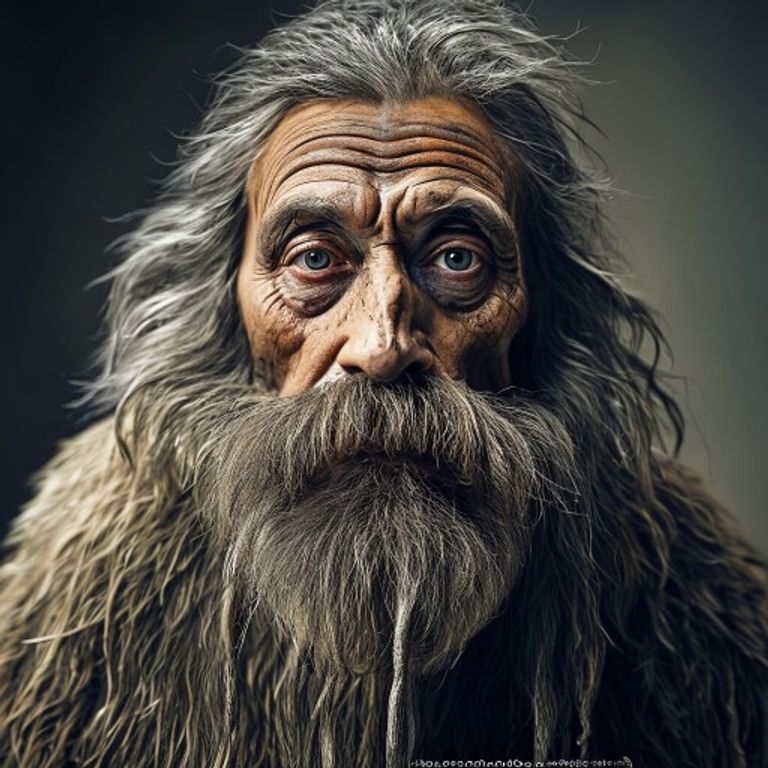
A five-thousand-year-old mummy found in the Alps in 1991; forensic analysis revealed that he was murdered with an arrow to the back and a blow to the head during a chase in the snow.
⚠️ Research conducted with the aid of Deep Research is subject to referential ambiguity.
🖥️ Clean HTML code using a proprietary tool.
👥 Research by Guilherme Felipe, Curation by Sílvio Lôbo
Ötzi, the Iceman: A Frozen Enigma Unraveled by Time
In the heart of the Ötztal Alps, a vast expanse of snow-capped peaks stretching across the borders of Austria and Italy, lies an ancient secret, preserved in ice for over 5,300 years. It is not a treasure of gold or jewels, but a man. A man frozen in time, whose mysterious death continues to echo through the halls of archaeology and forensic investigation. This is the case of Ötzi, an enigma that, paradoxically, has become clearer over the decades, yet whose darkest details still whisper in the shadows of history.
1. The Context and the Incident: An Accidental Discovery
The mystery of Ötzi began on September 14, 1991. A German tourist couple, Helmut and Erika Simon, were enjoying a hike in the Ötztal Alps, near the Austrian border, when they stumbled upon a human body emerging from the melting glacier. Initially, they thought they had found a modern mountaineer who had succumbed to the cold, a tragedy not uncommon in the region.
What they did not know was that they were about to unearth not just a victim, but one of the most significant archaeological finds in history. The accidental discovery, deep within a decaying glacier, marked the beginning of an investigation that would transcend eras, shedding light on the life and, crucially, the violent death of a Copper Age man.
2. Timeline of Events: From Ice to Global Fame
The reconstruction of the events surrounding Ötzi is a testament to scientific and investigative persistence.
- ~3300 B.C.: The death of Ötzi. Radiocarbon dating of his body and belongings places him in the late Neolithic or early Copper Age.
- September 14, 1991: Discovery of the body by Helmut and Erika Simon in the Ötztal Alps.
- September 16-19, 1991: First attempts to recover the body by Austrian authorities. The complexity of the terrain and the initial belief that it was a modern mountaineer led to recovery methods inadequate for an archaeological find of such magnitude.
- September 23, 1991: Custody of the body is transferred to Italy, as the discovery occurred on Italian territory. The initial autopsy is performed in Innsbruck.
- 1990s - Present: Intense scientific, forensic, and archaeological research is conducted on Ötzi's body and artifacts. The identification of his cause of death, diet, health, and lifestyle revolutionizes the understanding of European prehistory.
3. Main Theories: A Mosaic of Possibilities
The cause of Ötzi's death was, for a long time, one of the most intriguing aspects of his case. While scientific evidence points to a violent end, the absence of witnesses and the remote nature of the discovery left room for various theories.
Scientific and Forensic Theories (Proven Evidence):
- The arrow and blood loss: The most conclusive discovery, made in 2001 and confirmed by subsequent exams, was the presence of a flint arrowhead lodged in his left shoulder. Forensics indicate that the arrow pierced a major artery, leading to massive internal hemorrhaging. The fact that the arrow had been removed (or broken during the assault) and that there were no signs of treatment attempts suggests a sudden and brutal attack.
- The blow to the head: Later evidence also revealed a traumatic injury to the back of Ötzi's head, consistent with a heavy blow. This suggests that after being wounded by the arrow, he may have been struck and left to die, or that the fall following the hemorrhage caused the impact.
- Flight or pursuit: Analysis of his final route suggests that Ötzi was on the move, possibly fleeing from something or someone. The presence of partially digested food in his stomach indicates that he did not expect an imminent attack at that specific moment.
Alternative and Speculative Theories:
- Tribal or personal rivalry: The most accepted theory among scientists is that Ötzi was the victim of a dispute between groups or a personal conflict. His physical condition, high-quality clothing, and belongings suggest he was not a mere common traveler, but perhaps a leader, a shaman, or someone of importance who might have had enemies.
- Crime of opportunity: Although less likely, some speculate that Ötzi could have been attacked by bandits seeking his belongings. However, the lack of signs of an intense struggle around his body and the removal of the arrowhead do not fully corroborate this hypothesis.
- Iceman Curse (Paranormal/Folklore Theory): A more mystical theory, popularized by the media, suggests that those who disturbed Ötzi's rest were cursed. The death of about a dozen people linked to the discovery or study of the body, many of them sudden or tragic, fueled this narrative. However, there is no scientific evidence to support this idea, and most "curses" can be explained by statistical coincidences, dangerous environmental conditions, and the risky nature of research in extreme environments.
- Ancient conspiracies (Conspiracy Theories): Although there are no widely disseminated and detailed conspiracy theories about Ötzi like those found in other historical mysteries, the enigmatic nature of his death and the fact that he carried valuable artifacts for the time could, hypothetically, give rise to speculation about more complex motives than a simple assault. However, these remain in the realm of pure fiction.
4. Controversies and Blind Spots: Shadows in the Investigation
The discovery of Ötzi, while monumental, was not without controversy and blind spots, especially in the early stages of recovery and investigation.
- Inadequate Recovery Methods: The first attempts to remove the body from the ice involved the use of pickaxes and hammers, which caused significant damage to the mummy. Initial reports underestimated the antiquity of the body, leading to a more destructive approach than the careful excavation that would be applied today to an archaeological find.
- The "Curse" and the Media: Initial media coverage, focused on the idea of a "curse," often overshadowed the rigorous scientific research being conducted. The search for sensationalism diverted attention from the concrete facts.
- Were evidences lost?: With the passage of time and multiple analyses, it is possible that some original evidence has deteriorated or been lost. The preservation of a 5,000-year-old body in a constantly changing environment is a challenge in itself, and the initial handling, by necessity and lack of knowledge, may have compromised certain samples.
- Debate on the Exact Cause of Death: Although the arrow and the blow to the head are widely accepted, the exact details of the sequence of events and whether he was left to die or if the impact to the head was a secondary event can still be a subject of debate among specialists in specific cases.
5. Curiosities and Legacy: An Ambassador from the Past
Ötzi is much more than an ancient victim; he is a portal to the past, a direct link to a forgotten era that allows us to understand our own history in unprecedented ways.
- The Survival Kit: His belongings are an archaeological treasure: a nearly complete bow and arrows, a copper axe, a flint knife, a grass mat, well-made leather clothing, and even a first-aid kit with a lamp and medicinal fungi. These artifacts reveal a level of technological sophistication and social organization that challenges previous notions about the Copper Age.
- A Unique Genetic Profile: Genetic studies of Ötzi revealed his lineage, his predisposition to certain diseases (such as heart disease, which he suffered from), and even the presence of bacteria in his digestive system.
- A Cultural Icon: Ötzi has become a global celebrity. He is studied in museums, inspires documentaries, books, and even movies. His image is synonymous with historical mystery and scientific research.
- Current Status: The case of Ötzi has not been "reopened" in a criminal sense, as it is a prehistoric event. However, the investigation into his life and death continues incessantly. New analysis technologies, such as high-resolution computed tomography and advanced DNA analysis, continue to reveal new details about his existence. He is permanently exhibited at the South Tyrol Museum of Archaeology in Bolzano, Italy, where he is carefully preserved and studied.
The Iceman, Ötzi, remains a silent witness to an extinct life and a violent death that, over millennia, offers us an unprecedented glimpse into our past. His mystery is not completely solved, but each new discovery is one step closer to unraveling the secrets he took with him into the eternal embrace of the alpine ice.





