



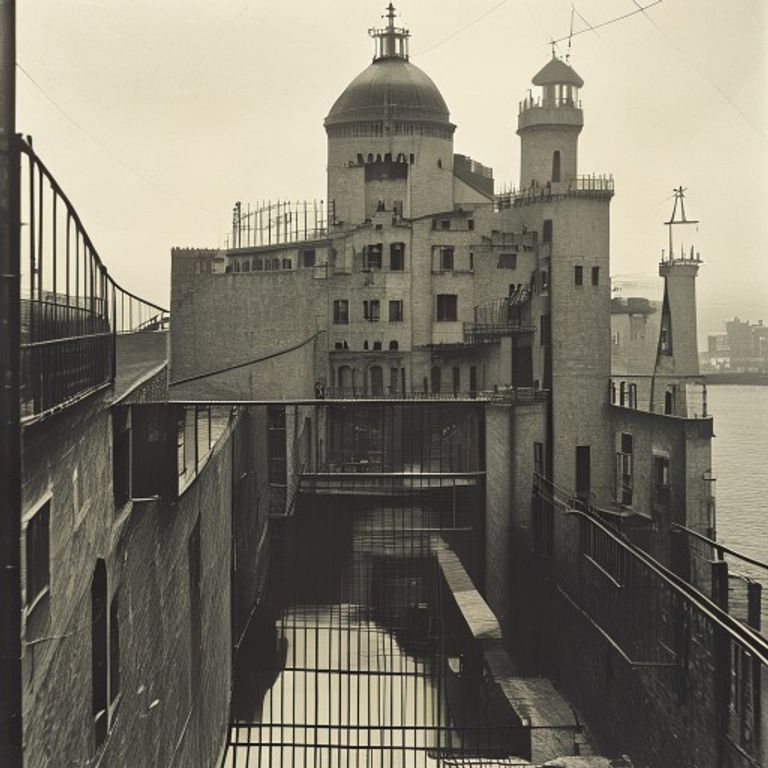
Three inmates disappeared from the maximum-security prison on makeshift rafts; although officially presumed dead, evidence sent to the family suggests they may have survived.
⚠️ Research conducted with the aid of Deep Research is subject to referential ambiguity.
🖥️ Clean HTML code using a proprietary tool.
👥 Research by Guilherme Felipe, Curation by Sílvio Lôbo
Alcatraz: The Impossible Escape and the Enigma That Haunts the Rock
For decades, the rocky island of Alcatraz, nestled in San Francisco Bay, was synonymous with impregnability. Its concrete walls, icy currents, and relentless surveillance made it America's most feared federal prison. However, on June 10, 1962, three men dared to challenge this myth, embarking on an escape that would become one of the most enduring and intriguing mysteries in American criminal history. The 1962 Alcatraz escape case is not just a story of desperation and ingenuity, but also a labyrinth of fragmented evidence, controversial investigations, and theories that refuse to fade away.
1. The Context and the Incident: Where, When, and How the Mystery Began
Located 1.2 miles off the coast of San Francisco, the Alcatraz federal prison operated from 1934 to 1963, housing some of the country's most dangerous criminals. The escape occurred during the night of June 10 to 11, 1962. The protagonists were Frank Morris, a genius with an estimated IQ of 133, known for his planning and escape skills; John Anglin, also a long-time criminal with a history of escape attempts; and Allen West, who, although he did not physically escape with the others due to delays in preparation, is considered an integral part of the plan.
The plan, meticulously crafted over months, involved exploiting a structural weakness in the cells: the ventilation openings. Using metal spoons, discarded metal pieces, and other improvised materials, the prisoners gradually widened the ventilation grilles in their cells. The removed stone and concrete were hidden or discarded in common areas, such as the yard, during permitted exercise times.
To disguise their absences during nightly rounds, the fugitives created fake heads using a mixture of soap, toilet paper, cement, and hair stolen from the prison barbershop. These realistic effigies, placed in their beds, fooled the guards. On the night of the escape, after crawling through the tunnels they had created, the three reached the cell block roof, from where they descended and accessed the island's shore.
From there, the plan was to navigate the treacherous waters of San Francisco Bay on a makeshift raft, built from over 50 raincoats stitched together and inflated with a musical accordion and modified electric fans. The final destination: dry land and freedom.
2. Timeline of Events: A Chronological Reconstruction of Key Facts
- Months before June 10, 1962: Intensive escape planning, including the excavation of ventilation openings and the fabrication of the fake heads.
- Night of June 10, 1962: Frank Morris and John Anglin escape their cells. Allen West, who was behind in finishing his grille, fails to get out in time to join the others.
- Morning of June 11, 1962: During the morning count, guards discover the empty cells and the fake heads in the beds. The escape is officially declared.
- Following days and weeks: An intense search is launched by federal and state authorities. Boats, aircraft, and search teams cover the bay and the coast.
- June 14, 1962: A destroyed rubber boat and personal belongings of the fugitives are found on Angel Island, about 2 miles northeast of Alcatraz. Some evidence suggests the inflatable raft may have been used.
- Subsequent months and years: The official investigation, led by the FBI, continues but finds no conclusive evidence regarding the fugitives' fate.
3. The Main Theories: Possible Explanations and Their Logic
Theory 1: Drowning in the Bay Waters (Most Likely Police/Scientific Hypothesis)
Logic: The waters of San Francisco Bay, even in June, are notoriously cold and treacherous, with strong tidal currents. The water temperature at the time was about 10-12°C (50-54°F), which, within a few hours, can lead to hypothermia and the inability to swim. The discovery of debris from what appeared to be an inflatable raft on the coast of Angel Island reinforces the idea that the fugitives attempted to cross the bay. It is plausible that the raft failed, or that the fugitives succumbed to the extreme conditions, drowning and being swept out to the ocean.
Anchored in Facts: Initial search reports and analysis of the found debris. Expert reports on water temperature and the effects of hypothermia.
Theory 2: Survival and Successful Escape (Alternative/Popular Theories)
Logic: This theory suggests that the fugitives were more successful than authorities believe. Frank Morris, with his high IQ and engineering skills, could have managed to build a functional raft and skillfully navigate the currents, reaching dry land. The idea is that they could have intentionally gone missing, living under new identities. This theory is fueled by unconfirmed sightings and the lack of bodies found.
Anchored in Facts: The ingenuity demonstrated in the escape plan, Morris's superior intelligence, and the absence of conclusive bodies as evidence of death.
Theory 3: Death and Partial Survival of Debris (Expanded Investigation Theory)
Logic: A variation of the drowning theory. The fugitives may have managed to cross the bay, but the raft fell apart. One or more of them may have reached land but succumbed to exhaustion, injuries, or the elements before they could settle. Another possibility is that parts of the found debris were from a secondary raft or items discarded after reaching land.
Anchored in Facts: The discovery of the debris, which was not completely destructible, suggesting a certain degree of survival up to a point. The possibility of sightings of unidentified individuals in the area in the weeks following the escape.
Theory 4: External Help and Coordinated Escape (Conspiracy Theory)
Logic: This theory posits that the fugitives did not act alone and had external help to plan and execute the escape, possibly from accomplices on land or even influential individuals who wanted them out. The raft could have been delivered to them in the bay, or they could have been rescued by a boat. This theory gains strength from the complexity of the plan and the apparent lack of means to cross the bay so efficiently.
Anchored in Facts: The level of planning would require resources and knowledge that could be facilitated externally. There are reports that the Anglin family had connections to organized crime.
Theory 5: The Death of Allen West and the Cover-up (Less Likely, But Existing Theory)
Logic: Some suggest that Allen West, unable to physically escape with the others, attempted an individual escape later and died or was caught. To avoid a public investigation that would expose security flaws, authorities could have covered up his death, declaring all three as missing to perpetuate the image that everyone had failed.
Anchored in Facts: The fact that West did not physically escape with the others, and his eventual detailed testimony about the plan, which could have been used to manipulate the narrative.
Theory 6: Paranormal or Supernatural Theories (Fringe Theories)
Logic: Although there is no concrete evidence, the inexplicable nature of the escape and the persistence of the mystery have led some to speculate about paranormal or inexplicable interventions, such as teleportation or other non-scientific phenomena. These theories generally lack any factual basis and are more part of the folklore surrounding the case.
Anchored in Facts: No factual evidence. Based on the lack of satisfactory conventional explanations for the general public.
4. Controversies and Blind Spots: Inconsistencies in Official Investigations
The investigation following the Alcatraz escape was marked by several controversies and blind spots that fueled the mystery:
- Evidence of Continued Life: Various letters and postcards allegedly sent by the Anglin brothers from locations like Seattle and Texas have surfaced over the years. Although the FBI analyzed and, in some cases, declared them to be forgeries, the authenticity of some remains a point of debate.
- Suspicious Photographs: In 2013, a report from the "America's Book of Secrets" program displayed photographs allegedly taken in 1975 of John Anglin at a wedding in Brazil, and of his mother visiting a grave with the names of John and Alfred Anglin. The FBI stated that the photos were analyzed and concluded they were not the Anglin brothers, but the resemblance is remarkable to many.
- FBI Declaration of Death: In 1979, after 17 years of investigation, the FBI officially declared that Frank Morris and the Anglin brothers likely drowned in the bay waters. However, the case remained officially open for longer, as there was no body to confirm the death. This declaration coincided with the opening of new information about the Anglins.
- Conflicting Testimonies: Allen West, after being recaptured and interrogated, provided crucial details about the plan. However, his narrative, while consistent with the basic plan, was never fully corroborated by independent physical evidence of his own frustrated escape.
- Ignored or Lost Clues: The vastness of the search and the complexity of the bay may have led to the loss of crucial evidence. The lack of a weapon, direct communication with the outside, or post-escape financial planning raises questions about long-term success, even if the initial escape was successful.
- Accessibility of Information: Despite several reports being declassified over the years, the entirety of the FBI files on the case is still not fully accessible to the public, fueling speculation about what might be hidden.
5. Curiosities and Legacy: Cultural Impact and Current Status of the Case
The Alcatraz escape case transcended the criminal realm to become a pop culture icon. The audacity and apparent impossibility of the escape inspired books, films, documentaries, and countless theories. The film "Escape from Alcatraz" (1979), starring Clint Eastwood as Frank Morris, solidified the case in the public mind, presenting a dramatic and plausible version of the escape.
The Alcatraz prison was closed in 1963, one year after the escape, partly due to high operating costs and the erosion of the structures. The island, now a popular tourist destination, continues to be a physical reminder of the fallibility of even the most secure institutions.
The 1962 Alcatraz escape case remains officially without a conclusive solution regarding the fate of the fugitives. The FBI ended its active investigation, but the United States Marshals Service keeps the arrest warrants in effect for Frank Morris and the Anglin brothers. This means that, theoretically, if they are found alive, they can still be arrested. The lack of a body and the persistent "clues" keep the mystery alive, a continuous invitation for speculation and amateur investigations, making the Alcatraz escape one of the most fascinating and persistent enigmas of modern history.





