



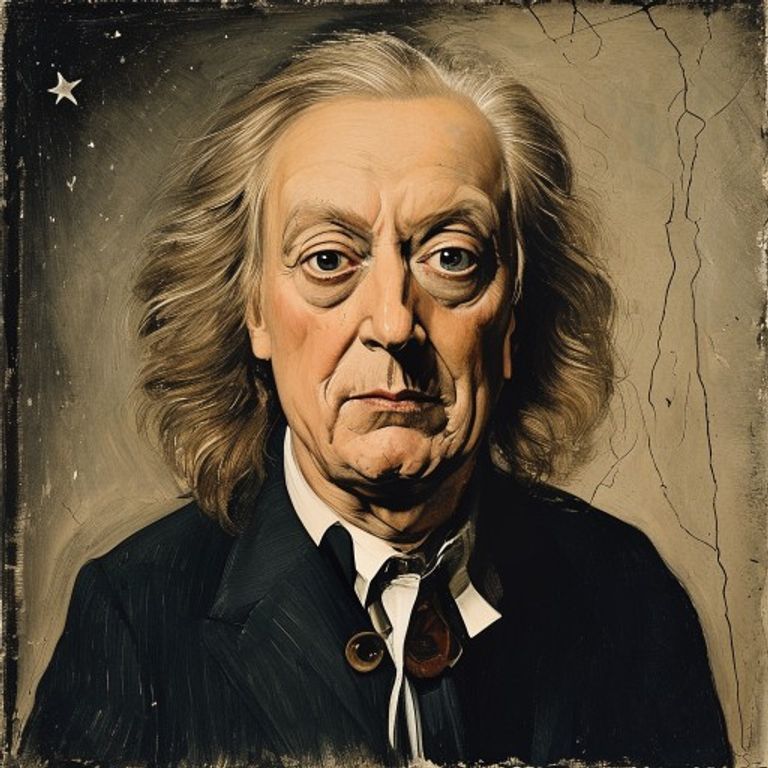
The actor who played Superman was found dead in 1959; although ruled a suicide, the lack of fingerprints on the weapon and extra bullet holes suggest something more.
⚠️ Research conducted with the aid of Deep Research is subject to referential ambiguity.
🖥️ Clean HTML code using a proprietary tool.
👥 Research by Guilherme Felipe, Curation by Sílvio Lôbo
The Kryptonite Mystery: The Death of George Reeves, the Superman Who Became an Enigma
On June 16, 1959, Hollywood lost one of its most iconic faces and, at the same time, gained one of its most persistent mysteries. George Reeves, the actor who brought the invincible Superman to life in the popular 1950s television series, was found dead in his home in Benedict Canyon, Los Angeles. The official cause: suicide. However, the circumstances surrounding his death quickly raised suspicions, turning the end of a hero's life into a dark tale of intrigue and speculation.
1. The Context and the Incident: Where, When, and How the Mystery Began
The discovery of George Reeves' body occurred in the early hours of June 16, 1959, at his residence at 4777 West Ledge Avenue. It was his fiancée, Leonora Lemmon, who alerted the authorities. Reeves was at a peculiar moment in his career; the success of "Adventures of Superman" was undeniable, but he harbored a growing desire to be taken seriously as an actor, feeling trapped by the role of the Man of Steel. The house was in disarray, with liquor bottles and a party atmosphere from the night before the fatal event. The body was found in the bedroom with a fatal gunshot wound to the head. A .38 caliber Colt pistol was found nearby.
The scene, at first glance, suggested the despair of a tormented man. However, for many who knew Reeves, the idea of suicide seemed unlikely. What followed was a police investigation that, for many observers and later researchers, left more questions than answers.
2. Timeline of Events: A Chronological Reconstruction
- 1952: Premiere of "Adventures of Superman," which quickly becomes a smash hit.
- 1958: Reeves expresses frustration with his limited role and seeks opportunities in more serious films.
- Night of June 15, 1959: George Reeves and Leonora Lemmon have dinner at a club. Reeves reportedly had a verbal confrontation with screenwriter Robert Maxwell, Lemmon's ex-husband, regarding Lemmon's infidelity.
- Early hours of June 16, 1959: Leonora Lemmon finds George Reeves dead in his bedroom. The police are called.
- Initial Investigation: The police declare the death a suicide, based on the presence of the weapon and Reeves' alleged emotional instability.
- 1990s: The case is re-examined by private investigators and gains new media attention, with the publication of books and documentaries that question the official conclusion.
3. The Main Theories: The Puzzle of a Premature End
The case of George Reeves' death is fertile ground for speculation, ranging from plausible police explanations to conspiracy theories that border on the fantastic.
Official Theory: Suicide
The authorities' initial hypothesis. It is based on the presence of the firearm next to the body, the absence of signs of forced entry, and reports that Reeves was going through financial difficulties and professional frustrations. The logic here is that of an ordinary man, overwhelmed by pressures, who decides to end his own life. However, critics point to the lack of a suicide note and the fact that Reeves had plans for the future, such as a possible role in a film, as counter-arguments.
Theory of Accidental (or Intentional) Homicide by Leonora Lemmon
This theory suggests that Leonora Lemmon, possibly in a fit of rage after an argument with Reeves, or even in a premeditated manner, may have fired the shot. Lemmon's presence at the scene, the potential tension between her and Reeves, and the way the weapon was found raise this hypothesis. However, the lack of concrete evidence of Lemmon's direct involvement and the official suicide verdict make it difficult to confirm this line of inquiry.
Theory of Homicide Involving Robert Maxwell
Robert Maxwell, Leonora's ex-husband and a screenwriter, was known for his volatile temper and would have had a motive to retaliate against Reeves. The argument on the night before the death is often cited as a crucial point. The logic would be revenge or an attempt to silence Reeves. However, there is no material evidence linking Maxwell directly to the incident.
Conspiracy Theory: Organized Crime Involvement
One of the most persistent theories, fueled by speculation that Reeves had ties to the mob, possibly due to gambling debts or for refusing to follow orders. The idea is that he was silenced by criminal figures. This theory is highly speculative and lacks robust documentary proof, relying mainly on rumors and third-party connections. Declassified FBI reports, which investigated Reeves due to alleged communist ties, never found evidence of organized crime involvement that could lead to a murder.
Theory of Homicide by an Unknown Admirer or Enemy
A line of thought suggesting that Reeves may have been the victim of an individual with obscure motivations, an obsessed fan, or a personal enemy who planned his death and staged it as a suicide. This theory is more of a vacuum of speculation, difficult to prove or refute without new evidence.
Paranormal/Supernatural Theory (less common, but exists)
Although not a widely accepted theory in serious investigations, the fact that Reeves played Superman led to fanciful speculation about his death being linked to something "beyond the ordinary." This line is purely fictional and has no basis in investigative reality.
4. Controversies and Blind Spots: The Cracks in the Official Facade
The initial police investigation, although it concluded with suicide, is marked by several inconsistencies and questions:
- The Weapon: The .38 Colt revolver, which was the murder weapon, belonged to George Reeves. However, the position in which it was found and the absence of clear fingerprints on the weapon in some reports fueled doubts.
- The Bullet Trajectory: Some experts who revisited the case suggested that the bullet trajectory could be inconsistent with a suicide, especially if Reeves was lying in bed.
- The Absence of a Suicide Note: A crucial element missing from the scene, which usually accompanies such an extreme act of despair.
- Conflicting Testimonies: The testimonies of Leonora Lemmon and other people present in the house that night showed some variations, which is common in stressful situations, but can also be explored as a point of doubt.
- Ignored Clues: Critics point out that the police may not have thoroughly investigated all lines of inquiry, settling for the simplest and most immediate conclusion.
- Later Films and Books: Documentaries like "Hollywood's Hollywood: The Movies and the Makers" and books like "Hollywood Babylon" by Kenneth Anger, although often sensationalist, revived the debate and raised questions about the official investigation.
5. Trivia and Legacy: The Superman Who Lives Forever in Mystery
The case of George Reeves' death transcended the police realm to become an iconic chapter in Hollywood history and a symbol of an unresolved mystery. The film "Hollywoodland" (2006), starring Ben Affleck as Reeves, re-examined the case through the eyes of a private investigator, reigniting public interest and discussion about the circumstances of his death.
Currently, the case remains officially a suicide, but the truth behind George Reeves' death is still a subject of fascination and debate. Without new concrete evidence that could officially reopen the investigation, the enigma persists, leaving a legacy of intrigue that, in a way, adds a layer of melancholy to the image of the hero who, in real life, met a tragic and inexplicable end.





