



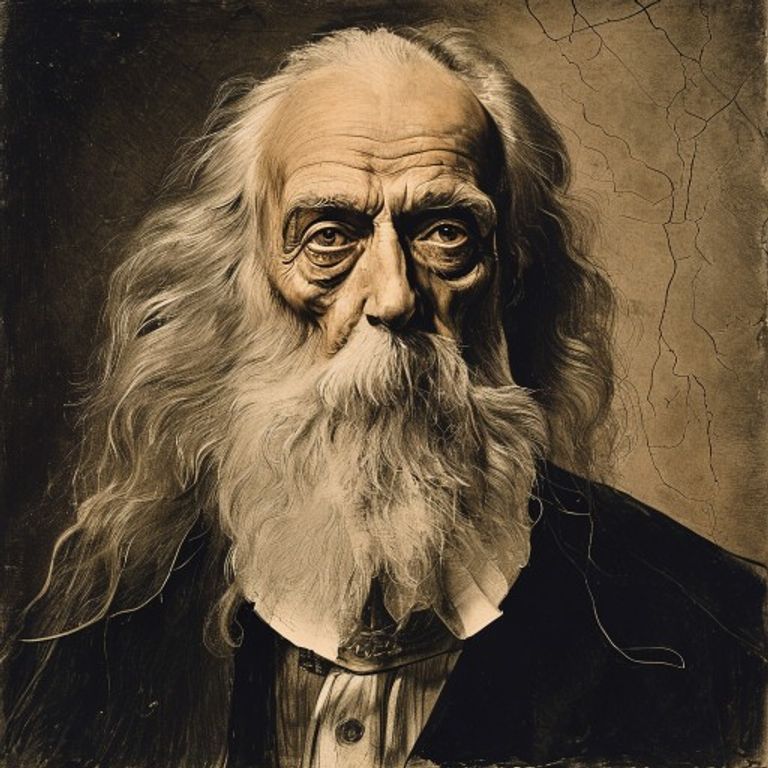
The passing of the naturalist in 1882, whose work on the evolution of species permanently changed biology and the place of human beings in nature.
⚠️ Research conducted with the aid of Deep Research is subject to referential ambiguity.
🖥️ Clean HTML code using a proprietary tool.
👥 Research by Guilherme Felipe, Curation by Sílvio Lôbo
Darwin's Final Enigma: A Mystery Surrounding the Death of the Father of Evolution
By [Your Name], Senior Investigative Journalist
1. The Context and the Incident: The Shadow Over Down House
The date of April 19, 1882, marked the end of an era in science. Charles Darwin, the renowned naturalist whose ideas on evolution transformed the understanding of life on our planet, passed away at his residence, Down House, in Kent, England. However, what should have been a peaceful farewell for a 73-year-old man began to be shrouded in whispers and questions. The official cause of death was reported as complications from heart disease, a condition Darwin had battled for years, exacerbated by a series of health issues throughout his life. Nevertheless, the sudden nature and some unusual circumstances surrounding his final moments cast a shadow over what, for many, should have been a natural death. The absence of a detailed post-mortem examination, combined with a certain degree of secrecy regarding the final events, fueled speculation that persists to this day.
2. Timeline of Events: The Genius's Final Days
Reconstructing the events surrounding the death of Charles Darwin is a delicate exercise, as the available records, although numerous, contain gaps and nuances that leave room for diverse interpretations.
- Early 1882: Charles Darwin's health was already in sharp decline. Reports from his family indicate constant weakness, pain, and fatigue.
- March 1882: Darwin's health deteriorated significantly. He appeared increasingly frail, with reports of difficulty breathing and chest pains.
- April 18, 1882: According to family testimonies, Darwin suffered a severe attack. Doctors were called, but they could do little to reverse the acute condition.
- April 19, 1882 (Morning): Reports indicate that Darwin asked to go to his garden, a place he loved deeply. There are accounts that he expressed a desire to see the nature he had studied so much.
- April 19, 1882 (Late Afternoon): Around 4:00 PM, Charles Darwin passed away. The declared cause was heart failure.
- After April 19, 1882: Darwin's death caused a great stir. The funeral, although initially planned to be private, was held at Westminster Abbey, a testament to his national and international importance. A detailed examination of the body was avoided, allegedly to preserve the dignity of the deceased and at the request of the family, who wished to avoid an invasive examination.
3. The Main Theories: Unraveling the Mystery of Darwin's Death
The death of Charles Darwin, even though the official cause points to natural heart failure, has become fertile ground for various theories, ranging from rigorous medical explanations to more audacious speculations.
Probable Medical and Scientific Theories:
- Chronic Heart Disease: This is the official explanation and the one most widely accepted by the scientific community. Darwin suffered from various afflictions throughout his life, including chronic gastrointestinal problems and, possibly, heart disease. It is plausible that his weakened health culminated in fatal heart failure. Medical reports from the time, although not as detailed as current ones, corroborate the presence of cardiac symptoms.
- Complications from Pre-existing Diseases: The possibility that a combination of his various illnesses led to his death is high. His travels, especially aboard the HMS Beagle, exposed him to parasites and tropical diseases, which may have left long-term sequelae, contributing to his frail state and vulnerability to heart attacks.
Alternative and Speculative Theories:
- Poisoning: This is one of the most persistent theories, albeit with little concrete evidence. The idea is that someone might have had motives to silence Darwin, perhaps for political, religious, or financial reasons linked to the controversy generated by the Theory of Evolution. However, there is no record of clear suspects or any formal police investigation that pointed in this direction. The lack of a toxicological examination at the time makes this theory, at this moment, impossible to prove or refute conclusively.
- Mysterious/Parasitic Disease: Given his exposure to exotic diseases during the Beagle voyage, some speculate that a chronic and undiagnosed disease, of parasitic or infectious origin, may have worsened in the final stages of his life, leading to organic collapse. Reports that he felt "poisoned" by some of his experiences, although metaphorical, are sometimes misinterpreted.
Conspiracy and Paranormal Theories:
- External Interference (Non-Poisoning): Some more conspiratorial theories suggest that, although there was no direct poisoning, an external force, perhaps linked to religious groups or staunch opponents of evolution, could have orchestrated some form of subtle influence to accelerate his death. These theories lack any factual basis and are based purely on speculation.
- Psychic/Spiritual Phenomena: In more esoteric circles, there is speculation about the possibility of negative "energies" or even a psychic event having affected Darwin. These theories are outside the scope of traditional scientific and journalistic investigation, relying on unproven beliefs.
4. Controversies and Blind Spots: The Lost Clues
The main blind spot in the "Case of Charles Darwin's Death" lies in the absence of a complete post-mortem examination. The family's decision not to authorize a detailed autopsy, while understandable from the personal and social perspective of the time, prevents a conclusive analysis of the exact cause of death, leaving room for speculation. Other controversies include:
- Vagueness of Medical Records: The available medical reports, although describing Darwin's symptoms, lack the rigor and detail of modern forensics.
- Social and Religious Pressure: The impact of the Theory of Evolution on Victorian society was immense. The death of such a controversial figure could have been subject to manipulation or silencing, had there been something to hide.
- Family Testimonies: Although valuable, the family's accounts, however sincere, can be influenced by emotions and subjective memories. The absence of independent external witnesses at crucial moments is noted.
5. Curiosities and Legacy: The Immortal Scientist
The "Case of Charles Darwin's Death," in itself, is not a criminal case reopened in courts, but a historical enigma that continues to fascinate and generate debate. The cultural impact of Charles Darwin transcends his death. His work, especially "On the Origin of Species," not only revolutionized biology but also influenced philosophy, sociology, and even art. The mystery surrounding his final hours, although secondary to his monumental scientific contribution, serves as a reminder of the complexity of human life and the challenges of uncovering the truth, even in cases of prominent historical figures. Currently, the case remains "shelved" in the sense of not being the subject of an official investigation, but it remains alive in the sphere of historical and scientific debate, proof that the legacy of a genius can inspire mysteries and reflections forever.





