



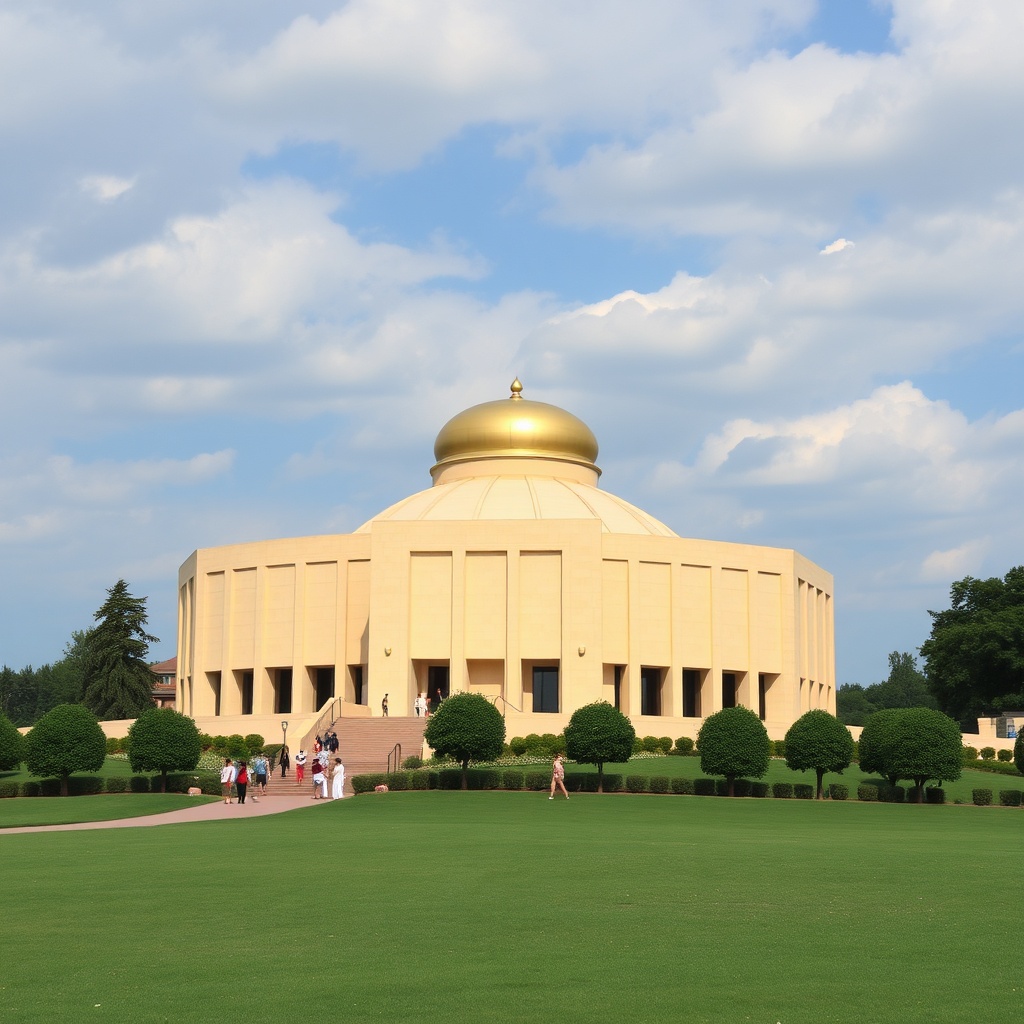
Eckankar, a term that evokes mystery and spirituality, refers to a modern religious movement that calls itself the "religion of the light and sound of God." Founded in the 20th century, Eckankar proposes a path to self-discovery and direct experience of the Divine through meditative practices and the exploration of past lives, presenting itself as an alternative to traditional religions and other spiritual paths.
Eckankar: A Sociological, Historical, and Theological Analysis
The study of new religious movements, such as Eckankar, requires a multifaceted approach that combines historical rigor, sociological analysis, and theological understanding. Impartiality, respect for diverse beliefs, and factual clarity are fundamental pillars for demystifying and contextualizing groups that are sometimes misunderstood or associated with simplistic labels. This article seeks to offer an in-depth analysis of Eckankar, exploring its origins, doctrines, practices, and its place in the contemporary religious landscape, with special attention to any controversies or allegations that may arise.
1. Sociological and Theological Definition
From a sociological perspective, Eckankar can be classified as a New Religious Movement (NRM), a broad term that encompasses religious groups that emerged mainly from the 19th century onwards, often with origins in Asian or Western spiritual traditions, but which differ from established religions. Eckankar falls into the category of movements that emphasize mystical experience and individual self-transformation.
Theologically, Eckankar defines itself as a spiritual path that seeks the union of the individual soul with the Cosmic Consciousness, or God. The term "Eckankar" is derived from words in ancient languages and means "God" or "Creative Spirit." The central belief lies in the existence of a "Living Master" (the Eckankar Guru), who guides practitioners on their spiritual journey. The ultimate goal is to reach the state of "God Consciousness" or "Self-Realization," through which the soul transcends the cycle of reincarnation and achieves spiritual freedom.
Eckankar's theology is syncretic, incorporating elements from various spiritual traditions, including Hinduism, Buddhism, Sufism, and esoteric Christianity, but presenting them through its own lens. The emphasis is on personal experience and inner discovery, rather than rigid dogmas or formal liturgical rituals.
2. Historical Origin, Founders, and Geographic/Cultural Context
Eckankar was founded by Paul Twitchell (1932-1971), an American writer and spiritualist. The official history of Eckankar traces back to a lineage of Eck Masters, who allegedly transmitted secret knowledge from generation to generation. Twitchell, under the spiritual name "Darwin Gross," published the first book on Eckankar, "The Tiger's Fang," in 1965, and founded the Eckankar organization in 1965 in San Diego, California.
The cultural and geographic context of its emergence is crucial. The 1960s in the United States was a period of spiritual and social effervescence, marked by growing interest in Eastern philosophies, meditative practices, and countercultural movements. Eckankar emerged in this scenario as an alternative to traditional religious institutions, offering a more individualized and experiential path to spirituality. The search for meaning and transcendence was palpable, and Eckankar, with its promise of self-knowledge and enlightenment, found a receptive audience.
After the death of Paul Twitchell, Darwin Gross assumed leadership as the Eckankar Guru until 1981, when leadership was passed to Harold Klemp. Klemp, under the title of "The Living ECK Master," is the current leader of Eckankar, which today has its headquarters in Chanhassen, Minnesota, USA.
3. Main Beliefs, Dogmas, Rites, and Practices
The fundamental beliefs of Eckankar revolve around the nature of the soul and its journey through multiple lives. Key concepts include:
- The Soul is Eternal: They believe that the soul is a divine spark, separate from the physical body, and that its true nature is bliss and wisdom.
- Reincarnation: The soul goes through a cycle of reincarnations to learn and evolve spiritually.
- Karma: Actions in past and present lives influence current and future circumstances.
- The Living ECK Master: The central figure who guides spiritual aspirants. The Living Master is considered the embodiment of the ECK (Divine Spirit).
- The Path of Light and Sound: The central practice of Eckankar, which involves meditation and the chanting of "HU," a sacred sound believed to be the sound of creation. The goal is to connect with the ECK.
- Soul Travel: The belief that the soul can consciously travel to other planes of existence, both in life and after death.
- Past Lives: Accessing and understanding past-life experiences are encouraged as part of the self-knowledge process.
Rites and practices in Eckankar are predominantly individual and focused on personal experience. The most common practices include:
- Meditation: Essential for spiritual development, focusing on techniques that promote introspection and connection with the "Inner Sound."
- Chanting HU: A daily practice where followers chant the sound "HU" to connect with the Divine.
- Study of Sacred Writings: Reading and contemplation of the teachings of Paul Twitchell and Harold Klemp.
- Dream Work: The interpretation and exploration of dreams as a means of receiving spiritual guidance.
- Volunteer Service: Many members engage in service activities for the Eckankar community.
Eckankar does not have formal temples in the traditional sense. Member meetings, called "worship services," usually take place in members' homes or rented community centers, and are more focused on chanting, meditation, and sharing experiences than on complex liturgical rituals.
4. Organizational Structure and Leadership Profile
The organizational structure of Eckankar is hierarchical, with the Eckankar Guru at the apex. Below him, there is a team of leaders and administrators who oversee global operations.
The Eckankar Guru is the central figure, responsible for transmitting teachings and guiding members. Currently, Harold Klemp holds this position. He is viewed as the "Living Master," the direct channel for the ECK.
The global organization is managed by a board and various administrative divisions. At the local level, there are study groups and coordination led by more experienced members. Eckankar operates in several countries, with a global community that communicates and shares information through its official websites, publications, and events.
The leadership profile, especially that of the Eckankar Guru, is presented as someone who has attained a high level of enlightenment and spiritual wisdom, being capable of guiding others on their path. The credibility and authority of the leadership are fundamental to the structure and functioning of Eckankar.
5. [WARNING/CONTROVERSIES] Factual Analysis of Potential Controversies and "Destructive Cult" Characteristics
When analyzing Eckankar from the perspective of potential controversies and the classification of "destructive cult," it is essential to rely on factual sources and academic research, separating allegations from concrete evidence. The term "destructive cult" is loaded and generally associated with groups that exhibit a consistent pattern of:
- Extreme social isolation of their members.
- Predatory financial exploitation.
- Coercive mind control and psychological manipulation.
- Physical or psychological harm to members or third parties.
- Criminal activities.
Academic research and serious reporting on Eckankar do not point to a proven history of "destructive cult" characteristics in the classic sense. There is no substantial evidence of forced social isolation, systematic financial exploitation, widespread psychological abuse, or deliberate physical harm to its members.
However, like many new religious movements, Eckankar has faced criticism and controversy, which must be addressed in a balanced way:
- Origins and Early Leadership: Paul Twitchell was a controversial figure. Reports indicate that he may have appropriated teachings from other traditions without proper credit, and there have been allegations that he may have been influenced by other spiritual groups. Some sources suggest that the lineage of Eck Masters may have been a later construction to legitimize the movement. Sociologists of religion like J. Gordon Melton, in their analyses of NRMs, often highlight the complexity in the genealogy of many new movements.
- Allegations of Plagiarism and Authorship: One of the most recurring points of criticism, especially in the early years of Eckankar, revolved around the authorship of Paul Twitchell's writings. Critics argued that he relied extensively on works by authors such as Lobsang Rampa and other esoteric writings, with little or no citation. This issue is common in movements that seek to legitimize their doctrines through an ancestral tradition, sometimes reinterpreted.
- Control and Doctrine Issues: Although not characterized as coercive, some former members or observers point to the strong emphasis on the figure of the Living Master and the need to follow his teachings as a potential for psychological control, especially in more vulnerable individuals. However, this differs significantly from aggressive mind-control techniques that aim to nullify an individual's autonomy. The very nature of a spiritual system that depends on a guide can generate this perception.
- Public Perception Challenges: Like many less traditional religious groups, Eckankar may face stigma or distrust from the general public, who do not always understand its beliefs and practices. Esoteric terminology and the emphasis on inner experience can be viewed with skepticism by those accustomed to more conventional forms of religion.
Reference: Melton, J. Gordon. Encyclopedic Handbook of Cults in America. Garland Publishing, 1992.
In short, while Eckankar does not fit the definition of a "destructive cult" based on evidence of systemic harm, it is not exempt from debates about its origin, the authenticity of its lineage, and the power dynamics within its structure. Factual analysis, grounded in research and reliable testimonies, is crucial to avoid generalizations and to understand the nuances of Eckankar as a religious phenomenon.
6. Social, Cultural Impact, and Contemporary Relevance
The social and cultural impact of Eckankar is largely circumscribed to its followers. The organization provides a space for individuals seeking an alternative spiritual path, with an emphasis on self-discovery and personal experience. For many, Eckankar provides a sense of community, purpose, and connection with the Divine.
Culturally, Eckankar contributes to the diversity of the religious landscape, introducing concepts and practices that depart from traditional Western norms. Its emphasis on soul travel, past lives, and the inner sound resonates with a contemporary interest in holistic and non-dogmatic spiritualities.
The contemporary relevance of Eckankar lies in its ability to attract people who feel disconnected from established religions or who seek answers to existential questions in a more personalized way. In an increasingly globalized and interconnected world, movements like Eckankar reflect the ongoing search for meaning and transcendence, adapting to the sensitivities and challenges of the 21st century. The organization remains active, promoting events, publishing materials, and maintaining its online presence, reaching new aspirants around the world.
References and Research Sources
- Eckankar Official Website: www.eckankar.org (Primary source for official and doctrinal information)
- Melton, J. Gordon. Encyclopedic Handbook of Cults in America. Garland Publishing, 1992. (General analysis of new religious movements)
- Bromley, David G. Fundamentalism, New Religious Movements, and the State: The Case of Eckankar. Nova Science Publishers, 2004. (Specific study on Eckankar and its relationship with the State, although the main focus is on other groups)
- Hanegraaff, Wouter J. New Age Religion and Western Culture: Esotericism, Gnosticism, and Magic. Brill, 1998. (Contextualizes the emergence of movements like Eckankar within the New Age phenomenon)
- Academic articles and religion databases (e.g., JSTOR, Academia.edu) on New Religious Movements and alternative spiritualities.





